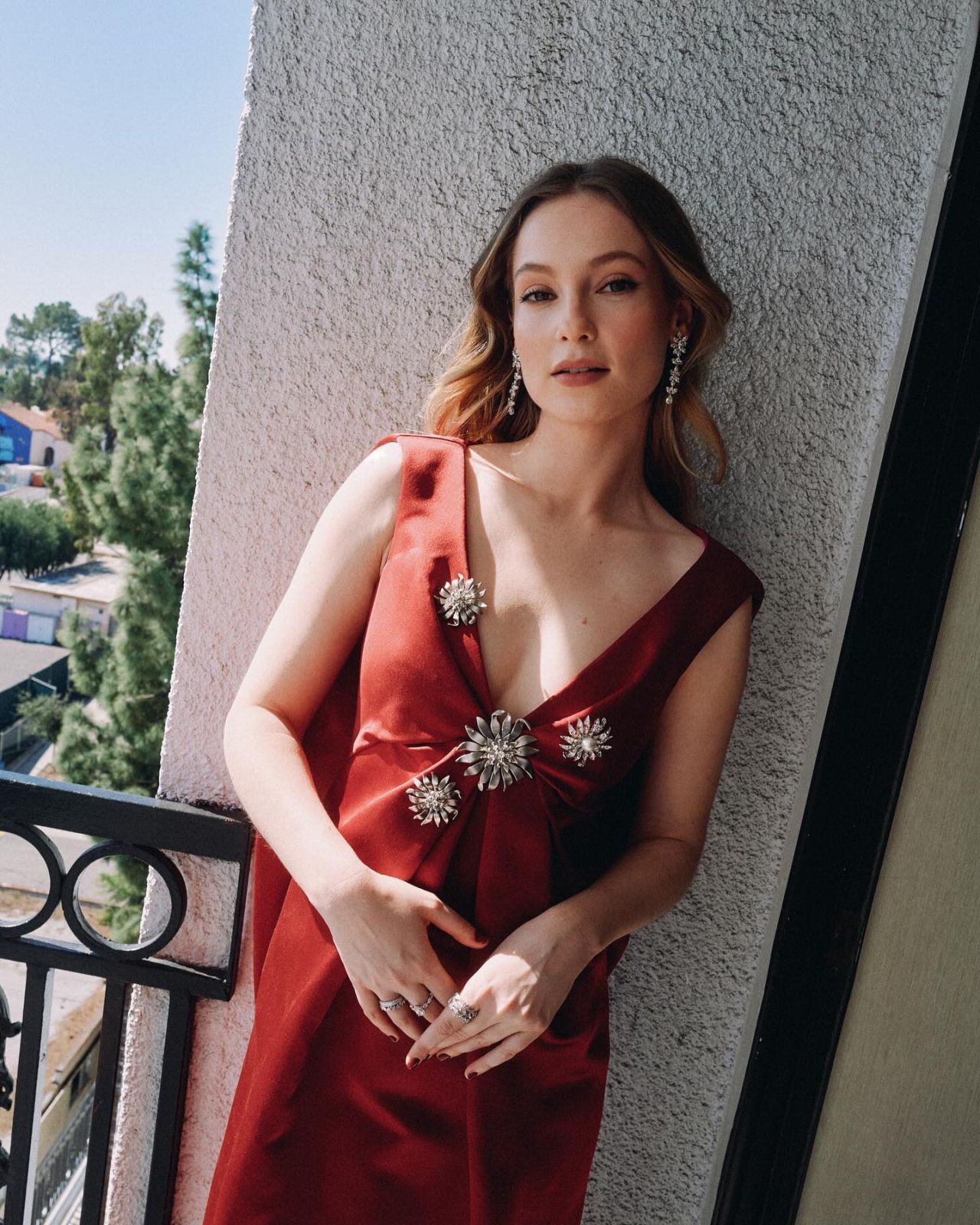
Hannah Dodd didn't just step into a new dress when she took over the role of Francesca Bridgerton. She stepped into a storm. Replacing an actor in a massive Netflix hit is usually a recipe for fan backlash, but Dodd managed something rarer. She made the character feel like she’d been there all along, specifically because she understood the quiet, internal nature of Francesca’s grief.
In Season 3, we finally see Francesca move beyond the background. She isn't the loud, social-climbing diamond her sisters were. She's a musician. She's a soul who prefers a piano forte to a crowded ballroom. When the story turns toward her relationship with John Stirling, the Earl of Kilmartin, it sets the stage for one of the most heartbreaking arcs in the entire series. It's a story about finding a soulmate, losing them, and then finding a way to breathe again.
The Challenge of Quiet Grief
Most actors want the big, screaming monologue. They want the scene where they throw a vase against a wall. Dodd had to do the opposite. To play Francesca correctly, she had to hold everything in. It’s a specific kind of British, Regency-era restraint that can easily look like "nothing" on screen if the actor isn't careful.
Dodd has been vocal about how much she struggled to keep her composure during filming. In interviews, she mentioned that she often had to stop herself from crying because the character isn't supposed to be falling apart yet. She's supposed to be navigating the weight of expectation. If you're a fan of the books—specifically When He Was Wicked by Julia Quinn—you know that Francesca’s story is the most "adult" of the bunch. It deals with infertility, sudden loss, and the guilt of moving on.
The show hasn't reached the darkest parts of her timeline yet, but the seeds are planted. You can see it in the way Dodd handles her scenes with Victor Alli, who plays John. Their romance isn't built on witty banter or spicy carriage rides. It’s built on silence. It’s built on two people who finally found someone who understands that they don't want to talk.
Moving Beyond the Recast Drama
When Ruby Stokes left the show to lead Lockwood & Co., fans were nervous. Recasting is a gamble. It breaks the immersion. But the "new" Francesca feels more aligned with the literary version of the character. Dodd brings a certain fragility that feels essential for what’s coming next.
Many viewers forget that the Bridgerton siblings aren't just archetypes. They're reactions to their father's death. While Anthony became obsessed with duty and Eloise became obsessed with independence, Francesca became obsessed with peace. She wants a small life.
Dodd’s performance emphasizes this desire for a "quiet life" which makes the impending tragedy of her story even more biting. If you’ve ever lost someone, you know that the grief isn't always a loud explosion. Sometimes it’s just a coldness in the room that won't go away. Dodd captures that chill perfectly, even when she’s standing in a sun-drenched garden.
Why the Piano is Francesca’s True Voice
In Bridgerton, music is rarely just background noise. For Francesca, the piano is her only outlet. It’s where she says the things she can’t say to her mother, Violet, or her overbearing brothers.
When Dodd plays, her body language shifts. She isn't just "acting" like a musician; she's using the instrument as a shield. The show’s creators used this to bridge the gap between her introversion and the public's demand for her to be a "debutante."
The real magic of Season 3 was watching her find John through music. When he brings her a rearranged piece of sheet music, it’s the most romantic gesture in the series because it acknowledges her internal world. Dodd plays those moments with a subtle softening of her features. It’s a masterclass in "less is more."
What Most Fans Miss About the Kilmartin Marriage
There is a common misconception that Francesca’s first marriage is just a "starter" relationship before the "real" drama happens later. That’s a total misunderstanding of the character.
Her love for John Stirling is profound. It’s a grounded, stable love. Dodd’s portrayal makes sure we feel that stability. She doesn't play it like a girl with a crush; she plays it like a woman who has found her home. This is why the grief she will eventually face is so devastating. It’s not just the loss of a husband; it’s the loss of the only person who let her be herself.
If the show follows the book's trajectory, we’re going to see Dodd transition from this quiet happiness into a period of intense isolation. The guilt she feels regarding Michael Stirling (John's cousin) is fueled by her intense loyalty to John.
Preparing for the Emotional Fallout
As we look toward future seasons, the focus will shift. We've had the "friends to lovers" tropes and the "enemies to lovers" tropes. Francesca offers something different: "grief to growth."
Dodd has already proven she can handle the heavy lifting. The way she carries herself—shoulders slightly tight, eyes always scanning for an exit—shows she’s thought about the psychological weight of being a Bridgerton. She isn't just there to look pretty in a corset. She’s there to show us what happens when a person’s world is upended.
Honestly, it’s refreshing. The show needs this grounded energy to balance out the more fantastical romances. Life isn't always about fireworks. Sometimes it’s about holding back tears while you try to finish a song.
If you want to catch up on the nuances of her performance, re-watch the scenes in Season 3 where Francesca is alone at the piano. Pay attention to her hands and her breath. That’s where the real story is. Then, go back and read When He Was Wicked to see exactly why Dodd is so worried about the "crying" part of her job. She’s protecting a character who has a lot of pain coming her way.
Watch for the subtle shifts in her interactions with the rest of the family in the upcoming episodes. The distance she maintains isn't accidental. It’s a choice. And it’s the reason she’s the most interesting Bridgerton on screen right now.