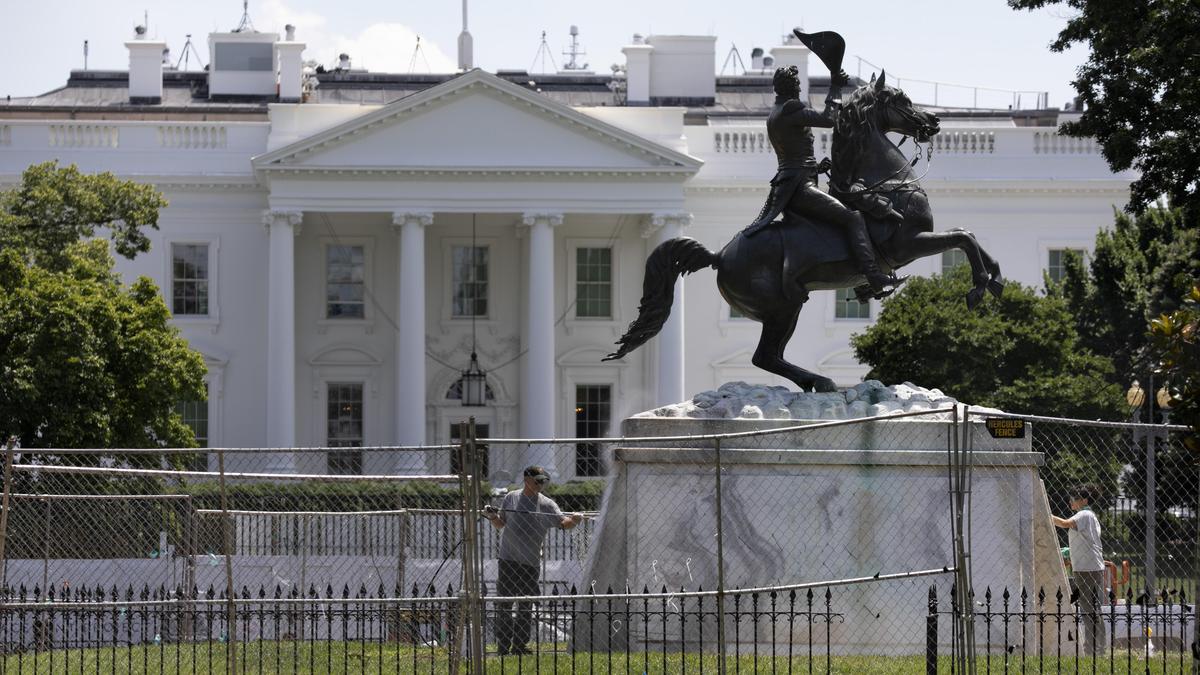
The sound of gunshots near the White House isn’t just local news. It’s a direct challenge to the most heavily guarded square mile on the planet. When reports of gunfire echoed near Lafayette Park recently, the immediate reaction followed a predictable script. Sirens blared. Officers scrambled. Streets closed. Yet, as the smoke cleared—literally and figuratively—authorities found no victims and no suspects. This lack of resolution happens more often than you think, and it highlights a growing gap between high-tech surveillance and the chaotic reality of urban street violence in the District.
Lafayette Park serves as the front yard of American democracy. It’s supposed to be a fortress. When rounds go off within earshot of the West Wing, it forces us to look at the effectiveness of current security protocols. If someone can fire a weapon and vanish into the D.C. night before the Secret Service or Metropolitan Police Department can make an intercept, we have a problem.
The Reality of Gunfire Near Lafayette Park
The incident began like dozens of others this year. A series of pops rang out, sending tourists ducking for cover and secret service agents into a high-alert posture. Witnesses reported the sound coming from the north side of the park, a transition zone where the heavy security of the federal installations meets the busy commercial traffic of H Street.
By the time the perimeter was established, the area was empty. No shell casings were immediately recovered in the first sweep, and no hospital reported a walk-in gunshot victim. This is the "ghost shooting" phenomenon. It’s frustrating for investigators and terrifying for the public. You have the auditory confirmation of a crime but zero physical evidence to move a case forward.
Law enforcement agencies like the United States Secret Service (USSS) and the Metropolitan Police Department (MPD) rely on ShotSpotter technology. This system uses acoustic sensors to triangulate the location of a discharge within seconds. While it's incredibly accurate, it doesn't catch the person. It only tells the police where to look for a body or a casing. When neither appears, the case often hits a wall before it even starts.
Why Suspects Vanish So Easily in Downtown DC
You’d assume every inch of Lafayette Park is under 24/7 video surveillance. It is. However, the urban geometry of the area—the alleys, the Metro entrances, and the constant flow of vehicles—provides a dozen escape routes in any direction. A shooter on a scooter or a bike can disappear into the Farragut North or McPherson Square crowds in under three minutes.
- The Scooter Problem: Small, fast electric vehicles are the bane of D.C. police. They don't have license plates, they can hop curbs, and they can navigate sidewalk traffic where a cruiser can't follow.
- The Nighttime Blind Spot: Even with high-definition cameras, identifying a masked individual in a hoodie at 11:00 PM is nearly impossible without secondary evidence.
- Response Lag: Even a sixty-second response time is too slow if the shooter is mobile. By the time the first "shots fired" call is processed and dispatched, the perpetrator is blocks away.
I've seen this play out in various urban centers. Security isn't just about cameras; it’s about the speed of the physical intercept. In the Lafayette Park incident, the lack of an immediate arrest suggests the shooter knew exactly where the blind spots were or simply got lucky with the timing of the patrol rotations.
The Psychological Impact on DC Tourism and Safety
Lafayette Park isn't just a patch of grass. It's where people go to protest, to take photos of the White House, and to feel the weight of history. When gunfire becomes part of that experience, the "safety theater" of the heavy police presence starts to crumble.
Visitors expect a certain level of invincibility when they stand in front of the White House. When that's shattered, it affects local businesses, hotel bookings, and the general vibe of the city. People stop lingering. They take their photo and leave. They don't grab a coffee at the nearby cafes. The economic ripple of a "minor" shooting with no injuries is still significant because it feeds the narrative that D.C. is losing its grip on public order.
Comparing Recent Incidents in the Federal Precinct
This wasn't an isolated event. Over the last eighteen months, the area surrounding the White House has seen a spike in "disorderly" incidents involving weapons.
- Vehicle Ramming Incidents: We’ve seen trucks and cars try to breach the outer bollards.
- Unsanctioned Protests: While most are peaceful, the tension often leads to physical altercations where weapons are recovered.
- Random Street Crime: The spillover from the nightlife corridors nearby often brings armed individuals into the federal zone.
The common thread is a sense of boldness. The fear of the "Secret Service bubble" is fading. Criminals are betting that the bureaucracy of a multi-agency response will give them the window they need to escape. Usually, they're right.
What Needs to Change Immediately
The current strategy of "respond and sweep" isn't working for these ghost shootings. We need a shift toward proactive tech integration that goes beyond simple recording.
The city needs to stop treating the federal zone and the municipal zone as two different worlds. A shooter crossing H Street shouldn't benefit from a hand-off in jurisdiction that slows down the pursuit. Real-time data sharing between USSS and MPD needs to be instantaneous, without the radio lag that currently exists.
More than that, we need to talk about the "no suspects found" reality. It’s an admission of failure. If the most protected house in the world can't ensure the safety of the park across the street, the security model is outdated. It relies too much on static defenses—fences and bollards—and not enough on mobile, rapid-response units that can cut off escape routes in seconds.
Next Steps for Public Safety
If you're living in or visiting the District, don't wait for a press release to tell you it's safe. Stay aware of your surroundings, especially in transition zones like Lafayette Park where crowds are thick and exits are narrow.
- Download the DC Police App: Get real-time alerts that often hit before the news cycle.
- Identify Hard Cover: If you hear pops, don't look for the source. Move behind concrete or stone immediately. In D.C., those sounds are rarely fireworks.
- Report Small Details: If you see a vehicle or scooter acting erratically near a security perimeter before anything happens, report it. Most of these shooters scout the area first.
The lack of suspects in the Lafayette Park gunfire is a wake-up call. We can't keep relying on luck to ensure that "no injuries" remains the headline. The next time, the shooter might not be aiming at the air or a rival; they might be aiming at the heart of the city.


