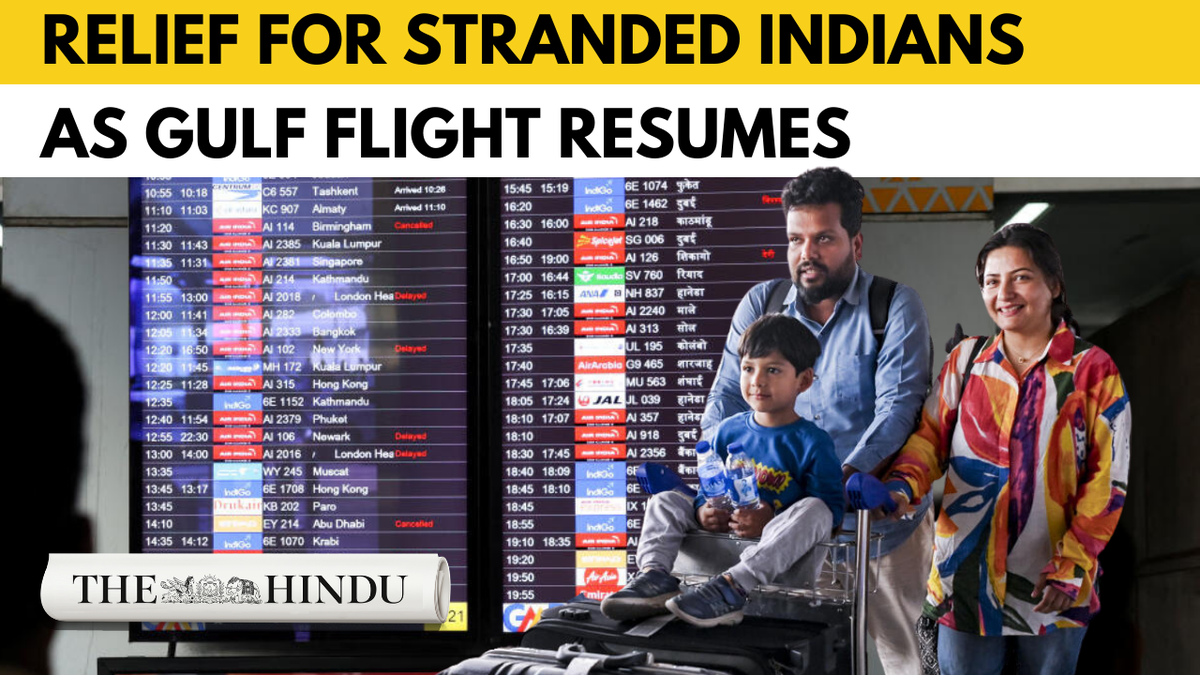
The headlines are bleeding with sentimentality. "Stranded Indians finally return." "Emotional reunions as flight operations resume." It’s a touching narrative designed to sell ads and soothe the national ego. But if you strip away the soft-focus lens and the airport terminal hugs, you’re left with a cold, hard economic disaster that nobody in the mainstream media has the spine to address.
Repatriation isn't a victory. For the vast majority of these workers, it’s a white flag. It is the sound of the world’s most efficient remittance engine grinding to a halt, and if we keep celebrating these "homecomings" as humanitarian wins, we are ignoring the structural collapse of the Indian middle-class dream in the Middle East.
The Remittance Trap Nobody Talks About
The standard argument is simple: the flights are back, the people are safe, and the crisis is over. This is a fundamental misunderstanding of how the Gulf-India corridor actually functions.
India is the world’s top recipient of remittances. We aren't talking about pocket change; we are talking about roughly $100 billion-plus annually. A massive chunk of that flows directly from the construction sites of Dubai, the oil fields of Abu Dhabi, and the retail hubs of Riyadh. When a worker "returns home" because of a flight resumption after a period of instability, they aren't just changing their GPS coordinates. They are switching off a financial lifeline that supports entire villages in Kerala, Uttar Pradesh, and Bihar.
The competitor articles love to focus on the "relief" of the stranded. They never ask what happens on Day 31. On Day 31, the savings start to evaporate. On Day 60, the local debt collectors knock. By Day 90, the "repatriated" worker is a statistic in an overcrowded domestic job market that cannot absorb them.
The Fallacy of the Domestic Pivot
A common "People Also Ask" query is: Can returned Gulf workers find similar jobs in India?
The brutal, honest answer is no.
I have spent fifteen years analyzing labor migration patterns, and the math never checks out for the returnee. A skilled welder in Qatar or a nurse in Kuwait earns a "Gulf Premium"—a wage that is often 3x to 5x higher than what they can command in Mumbai or Kochi for the exact same labor.
When these workers return, they face a domestic economy that is already saturated. They aren't "returning to contribute to the nation"; they are returning to compete for crumbs in a market that doesn't value their international experience as much as it values cheap, local, stay-at-home labor.
The "nuance" the media misses is that these flights shouldn't be celebrated as a homecoming. They should be viewed as a mass evacuation of capital. Every seat filled on a return flight to India is a vacancy in a high-yield foreign market that may never be filled by an Indian again.
The Geopolitical Void
While we cheer for the Vande Bharat-style operations, we are losing our grip on the Khaleeji labor market.
- Automation is the New Migrant: Saudi Arabia’s Neom and the UAE’s "Vision" projects aren't looking for more manual labor. They are looking for AI integration and robotics.
- The Competition: While Indian workers are focused on "getting home safely," laborers from Vietnam, the Philippines, and East Africa are ready to undercut their wages and take their spots.
- The Visa Pivot: The "Kafala" system is evolving. It’s becoming harder, not easier, to maintain long-term residency.
The "lazy consensus" says that once flights resume, the status quo returns. It doesn't. Every interruption in the labor flow is an excuse for a Gulf employer to ask: "Do I actually need 500 guys from Kerala, or can I buy ten German-engineered machines?"
The False Security of "Flight Operations"
Watch the news and they’ll tell you "operations are back to normal."
Normal is dead.
The cost of these return flights, the hiked insurance premiums, and the new bureaucratic hurdles mean the barrier to entry for a migrant worker has doubled. We’re seeing a "filtering" effect. Only the ultra-skilled or the desperate are making the trip back out. The middle-tier worker—the backbone of the remittance economy—is being squeezed out of existence.
If you are an Indian professional currently in the Gulf, "returning home" should be your absolute last resort. The domestic Indian market is a pressure cooker. The inflation you face at home will eat your Gulf savings in eighteen months.
Stop Asking the Wrong Questions
The media asks: "When will the next flight land?"
You should be asking: "How do we stop these people from needing to land?"
We need to stop fetishizing the "return." A return is a failure of the global labor strategy. We should be discussing the renegotiation of bilateral labor treaties that guarantee wage protection and long-term residency, not celebrating the fact that a Boeing 777 managed to land in Kozhikode without falling out of the sky.
I’ve watched families blow their entire life savings on a "repatriation" ticket only to realize three months later that they have no path back to the high-income life they left behind. It’s a trap. A sentimental, flag-waving, economically illiterate trap.
The Reality Check
If you’re reading this while waiting for a flight home, do a cold audit of your finances.
- Do you have a job offer in India that pays at least 70% of your Gulf salary? (You don't).
- Can you afford the 12% to 15% annual inflation on quality education and healthcare in India? (Probably not).
- Is your "return" based on a temporary fear or a long-term financial plan?
Most of these flight operations aren't "resuming" to help you; they are resuming to clear the decks. The Gulf states want to shed the liability of an unemployed foreign workforce, and the Indian government wants the optics of "saving" its citizens.
Both sides win. You lose.
The status quo is a lie. The "stranded Indian" isn't the one stuck in a desert camp. The truly stranded Indian is the one who gets on that plane, lands in India, and realizes they have just traded a temporary crisis for a permanent downgrade in their family’s future.
Stay where the money is. Fight for your visa. Ignore the siren song of the repatriation flight.
The "home" you’re dreaming of doesn’t exist on the salary you’re about to earn.