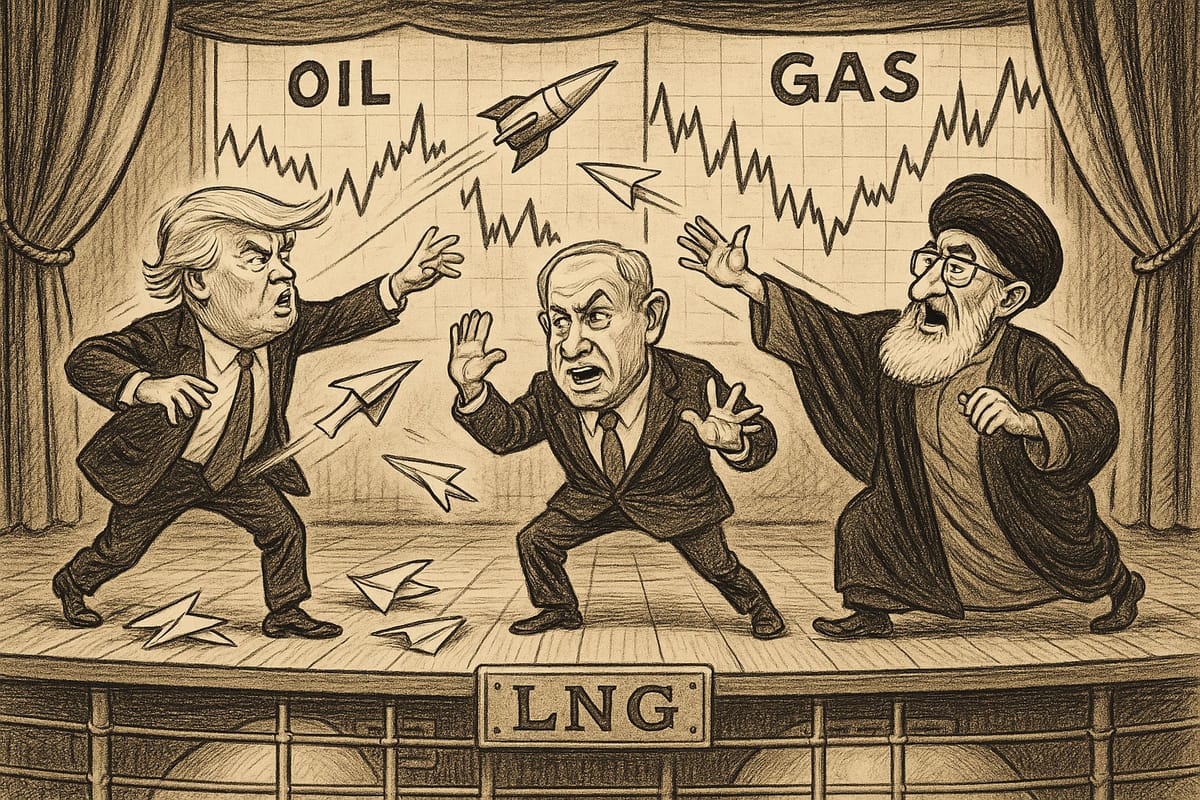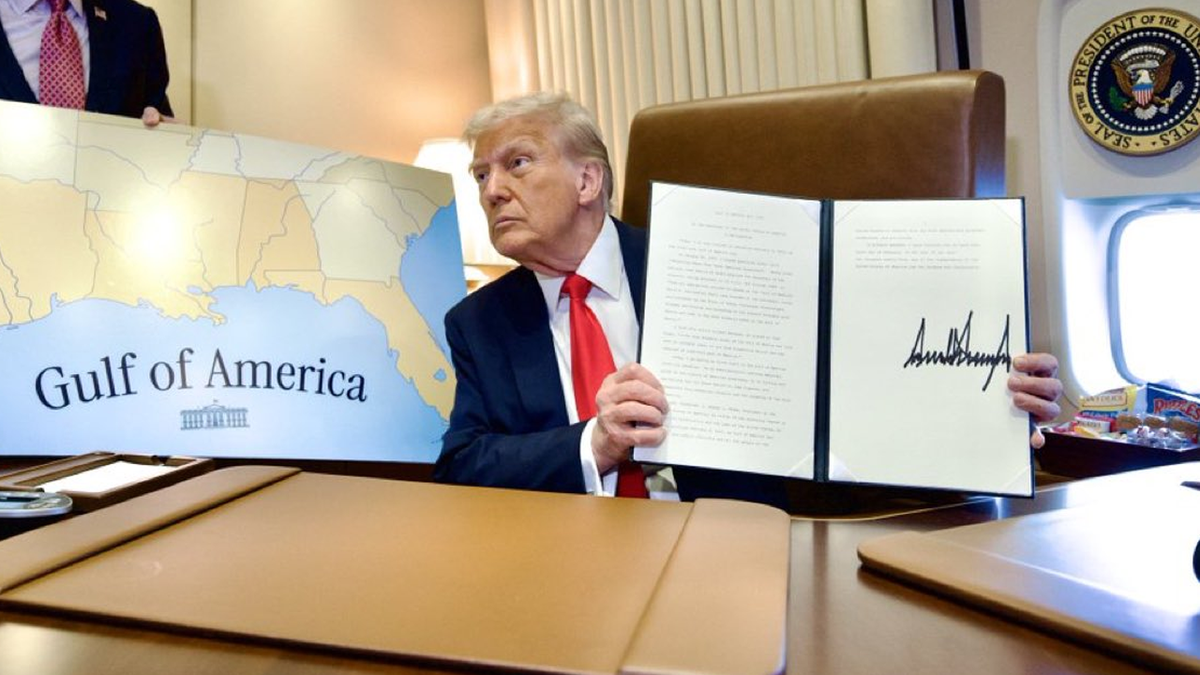
The maritime corridor of the Persian Gulf is once again a theater of kinetic friction. Recent Iranian provocations against United States allies in the region have shattered a period of relative calm, forcing a recalibration of security assumptions in both Washington and Riyadh. While the stated goal of the current administration has been to maintain regional stability through a mix of deterrence and diplomatic signaling, the reality on the water suggests a significant disconnect. Donald Trump’s public admission that these specific escalations were "not expected" reveals a critical gap in intelligence or, perhaps more accurately, a misreading of Tehran’s desperation.
This is not a random flare-up. It is a calculated response to the tightening of economic screws and a shifting geopolitical map that has left Iran with fewer cards to play. By targeting the energy infrastructure and maritime assets of U.S. partners, Iran is effectively testing the limits of the American security umbrella. They are betting that despite the tough rhetoric, there is little appetite for a full-scale shooting war in the Gulf.
The Failure of Predictability
Security analysts have long warned that "maximum pressure" campaigns produce unpredictable outcomes. When a state feels backed into a corner with no clear path to economic relief, the traditional rules of engagement often go out the window. The surprise expressed by the former president is a symptom of a larger problem: the assumption that an adversary will always act in its own long-term rational interest.
In the world of asymmetric warfare, rationality is subjective. For the Islamic Revolutionary Guard Corps (IRGC), the risk of a regional conflagration is often outweighed by the need to demonstrate that they can still inflict pain on global markets. If they cannot sell their oil, they will ensure that the transit of everyone else’s oil is fraught with peril. This is the "scorched water" policy that has characterized Iranian naval doctrine for decades, yet it continues to catch Western planners off guard.
The intelligence community likely saw the troop movements and the repositioning of fast-attack craft. What they missed was the political trigger. The timing suggests these attacks were meant to coincide with specific diplomatic shifts, acting as a violent punctuation mark to ongoing negotiations.
The Vulnerability of Gulf Energy Infrastructure
The reliance of the global economy on a few narrow chokepoints is a structural weakness that cannot be solved with more carrier strike groups alone. The Strait of Hormuz remains the world’s most sensitive artery. When Iran deploys limpet mines or uses drones to strike pumping stations, they aren't just attacking a physical target; they are attacking the insurance rates and the confidence of the global energy market.
Hardware vs. Intent
Saudi Arabia and the United Arab Emirates have spent hundreds of billions on advanced Western defense systems. They have the latest radar, the most sophisticated interceptors, and a dizzying array of patrol vessels. However, these systems are designed for conventional warfare. They are less effective against "gray zone" tactics—deniable actions that fall just below the threshold of an act of war.
- Drone Swarms: Low-cost, high-impact tools that can overwhelm expensive missile defense batteries.
- Sabotage: Undersea operations that are difficult to attribute in real-time.
- Proxy Forces: Using regional militias to launch strikes, providing Tehran with a layer of plausible deniability.
This mismatch in capabilities creates a persistent sense of insecurity. It doesn't matter how many F-35s are in the hangar if a $20,000 drone can take out a multi-billion dollar processing facility. The "unexpected" nature of these attacks stems from a refusal to acknowledge that the traditional military hierarchy is being disrupted by cheap, readily available technology.
Diplomatic Shadows and Misaligned Goals
There is a widening rift between the tactical objectives of the United States and the existential concerns of its Gulf allies. Washington wants to contain Iran without getting dragged into another "forever war." Riyadh and Abu Dhabi, conversely, view Iran as a permanent neighbor and a constant threat that requires a more definitive solution.
When the U.S. signals a pivot toward other theaters, such as the Indo-Pacific, it creates a vacuum. Iran is more than happy to fill that space with aggression. The shock expressed by U.S. leadership suggests they believed the regional status quo was more durable than it actually was. In reality, the regional security architecture is a house of cards held together by the perception of American resolve. When that perception wavers, the attacks resume.
The Role of Domestic Politics
We cannot ignore the role that domestic American politics plays in these cycles of violence. Foreign adversaries watch the news. They see the internal divisions in the U.S. and the conflicting messages coming from the White House and the State Department. This creates an environment where Tehran feels it can push the envelope without facing a unified response.
The administration’s surprise isn't just a failure of intelligence; it’s a failure of communication. If the "red lines" are not clearly defined and consistently enforced, they cease to exist. Iran is currently operating in the gray space where those lines have blurred.
The Economic Toll of Uncertainty
The most immediate impact of these renewed attacks is felt in the boardrooms of global shipping companies. The Gulf is no longer a routine transit zone; it is a high-risk combat theater. This shift has massive implications for global supply chains that are already stretched to their breaking point.
- Surging Insurance Premiums: War risk surcharges for tankers transiting the Gulf have spiked, adding millions to the cost of energy transport.
- Resource Diversification: Countries are being forced to look for more expensive alternatives to Gulf oil to avoid the volatility of the Strait.
- Security Privatization: We are seeing an increase in the use of private maritime security companies, adding another layer of complexity to an already crowded waterway.
These are not temporary adjustments. They represent a fundamental shift in how the world views the Middle East’s role as a stable energy provider. The "unexpected" attacks have essentially re-priced the risk of doing business in the region.
A Cycle Without an Exit
The current trajectory points toward a sustained period of high-tension brinkmanship. There is no easy diplomatic off-ramp because the core issues—Iran’s nuclear program, its regional influence, and its ballistic missile development—remain unresolved. Every time the U.S. thinks it has found a baseline for stability, the IRGC finds a new way to disrupt it.
The pivot toward renewable energy is often cited as the long-term solution to this dependency, but that is a decades-long transition. In the immediate future, the world remains tethered to the security of the Persian Gulf. The failure to anticipate these attacks reveals a profound lack of strategic empathy. We fail to see the world through the eyes of an embattled regime that views chaos as its only leverage.
As long as the strategy remains reactive, the U.S. and its allies will continue to be surprised. True deterrence requires more than just military presence; it requires a clear, unwavering policy that doesn't fluctuate with the news cycle or the political winds in Washington. Until that happens, the Gulf will remain a volatile frontier where the "unexpected" is the only thing one can actually count on.
Move the focus from reactive military deployments to a localized, multilateral maritime security framework that doesn't rely solely on American oversight.