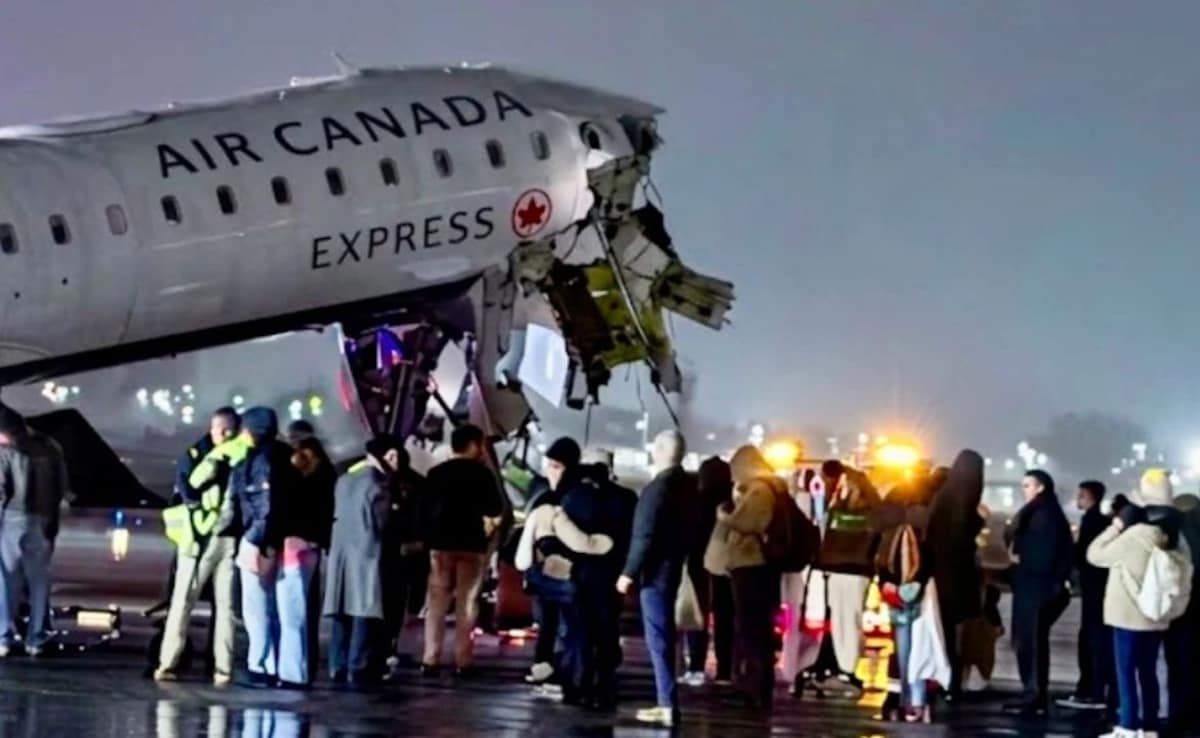
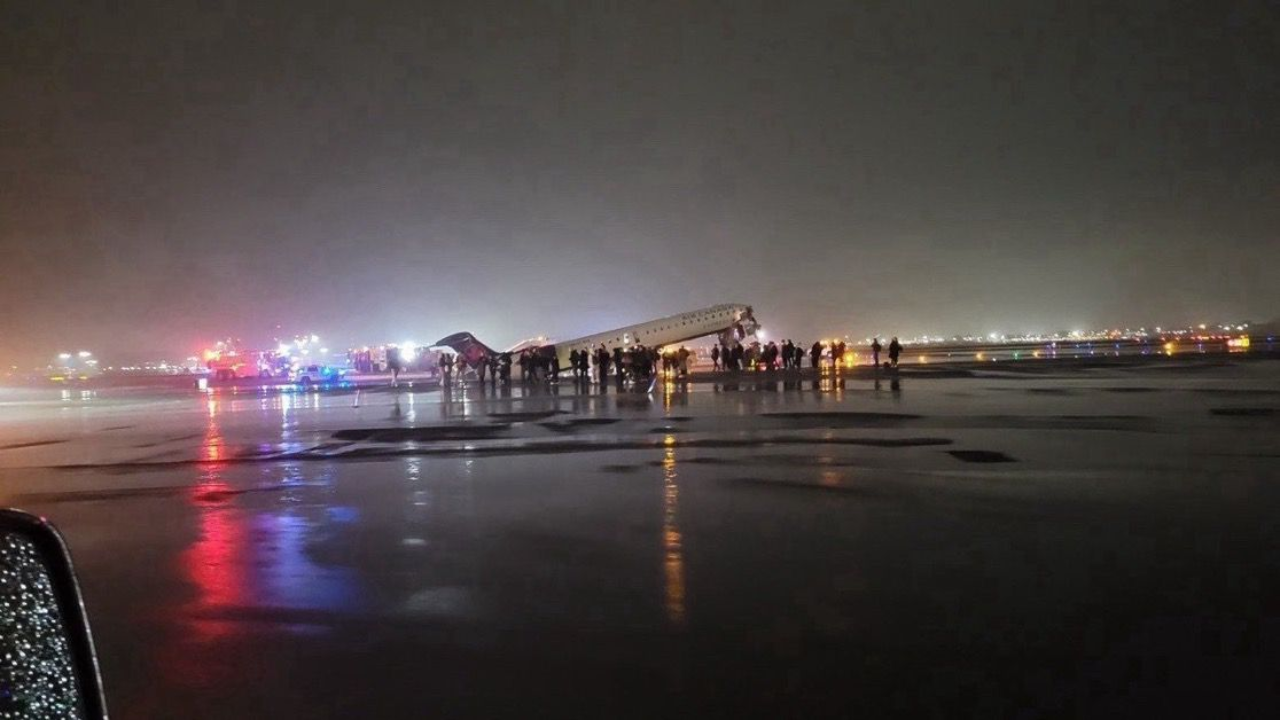
The headlines are predictable. "Air Canada Express Jet Hits Ground Vehicle at LaGuardia." The public gasps. The safety advocates wring their hands. The armchair pilots on social media demand heads on pikes. They all point to a "breakdown in protocol" or a "lapse in safety culture."
They are wrong.
This isn’t a failure of the system. This is the system functioning exactly as it was designed. When a Jazz Aviation CRJ-900 clips a fuel truck or a baggage tug in the cramped, chaotic corridors of LGA, it isn’t an anomaly. It is the mathematical tax we pay for demanding 2026 flight frequencies at 1970s infrastructure limits.
We’ve spent decades obsessing over what happens at $30,000$ feet, but the real danger—and the real incompetence—is happening at zero.
The LaGuardia Death Trap
Stop pretending LaGuardia is a modern airport. It is a high-stakes game of Tetris played with hundred-million-dollar assets and thousands of lives. The "New LGA" has fancy terminals and better food, but the concrete footprint hasn't magically expanded to meet the physics of modern regional jet volume.
When you pack Air Canada Express, Delta Connection, and American Eagle flights into a space designed for a fraction of that traffic, "wing-tip clearances" become a suggestion rather than a rule. The industry calls these "ground incidents." I call them "operational inevitabilities."
The competitor reports focus on the "investigation" and the "lack of injuries." They miss the structural rot. We have built an aviation model that prioritizes "on-time performance" (OTP) above the literal physical space required to move a plane safely. Ground crews are underpaid, overworked, and pressured by a clock that counts down in seconds, not minutes.
If a pilot waits for a perfectly clear path, they lose their slot. If the tug driver waits for a supervisor, the turnaround fails. So they squeeze. And sometimes, the squeeze bites back.
The Myth of Human Error
Whenever a winglet slices through a service vehicle, the NTSB and the airlines love to use the term "human error." It’s convenient. It’s neat. It allows the corporation to fire a technician or retrain a pilot and tell the shareholders the problem is solved.
It’s a lie.
The error is systemic. Aviation infrastructure is currently grappling with a "compressed apron" reality.
- Vehicle Density: There are more specialized vehicles on the tarmac now than at any point in history.
- Turnaround Pressure: The low-cost carrier model has forced legacy carriers to adopt 30-minute turns.
- The "Regional" Shell Game: Major airlines like Air Canada don't even fly these planes. They outsource to partners like Jazz Aviation. This creates a fragmented safety chain where the person fueling the plane, the person de-icing it, and the person flying it might work for three different companies with three different communication standards.
I’ve spent years in the operations centers of major hubs. I’ve seen the heat maps. The tarmac at a major Northeast hub isn't a controlled environment; it’s a bazaar. Expecting zero collisions in that environment is like driving a Ferrari through a crowded wet market at 40 mph and being shocked when you hit a vegetable cart.
Your On-Time Obsession is the Problem
You want to know why that Air Canada jet hit a truck? Because you—the passenger—will sue the airline if your flight is twenty minutes late.
Airlines live and die by the Department of Transportation (DOT) rankings. To stay at the top of those charts, they cut margins of safety on the ground. They push back from the gate before the "alley" is fully cleared. They trust that the "wing walker" (usually a kid making slightly above minimum wage) is paying 100% attention despite the 100-decibel roar and the freezing rain.
We have automated the cockpit to the point where the plane can almost land itself, yet we still rely on a guy with two orange flashlights to make sure a $50 million jet doesn't hit a catering van. The irony is staggering.
The Cost of "Safety First" (That No One Will Pay)
If we actually wanted to stop ground collisions, we would have to do things that would make the average traveler scream:
- Increase separation times: Add 15 minutes to every taxi and pushback. Result? Your ticket price jumps 20% to cover the lost utilization.
- Automate the Tarmac: Install GPS-linked shutoffs on every ground vehicle. Cost? Billions.
- De-clutter the Gate: Reduce the number of flights allowed at constrained airports like LGA or DCA. Result? Your "convenient" 8:00 AM flight to Toronto no longer exists.
The industry chooses the collisions because the collisions are cheaper than the cure. A dented fuselage and a grounded CRJ are line items in an insurance budget. Changing the fundamental physics of airport operations is a threat to the bottom line.
Stop Asking if it’s Safe
"Is it safe to fly out of LaGuardia?"
People ask this question as if safety is a binary toggle. It isn’t. Safety is a sliding scale of risk management. When you fly into a constrained, high-density airport on a regional partner airline, you are accepting a higher "ground risk" profile.
The competitor article treats the Air Canada incident as a "scary moment." It wasn’t. It was an expensive fender bender caused by a system that values throughput over clearance.
We don't need another investigation into why one pilot didn't see one truck. We need to admit that we are trying to run a 21st-century airline schedule on a 20th-century slab of concrete. Until we stop pretending that physics doesn't apply to airport aprons, keep your seatbelt fastened until you're at the gate—and maybe keep it on even then.
The next time you see a winglet clip a truck, don't blame the driver. Blame the clock.