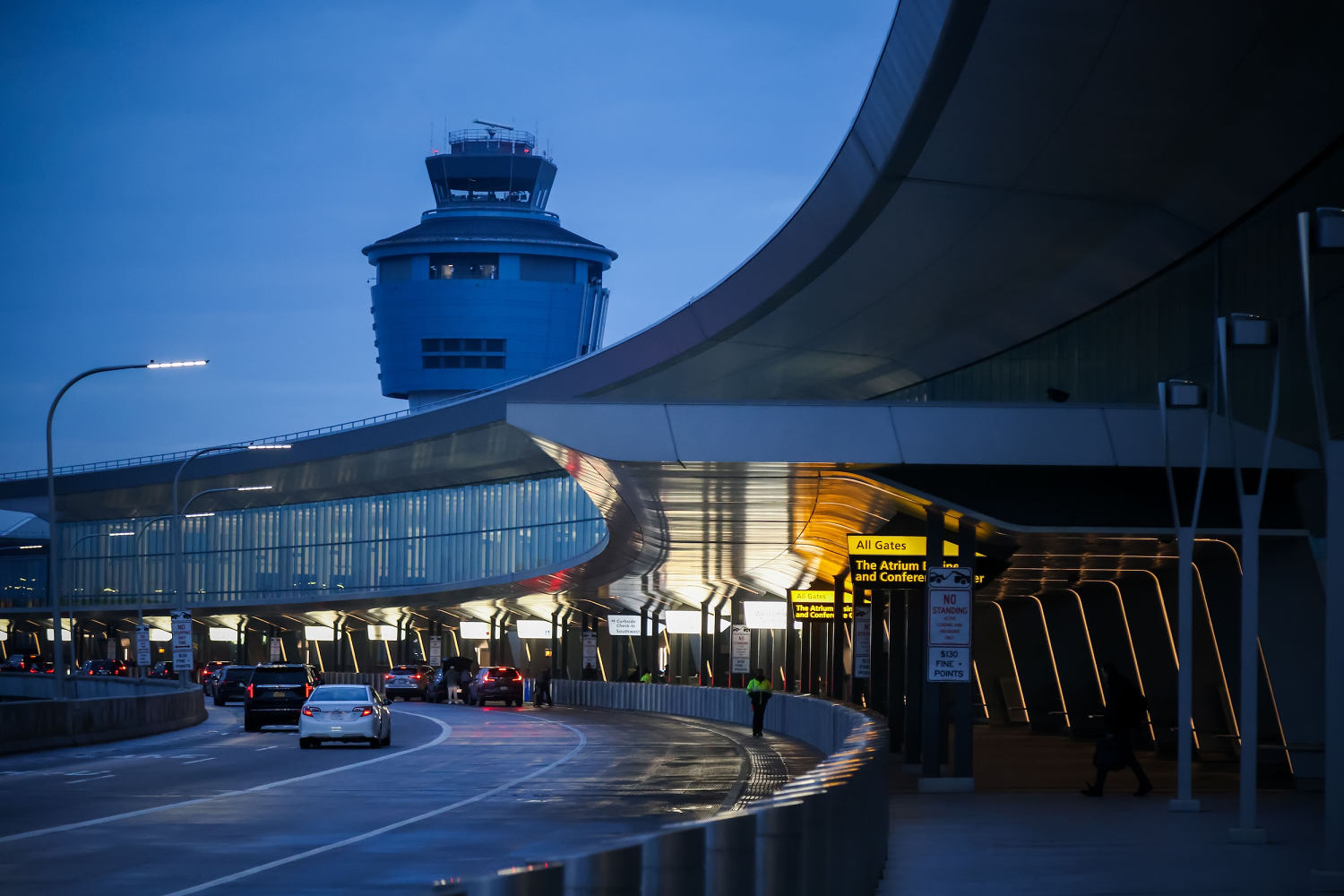
A plane wing slicing through a ground vehicle isn't just a scene from an action movie. It’s a terrifying reality that just played out on the tarmac at LaGuardia Airport. An Air Canada Airbus A319, carrying passengers ready to head north, clipped a shuttle bus during a routine taxi. The result? Four people are in the hospital. This wasn't a mid-air engine failure or a dramatic landing in the Hudson. It was a low-speed collision on the ground, yet it highlights the growing chaos in American airport infrastructure.
When you're sitting in seat 12C, you're usually worried about turbulence or the quality of the pretzels. You assume the taxi to the runway is the safest part of the journey. It's not. The "ramp" is often the most dangerous place for airport staff and equipment. LaGuardia, famously compared to a "third world country" by politicians in the past, has undergone a multi-billion dollar facelift, but no amount of shiny new terminals can fix the fundamental physics of cramped taxiways and human error.
The Mechanics of the LaGuardia Collision
The incident involved Air Canada Flight 713. This wasn't a massive wide-body jet, but an Airbus A319 still has a wingspan of roughly 112 feet. In the tight confines of LaGuardia’s layout, there's very little room for a "miss." Early reports indicate the aircraft's wingtip struck a vehicle—reportedly a shuttle bus or a contract service van—while moving at a slow speed toward the terminal or runway.
Four people on the ground vehicle sustained injuries. While the passengers on the plane were physically unharmed, the psychological jolt of feeling a multi-ton aircraft strike an object is something that stays with you. The FAA and the Port Authority of New York and New Jersey have already launched investigations. They'll look at the "wing walkers," the ground crew responsible for ensuring the path is clear, and the communication between the cockpit and air traffic control.
Why does this happen? Usually, it's a breakdown in spatial awareness. Pilots have limited visibility of their wingtips from the cockpit. They rely on painted lines and ground marshals. If a vehicle is parked six inches outside a designated safety zone, or if a pilot drifts slightly off the yellow line, metal meets metal. At an airport as busy as LGA, these margins are razor-thin.
Why Ground Safety is Deteriorating
We’ve seen a spike in "close calls" and ground incidents across the United States over the last few years. The National Transportation Safety Board (NTSB) has been sounding the alarm. It’s a cocktail of high traffic volume, staffing shortages, and aging tech.
- Congestion: LaGuardia is one of the most congested airports in the world. It’s built on a small footprint. Every square inch is utilized.
- Human Fatigue: Ground crews are often overworked and underpaid. When you're on your tenth hour of shifting luggage or driving shuttles in the NYC humidity or cold, mistakes happen.
- Communication Gaps: Sometimes the "hand-off" between different control frequencies leads to a vehicle being where it shouldn't be.
This isn't just an Air Canada problem. We've seen similar incidents with JetBlue, American, and Delta. The reality is that the ground environment is less regulated by automated safety systems than the actual flight. We have sophisticated anti-collision tech in the sky (TCAS), but on the ground, we’re still largely relying on eyeballs and radio chatter.
The True Cost of a Wing Strike
You might think a dented wing and a broken windshield on a van is a minor insurance claim. You’re wrong. An incident like this costs the airline and the airport millions. First, the aircraft is grounded. An Airbus A319 represents tens of millions of dollars in capital. Every hour it sits in a hangar for inspections and composite repair is lost revenue.
Then there’s the litigation. The four injured individuals will likely have significant medical bills and potential long-term trauma. In the litigious environment of New York, the Port Authority and the airline are looking at massive settlements.
Beyond the money, there’s the "ripple effect" on the schedule. One collision at a gate or on a taxiway can delay fifty other flights. Because LGA operates on such a tight schedule, there is no "slack" in the system. If one plane blocks a taxiway for two hours while investigators take photos, the entire East Coast corridor feels the pain.
What Travelers Should Know About Ramp Safety
Most people think they're safe once the "Fasten Seatbelt" sign comes on and the plane starts moving slowly. But the taxi phase is a "sterile cockpit" time for a reason. Pilots are focused on navigating a maze of lights and signals.
If you're a passenger and you see something that looks wrong—like a vehicle parked too close or a piece of equipment left on the taxiway—don't be afraid to speak up to a flight attendant. It sounds crazy, but passengers have occasionally been the first to notice a wing clipping a pole or another aircraft because they have a direct view out the side window that the pilots don't.
Practical Steps for Your Next Trip
- Stay buckled until the gate: Even if the plane is moving at 5 mph, a sudden stop from a collision can toss you out of your seat. The four people injured in the vehicle weren't expecting an impact. You shouldn't assume the plane won't jerk or stop violently.
- Expect delays after any "thump": If you feel any vibration or hear a weird noise during taxi, prepare for a long day. Airlines won't take off if there's even a scratch on the wing's leading edge. It ruins the aerodynamics and could be structural.
- Check your flight status via the app: In the event of a ground collision involving your airline at a hub like LGA, the entire gate system might shift. Use the carrier's app for the most "real-time" data, which is usually faster than the terminal screens.
The FAA needs to stop talking about "modernization" and start implementing better ground-radar systems for small vehicles. We have the tech to GPS-track every tug, van, and bus on the airfield. There's no reason a plane should ever "stumble" into a vehicle in 2026.
If you're flying through New York this week, give yourself extra time. This specific accident will trigger a wave of safety audits and potentially slower taxi times as crews become extra cautious. Safety is the priority, but the inefficiency of our current ground handling is a glaring weakness in American aviation.
Next time you're looking out the window while taxiing, keep your eyes peeled. You're part of the safety net too. If you see a wing getting uncomfortably close to a service truck, hit that call button. It’s better to be the person who "overreacted" than the person sitting on a grounded jet for six hours waiting for the NTSB to finish their measurements.