Bringing a lost soldier home isn't a Hollywood movie. It's a grueling, mud-soaked, and often heartbreaking slog through decades of red tape and decaying earth. When an American airman goes down behind enemy lines—whether it happened yesterday or in 1944—the clock starts ticking against nature itself. We like to talk about "no man left behind" as a slogan. In reality, it’s a massive logistical machine powered by forensic anthropologists, specialized recovery teams, and the sheer willpower of families who refuse to forget.
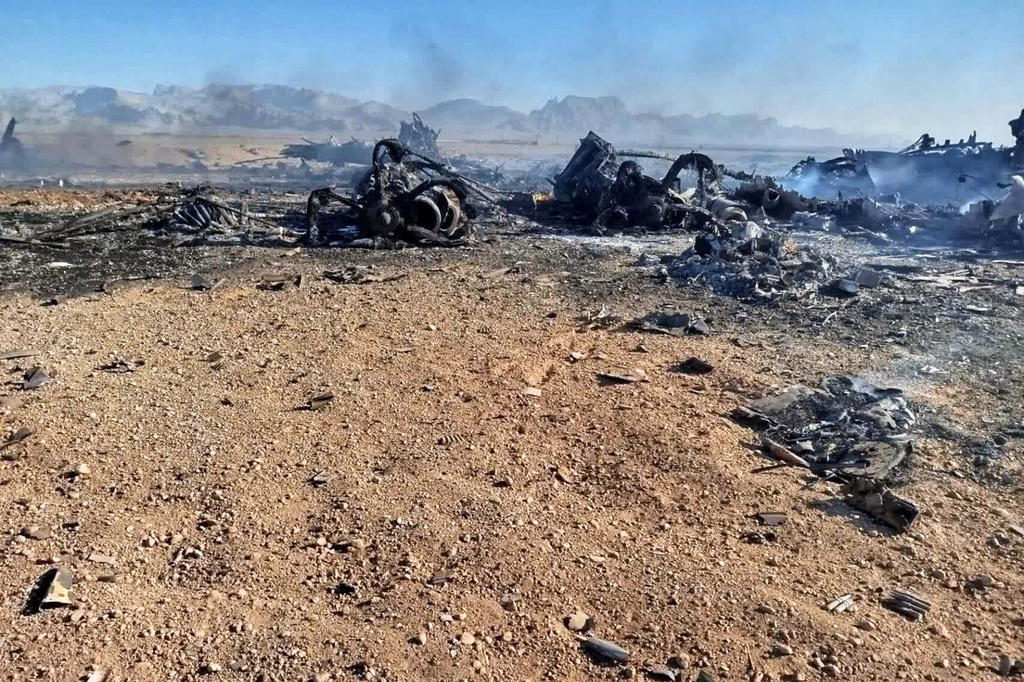
Most people assume the military knows exactly where these crash sites are. They don't. A plane hitting the ground at 400 miles per hour doesn't stay a plane. It becomes a debris field scattered across miles of jungle, mountain, or swamp. Over eighty years, those fragments sink. They get covered by roots. They get moved by locals who need scrap metal. Finding a downed pilot isn't about looking for a cockpit; it's about sifting through metric tons of dirt to find a single tooth or a piece of a flight suit the size of a postage stamp.
Why we still hunt for ghosts in the Pacific
The Defense POW/MIA Accounting Agency (DPAA) handles the bulk of these missions. Right now, more than 81,000 Americans are still missing from past conflicts. About 75% of those are in the Indo-Pacific. It’s a staggering number. You might think, why bother now? The witnesses are dead. The wreckage is rust. But for the families, time doesn't actually heal. It just suspends the grief in a kind of permanent limbo.
I’ve seen how these missions play out on the ground. It’s not just "searching." It’s an archeological dig with the highest stakes imaginable. The teams often work in places like Vietnam, Laos, or the remote islands of Papua New Guinea. The heat is oppressive. The insects are relentless. You’re digging in a grid, centimeter by centimeter. If you move too fast, you destroy the very evidence you're trying to find. If you move too slow, the monsoon season washes the site away.
The science of identifying the fallen
When a team finds something—a bone fragment, a wedding ring, a dog tag—the process shifts from the field to the lab. This is where the real magic happens, but it’s painfully slow. DPAA labs in Hawaii and Nebraska use DNA sequencing, but they also rely heavily on dental records and skeletal analysis.
DNA isn't always the "gotcha" moment people think it is. After decades in acidic soil, mitochondrial DNA can be almost nonexistent. Scientists have to compare what they find against family reference samples. If you're the grand-niece of a missing pilot, your DNA might be the only key left to unlock his identity. That’s why the military is constantly pleading with distant relatives to provide cheek swabs. Without those markers, the bones stay in a box labeled "Unknown."
The diplomatic dance of recovery missions
You can't just fly a Black Hawk into a foreign country and start digging holes. Recovery is as much about diplomacy as it is about digging. Every mission requires a bilateral agreement. In places like North Korea, these missions are often used as political bargaining chips. One year the gates are open; the next, they're slammed shut because of a missile test or a trade dispute.
In Vietnam, the cooperation is surprisingly high today. It’s a weird irony of history. The people who were once our enemies are now the ones helping us find our dead. They provide local guides, laborers, and historical archives. Often, a Vietnamese farmer who was a teenager during the war is the only person who remembers where a "metal bird" fell out of the sky.
What the public gets wrong about crash sites
People watch movies and expect to see a preserved fuselage. That almost never happens. When an aircraft like a P-51 Mustang or a B-24 Liberator crashes, the impact is catastrophic. The aluminum shears. Fuel explodes. What’s left is "micro-debris."
Recovery teams use high-tech tools like magnetometers and ground-penetrating radar, but at the end of the day, it comes down to a screen and a shovel. They're looking for "life support equipment." That’s the technical term for things like parachute buckles or oxygen masks. If you find the parachute, you’re close to the pilot. If the parachute is still packed, you know he never made it out. Those are the moments when the mood on a site changes. It’s no longer an archeological project. It’s a funeral.
The cost of the mission
These operations aren't cheap. We're talking hundreds of millions of dollars a year. Critics sometimes argue that the money could be better spent on living veterans. It’s a fair point, but it misses the psychological impact on the current force.
When a 20-year-old kid signs up for the Air Force today, they need to know that if their jet goes down in a hostile canyon, the country won't just write them off. The recovery of WWII or Vietnam pilots is a down payment on that promise. It’s a message to the current generation that the commitment is eternal. We don't stop looking. Ever.
The emotional weight of the homecoming
When a recovery is successful, the "honor carry" is the final step. It’s the flag-draped casket on the tarmac. It’s the missing man formation flown by jets that weren't even invented when the pilot died. For the families, it’s finally having a place to lay flowers that isn't a symbolic cenotaph.
I remember a case where a family waited 78 years. The daughter of the pilot was in her 80s when they finally identified her father's remains. She said she finally felt like she could stop holding her breath. That’s the ROI. You can't put a price on that kind of closure.
The work continues because the list is still long. Every year, a few dozen more names are crossed off that 81,000-person list. It’s slow. It’s expensive. It’s frustrating. But it’s one of the few things the government does that is purely about honor, divorced from politics or profit.
If you have a family member who went missing in action, the best thing you can do is contact the service casualty office for their specific branch. Provide your contact info. Give a DNA sample. The technology for identification is getting better every day, but the lab needs your data to make the match. Don't assume someone else in the family has already done it. Be the reason a ghost finally gets to come home. If you want to support these efforts, stay informed through the DPAA’s public briefings. They happen across the country, and they’re the best way to see the actual faces of the people doing the digging. Support for these programs ensures the funding doesn't dry up when the news cycle moves on. It's a mission that belongs to all of us. Empty chairs at Thanksgiving deserve to be filled with stories, not just silence.