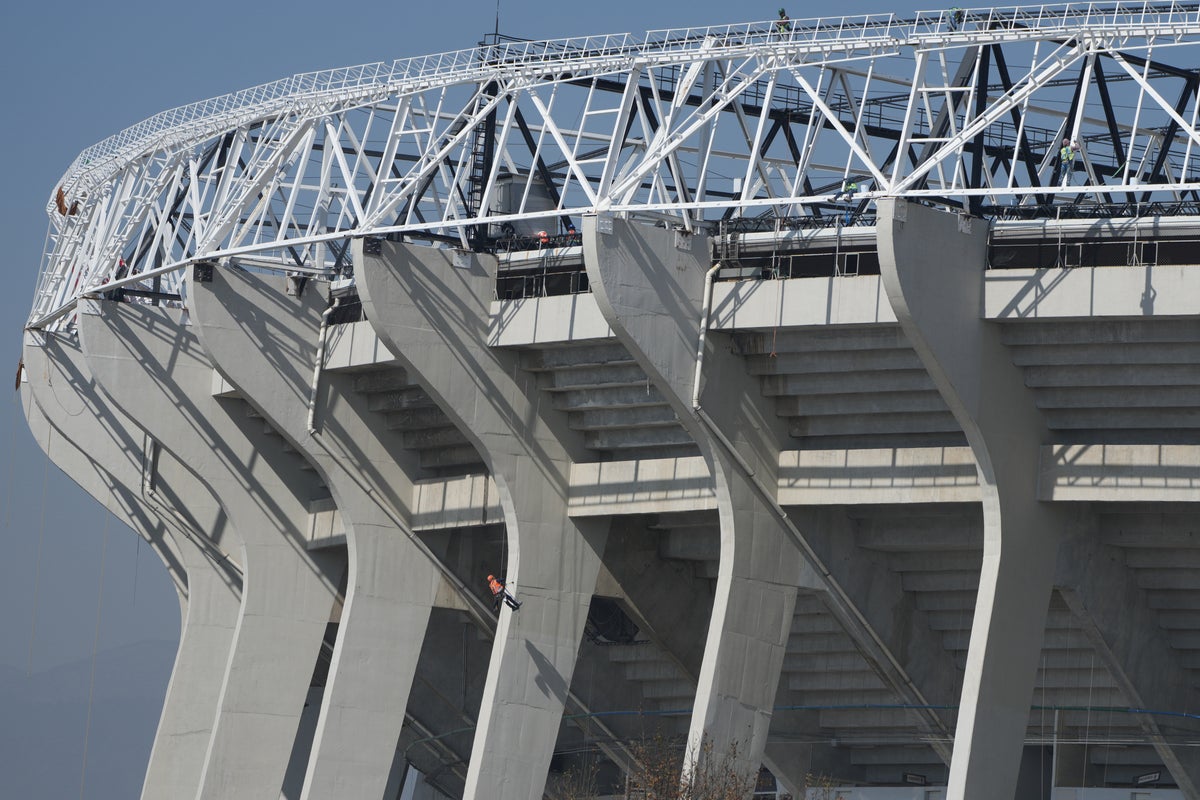
If you stand in the center of a capacity crowd at Ellis Park, the sound doesn’t hit your ears first. It hits your sternum. It is a low, rhythmic thrum—the collective heartbeat of sixty thousand people who have been told, for most of their lives, that they are the underdogs even when they are the champions.
South Africa enters every World Cup cycle wrapped in a paradox. They are the most successful nation in the history of the tournament, yet they are rarely the "favourite" in the way we talk about the clinical efficiency of the All Blacks or the tactical flair of the French. To the global punditry, the Springboks are a problem to be solved, a physical anomaly that shouldn’t technically work in the modern, expansive game.
But the scoreboard doesn't care about aesthetic theories. The three gold trophies in the cabinet at SARU House aren't there because of luck. They are there because of a specific, grueling brand of psychological resilience that most teams cannot replicate.
The Myth of the Statistical Darling
We live in an era of rugby governed by data. Analysts point to "metres made," "offloads," and "clean breaks" as the currency of success. If you look at those spreadsheets, Ireland often looks like the most sophisticated team on the planet. France looks like a fever dream of athletic perfection. South Africa, by comparison, looks like a sledgehammer.
Data tells us that kicking away possession is a risk. The Springboks do it more than almost anyone. Data says that a "6-2 split" on the bench—bringing on six massive forwards halfway through a match—is a gamble that limits your tactical flexibility. The Springboks turned it into a weapon of psychological warfare known as the Bomb Squad.
Numbers fail to capture the "suffocation factor." There is a specific moment in a high-stakes Test match—usually around the 55th minute—when an opposing fly-half looks at the defensive line and realizes there is no way through. He sees Eben Etzebeth, a man who looks like he was carved out of a mountainside, and he realizes that for the next twenty-five minutes, every breath is going to hurt.
That isn't a statistic. It’s a tax. And South Africa is the only team that knows how to collect it every single time.
The Ghost of 1995 and the Burden of Hope
To understand why the world is hesitant to call them favourites, you have to understand what the jersey actually represents. For a New Zealander, the All Black jersey is about excellence. For an Englishman, it’s about tradition. For a South African, the green and gold is a social contract.
Consider a hypothetical young boy in a township outside Gqeberha. He isn’t watching the game for "entertainment." He is watching because Siya Kolisi, a man who grew up with nothing, is the captain of the most powerful entity in the country. When the Springboks play, the economy shifts. The national mood swings. If they lose, the darkness feels a little heavier.
This creates a level of pressure that would break most teams. Instead, it has become the Springboks' primary fuel source. They don't play for the win; they play for the survival of the collective spirit. When you are playing for something that heavy, you don't care if the "experts" think your game plan is one-dimensional. You just win.
The Rassie Factor and the Death of Convention
For years, the Springboks were predictable. They were big, they were slow, and they were angry. Then came Rassie Erasmus.
Rassie didn't just change the tactics; he changed the psychology of how we view "favourites." He embraced the villain arc. He understood that being liked is not the same as being feared. By the time the 2019 and 2023 cycles rolled around, South Africa had developed a tactical versatility that the world still refuses to fully acknowledge.
They can play the "aerial ping-pong" game better than the Welsh. They can scrum the French into the dirt. And, as they showed in the 2023 final, they can defend their own try-line with a ferocity that borders on the spiritual.
Yet, the "favourite" tag remains elusive. Why? Because we want our champions to be beautiful. We want them to score forty-meter tries off set-pieces. We don't want to admit that the most effective way to win a World Cup is to embrace the ugly, the grit, and the one-point margin.
South Africa has won their last three knockout games in World Cups by exactly one point each.
- 29-28 against France.
- 16-15 against England.
- 12-11 against New Zealand.
That isn't a fluke. That is a team that has mastered the art of existing on the edge of a cliff without falling off.
The Invisible Stakes
When we ask if it’s "time to trust" them as favourites, we are asking the wrong question. Trust implies a belief in a predictable outcome. But South Africa is never predictable. They are a team of chaos managed by iron discipline.
The real question is: Can any other team survive the 80-minute car crash that is a Springbok knockout game?
Most teams prepare for a rugby match. The Springboks prepare for a confrontation. They invite you into a dark room and wait to see who blinks first. In the last two World Cups, the entire world blinked, and the Boks didn't.
There is a visceral reality to their dominance that defies the "favourite" label. To be a favourite is to be expected to win. To be the Springboks is to be the team that everyone expects to lose to eventually—until the final whistle blows and they are the ones left standing.
The Taxman Comes for Everyone
The skepticism toward South Africa usually stems from their results between World Cups. They lose to Australia in the heat. They struggle in the wet of a November tour in Dublin. They look mortal. They look like they can be beaten.
But the World Cup isn't a league. It’s a tournament of attrition.
Imagine a marathon where, every five miles, someone punches you in the ribs. You might be the fastest runner. You might have the best form. But by mile twenty, the only thing that matters is how much pain you can tolerate.
The Springboks are built for the twenty-mile mark. They have cultivated a depth of talent that allows them to lose a world-class hooker or a starting fly-half and simply plug in another human wrecking ball who has been waiting his whole life for that moment.
Why the World is Scared to Say Yes
There is a lingering hesitation to crown them because, if we admit they are the best, we have to admit that their way of playing—physical, defensive, and ruthlessly efficient—is the superior way to play the game.
Rugby fans are romantics. We want the sport to be about "the beautiful game." We want the ball to move through the hands. We want the "French flair."
The Springboks are the cold water that wakes us up from that dream. They remind us that at the highest level of human competition, victory belongs to those who can endure the most discomfort for the longest period. They aren't the favourites because they are the most talented. They are the favourites because they are the most certain.
They are certain of who they are. They are certain of what they represent. And they are certain that, in a one-point game with three minutes left on the clock, they will find a way to make you fail.
The green jersey doesn't just represent a team anymore. It represents a psychological barrier. Until someone proves they can break it, the gold trophies will continue to reside in the southern hemisphere, and the world will continue to wonder how a team so "limited" keeps ending up on the podium.
It isn't about whether you trust them. It’s about whether you can survive them. And so far, when the lights are brightest and the stakes are highest, nobody can.
The silence of a stadium after a South African victory is a very specific kind of quiet. It is the sound of realization. It is the sound of sixty thousand people admitting that while they didn't want the sledgehammer to win, they couldn't find a way to stop it from swinging.
The green ghost is still there, waiting in the 79th minute. It doesn't care about your predictions. It doesn't care about the odds. It only cares about the weight of the gold.