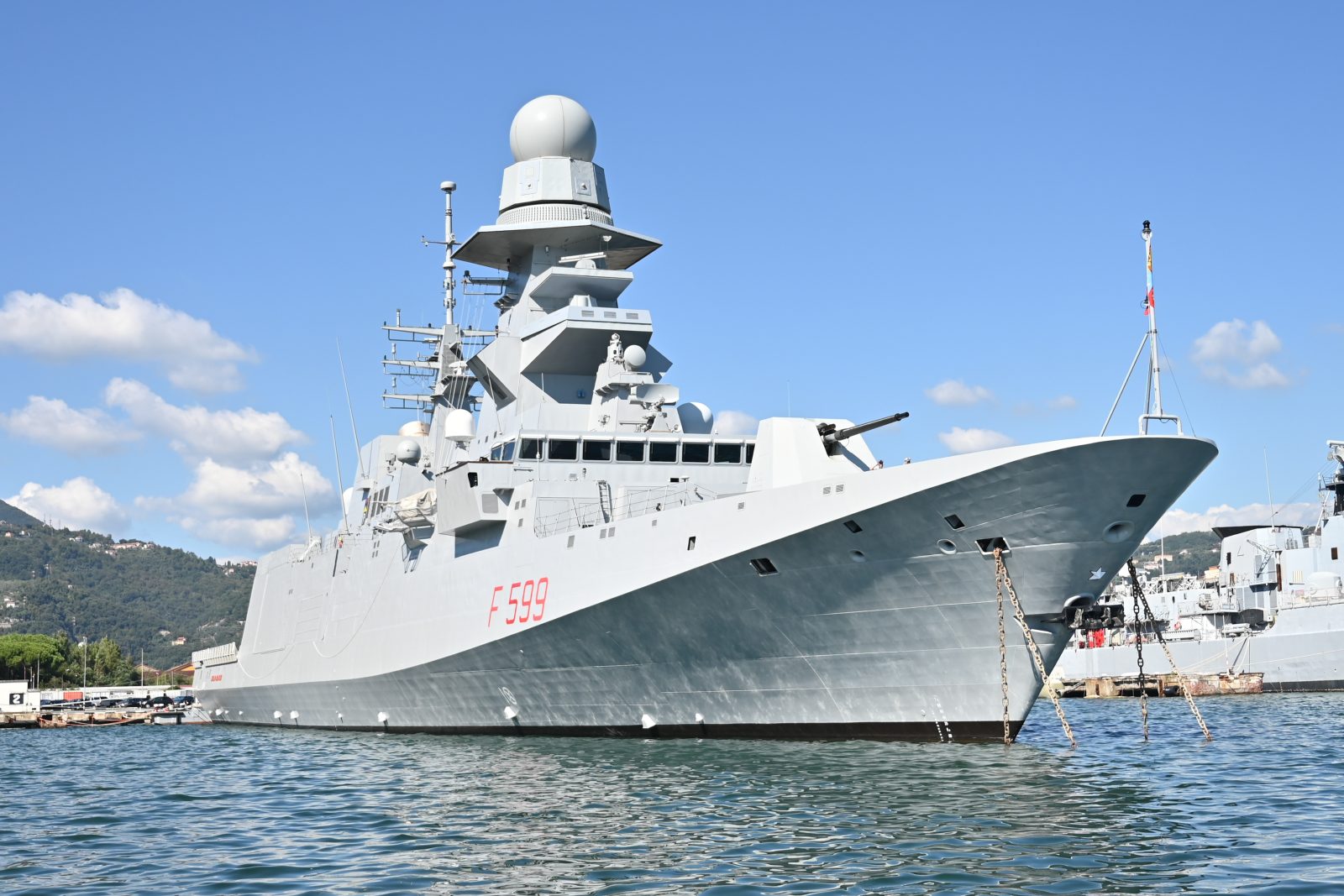
Athens is moving with a sense of urgency that suggests the status quo in the Aegean is no longer sustainable. By April, the Greek government expects to finalize a multi-billion dollar agreement with Italy for the acquisition of new frigates, a move that signals a departure from traditional procurement cycles and a direct response to a hardening regional security environment. This is not merely a purchase of hardware. It is a calculated realignment of Mediterranean maritime strategy.
The Hellenic Navy has spent years operating on a knife-edge. While the recent acquisition of French FDI Belharra-class frigates provided a much-needed shot of adrenaline, the fleet's backbone remained a collection of aging hulls that required more maintenance than their operational value justified. The turn toward Italy’s Fincantieri for the Constellation-class or FREMM variants represents more than just filling a quota. It is an admission that the Greek defense doctrine now requires a level of interoperability and multi-mission capability that older platforms simply cannot provide.
The Strategic Pivot Toward Rome
For decades, French and German shipbuilders held a near-monopoly on Greek naval attention. That grip has loosened. The Greek Ministry of National Defense is looking for more than just a boat; they are looking for a partnership that includes domestic industrial involvement and a rapid delivery timeline. Italy, sensing a vacuum, has stepped up with a proposal that balances high-end electronic warfare capabilities with a price point that doesn't immediately bankrupt the Hellenic Treasury.
The "why" behind this sudden sprint toward an April deadline is tied to the Eastern Mediterranean gas fields and the increasingly complex web of Exclusive Economic Zones (EEZ). Greece cannot protect its sovereign claims with a "wait and see" approach to procurement. The Italian deal provides a specific type of maritime presence—vessels capable of sustained anti-submarine warfare and advanced air defense—that serves as a credible deterrent against any regional actor looking to test Greek resolve.
Industrial Survival and the Elefsina Factor
One of the most overlooked components of this deal is the resurrection of the Greek shipbuilding industry. You cannot separate the frigate purchase from the revitalization of the Elefsina Shipyards. The deal is being structured to ensure that a significant portion of the construction or at least the long-term maintenance happens on Greek soil.
This is a defensive necessity. In a high-intensity conflict, a navy that has to send its primary surface combatants back to a foreign shipyard for repairs is a navy that has already lost. By integrating Fincantieri’s expertise with Greek labor, Athens is attempting to rebuild a sovereign industrial base that withered during the debt crisis. It is a high-stakes gamble. Shipbuilding is notoriously prone to cost overruns and delays, and the Greek yards have been dormant for a long time.
The Technical Edge
What are the Greeks actually buying? If the deal follows the expected trajectory, the Hellenic Navy will gain access to:
- Advanced Multi-Function Radars capable of tracking hypersonic threats.
- Agnostic Launch Systems that can fire a variety of European and American missiles.
- Increased Automation which reduces the crew size, a critical factor for a nation facing a demographic squeeze in its military recruitment.
The Italian FREMM design is a proven commodity. It isn't a prototype. It is a platform that has been tested in the North Atlantic and the Mediterranean alike. For a navy that needs to be "ready tonight," the reliability of the Italian platform outweighs the theoretical advantages of more experimental designs.
The Geopolitical Chessboard
The timing of the April deadline is not accidental. The European defense market is currently in a state of flux. With the United States distracted by internal politics and the ongoing war in Ukraine, Mediterranean nations are realizing that "Strategic Autonomy" is not just a French talking point—it is a survival requirement.
Italy and Greece are finding common ground in their desire to secure the southern flank of NATO. While the alliance focuses on the Suwalki Gap, the Mediterranean remains a volatile corridor for energy, migration, and Russian naval incursions. A strengthened Hellenic Navy, backed by Italian industrial might, creates a southern arc of stability that Washington is happy to see, provided it doesn't spark a renewed arms race with Ankara.
However, we must address the friction. Every Euro spent on an Italian frigate is a Euro not spent on the Greek Air Force or the Army’s modernization. The Greek defense budget is a zero-sum game. The decision to prioritize the navy reflects a belief that the next major challenge to Greek sovereignty will come from the sea, not the land.
The Cost of Hesitation
Critics argue that rushing a deal by April could lead to "buyer’s remorse" regarding the specific configurations of the combat management systems. There is a valid concern that in the haste to sign the contract, the Hellenic Navy might compromise on the depth of the sensors or the quantity of the vertical launch cells.
But the counter-argument is more compelling. The cost of no deal is far higher than the cost of a slightly imperfect one. The aging Elli-class frigates are approaching the end of their hull life. If Athens waits another two years to negotiate the "perfect" contract, they risk a capability gap that would leave the fleet unable to project power beyond the immediate vicinity of the Attica coast.
The Italian deal is a pragmatic solution to an existential problem. It acknowledges that the Mediterranean is no longer a quiet lake. It is a contested space where the quality of your steel and the sophistication of your software determine your seat at the table.
Greece is no longer asking for permission to modernize. By locking in this deal, Athens is asserting that it will remain the primary maritime gatekeeper of the Eastern Mediterranean, regardless of the shifting political winds in the region. The focus now shifts to the fine print of the contract and whether the Greek shipyards can actually deliver on the promises made in the heat of negotiation.
Monitor the sub-contracts for the electronic warfare suites. That is where the real power of these ships will be decided.