In a small, windowless briefing room in Brussels, the air usually tastes of stale espresso and the quiet hum of high-end ventilation. But lately, the atmosphere has shifted. It feels like the heavy, ionized air right before a thunderstorm. Men and women in charcoal suits are looking at maps, not of geography, but of silicon and light. They are realizing that the fortress they planned to build has no walls.
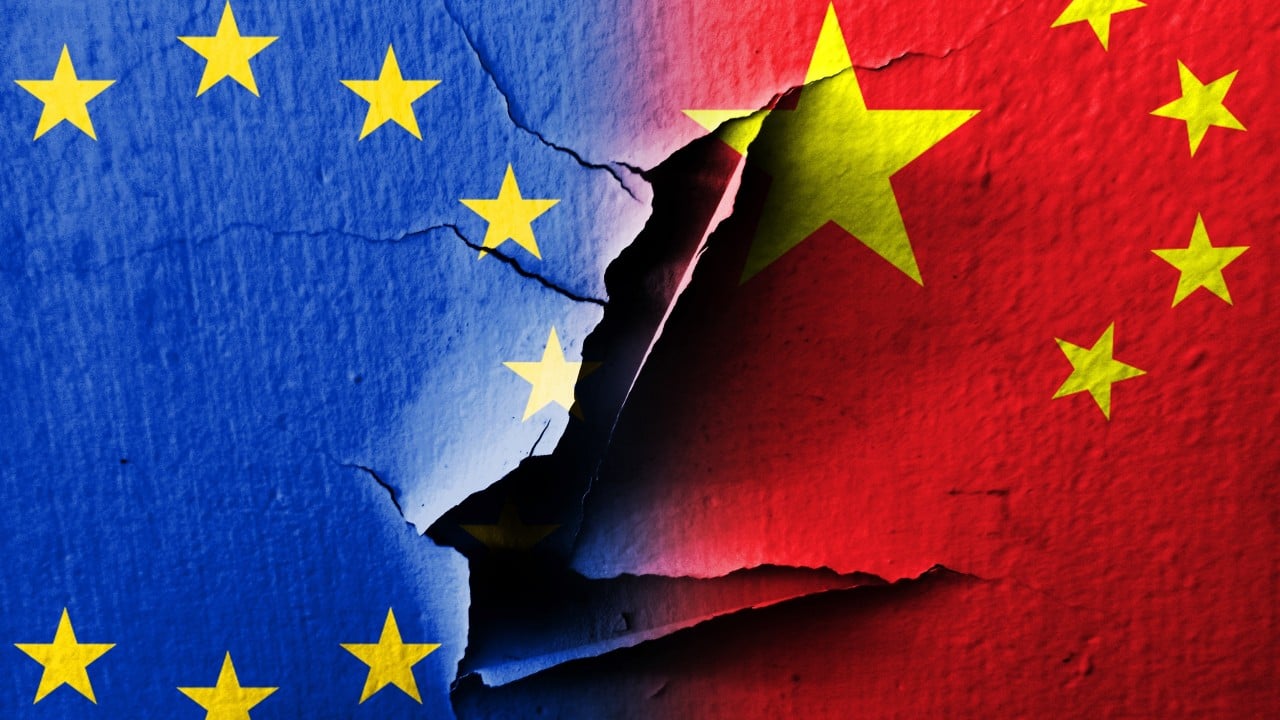
For months, the European Union had a grand design. It was called the European Industrial Strategy, a massive, multi-billion-euro shield intended to protect the continent's most precious intellectual cargo from the encroaching influence of Beijing. The plan was simple: if it is small, fast, or thinks for itself, we keep it close. We fund it. We lock the doors.
Then, the doors blew open.
The latest draft of this industrial roadmap has arrived, and it is missing its most vital organs. Gone are the explicit, hardline protections for Artificial Intelligence. Scrapped are the aggressive mandates for domestic microchips. Deleted are the frantic safeguards for quantum computing. The very technologies that define the next century have been quietly excised from the priority list of the EU’s "offensive" industrial defense.
Brussels didn't just blink. It walked away from the table.
The Engineer in the Eindhoven Rain
To understand why this matters, you have to look past the bureaucratic jargon and find someone like "Lukas." Lukas is a hypothetical composite of the engineers I’ve interviewed over the last decade—the kind of person who spends twelve hours a day staring at extreme ultraviolet lithography machines in Eindhoven. These machines are the only reason your smartphone functions. They are the size of a city bus, cost $200 million, and use lasers to etch patterns onto silicon that are thinner than a strand of human DNA.
Lukas doesn't care about geopolitics. He cares about the "yield." He cares about the fact that the lenses in his machine are so smooth that if you expanded them to the size of the Earth, the highest bump would be less than a millimeter tall.
When the EU announced its plan to counter China, Lukas felt a flicker of hope. It meant his work wouldn't be auctioned off to the highest bidder in a desperate bid for quarterly survival. It meant Europe was finally going to treat silicon like gold.
But the new reality is different. By stripping AI and chips from the industrial plan, the EU is essentially telling Lukas and his peers that they are on their own. The "security" of these technologies is being handed back to the whims of the open market. And in the open market, China has a very long memory and very deep pockets.
The Weight of a Ghost
Quantum computing feels like magic, which is why it is so easy for politicians to ignore it when the budget gets tight. It is the study of the "ghostly"—the ability of a particle to be in two places at once. If we master it, we can crack every password on the planet in seconds. We can simulate new life-saving drugs in an afternoon.
The original EU plan recognized this. It treated quantum as a sovereign necessity. But the revised document treats it as a luxury.
Imagine you are a startup founder in Berlin working on quantum encryption. You need ten years of "patient" capital. You need a government that says, "We will not let you fail because your failure is a national security risk." Instead, the EU just signaled that you are just another business. You are a line item.
The stakes are invisible until they are absolute. We don't notice the loss of technological sovereignty when it happens. It doesn't arrive with a bang or a parade. It arrives as a slow, creeping realization that the software running your power grid was written elsewhere, and the chips controlling your hospitals are no longer yours to audit.
The Friction of Reality
Why the retreat? The answer isn't a lack of ambition. It’s a surplus of fear.
The European Union is a sprawling, beautiful, tangled mess of twenty-seven voices. To pass a massive industrial plan that targets China, you need everyone to agree. But Germany needs to sell cars. France wants to protect its luxury exports. The smaller nations are terrified of a trade war that would crush their fragile recovery.
The "cold facts" of the matter are that Europe is currently caught in a pincer movement. On one side is the United States, with its Inflation Reduction Act pouring hundreds of billions into green tech and chips. On the other is China, which has spent twenty years subsidizing its way to the top of the supply chain.
Europe tried to find a third way. It tried to legislate its way into a superpower.
But the laws of physics and the laws of economics are stubborn. You cannot build a "European Silicon Valley" by removing the very things that make the valley grow. By stripping AI and quantum from the plan, the EU is effectively admitting that it cannot afford the war it wanted to start.
The Human Cost of the Pivot
When we talk about "industrial plans," we tend to think of factories and smoke. We should be thinking about the kids in high school right now who are deciding whether to study computer science in Paris or move to Palo Alto.
If the EU won't protect its industrial future, why should they stay?
Every time a major policy shift like this happens, there is a "brain drain" that no spreadsheet can fully capture. It is the quiet departure of the best and brightest. It is the PhD student who realizes their research on neural networks will never find a home in a Europe that is too afraid to pick a side.
The EU argues that by streamlining the plan, they are making it more "realistic." They claim that by focusing on a narrower set of technologies—like wind turbines and heat pumps—they can actually achieve something tangible. They are choosing the "known" over the "frontier."
It is a safe bet. It is also a heartbreaking one.
The frontier is where the future is written. If you aren't at the table where AI is being governed and quantum is being built, you aren't a player. You are a customer. And customers don't make the rules.
The Unspoken Truth
There is a specific kind of silence that follows a broken promise.
For the last two years, European leaders have stood on stages and talked about "Strategic Autonomy." They used the phrase like a mantra. It was supposed to be the end of the era where Europe was a playground for global powers.
This new, thinned-out industrial plan is the sound of that dream being scaled back. It is a confession. The EU is realizing that it might be too late to catch up in the chip race, and too expensive to lead in the AI race.
So, they are retreating to the hills. They are focusing on the "old" green tech where they still have a lead. They are hoping that if they don't provoke China too directly, the storm will pass them by.
But storms don't work that way. They don't ignore the house that refuses to build a roof.
The Final Calculation
We are living through a period of history where the "human element" is being digitized at an alarming rate. Our thoughts, our health, our secrets—they are all becoming data. The machines that process that data are the new cathedrals. They are the centers of power.
By stepping back from the industrial protection of AI and quantum, Europe isn't just making a trade decision. It is making a cultural one. It is deciding that it is okay to live in a world where the most important tools of the human mind are built and owned by someone else.
The charcoal-suited bureaucrats in Brussels will tell you this is a tactical adjustment. They will point to "regulatory frameworks" and "multilateral agreements." They will use words that are designed to make you stop asking questions.
But Lukas in Eindhoven knows the truth. He can feel it in the way the funding cycles are shifting. He can see it in the eyes of the recruiters from Shenzhen and San Jose who are calling his team every single week.
The fortress wasn't just missing walls. It was missing the will to build them.
Somewhere in a lab in Beijing, a researcher is reading the same news we are. They aren't looking at the "cold facts" of the EU’s retreat. They are looking at an opportunity. They are seeing a continent that decided the future was just too expensive to keep.
The ghost is out of the machine, and it’s moving East.