The needle on the dashboard of an aging diesel Skoda doesn’t just measure volume. In a small town outside Mullingar, or along the rain-slicked curves of the N22, that needle measures something much more volatile: breathing room.
For months, the ritual of the forecourt has felt like a slow-motion heist. You pull up, the numbers on the digital display spinning with a frantic, blurring speed that never seems to match the sluggish pace of a monthly paycheck. You click the nozzle, and you feel the weight of it. Not the weight of the fuel, but the weight of the choices being made in real-time. Do I fill it to the click, or do I stop at forty Euro and hope the prices dip by Tuesday?
That pressure is finally beginning to ease.
It isn’t a landslide. It isn’t a sudden return to the vanished days of cheap transit. But the government’s decision to slash excise duty—cutting 20 cent per litre of petrol and 15 cent for diesel—has started to manifest as a visible, if fragile, reprieve at the pumps. For the first time in what feels like an age, the numbers are retreating.
The Mathematics of a Hot Meal
To understand why a few cents at the pump matters, you have to look past the macro-economics and into the kitchen of a woman we’ll call Siobhan. Siobhan isn't a statistic, but she represents the demographic reality of rural Ireland. She drives forty minutes each way for a job that pays well enough to survive, but not well enough to ignore the global oil market.
When fuel hit two Euro a litre, Siobhan’s commute became a predatory expense. It started eating her "buffer" money. Then it started eating the grocery budget. The logic is brutal and binary: if the tank is empty, the job is gone. Therefore, the tank must be full, even if the fridge is not.
The excise duty cut is the state’s way of stepping between Siobhan and that predatory cost. By reducing the tax the government takes on every litre, they have effectively handed back a small portion of the weekly shop to every household in the country. It is a rare moment where the gears of the state grind in favor of the individual's immediate pocketbook.
Why the Price Tags Moved
The mechanics of this shift aren't purely down to Irish policy. We are, after all, a small island tethered to a global tide of Brent Crude and international volatility. But the excise cut serves as a shock absorber.
Excise duty is a flat tax. Unlike VAT, which is a percentage that grows as the price grows, excise is a fixed amount per litre. By lowering that fixed barrier, the government has created a floor that sits significantly lower than it did last month.
Critics will argue—and they aren't entirely wrong—that these cuts are a temporary bandage on a structural wound. They point to the need for a "green transition" and the irony of subsidizing fossil fuels during a climate crisis. But those arguments often ring hollow to someone sitting in a cold car in County Mayo, wondering if they can afford the trip to the GP.
The reality is that Ireland’s infrastructure is currently a hostage to the internal combustion engine. You cannot ask a population to jump to electric vehicles when the second-hand market is priced for the elite and the charging network is a patchwork of hope and frustration. The excise cut is an admission of this reality. It is a gesture of empathy from a bureaucracy that usually speaks only in percentages.
The Invisible Stakes
There is a psychological component to these falling prices that the "Standard Dry Article" always misses. It is the "Forecourt Flinch."
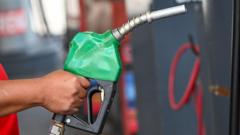
For the last year, drivers have approached the pump with a physical tensity. You see it in the way people grip the pump handle. You see it in the way they look at the price board before they even turn into the station. It is a form of low-level, chronic stress. When that price drops by 15 or 20 cents, the flinch lessens.
Suddenly, the drive to see a parent in a nursing home three towns over doesn't feel like a luxury. The weekend trip to the coast with the kids doesn't require a spreadsheet. This is the invisible stake: the social fabric of a country that relies on movement. When movement becomes too expensive, the world shrinks. People stay home. Isolation grows. Local shops lose the "passing trade" that keeps their lights on.
By lowering the cost of the journey, the government is essentially subsidizing the social connectivity of the nation.
The Volatility Trap
We must be honest about the fragility of this moment. Just because the prices are falling now does not mean the dragon has been slain.
The global energy market is a nervous creature. A flare-up in geopolitical tensions, a decision by a cartel halfway across the world, or a sudden shift in shipping lanes can wipe out an excise cut in a single afternoon. We are currently enjoying a lull, a synchronization of government intervention and a slight softening in international wholesale costs.
It is a reminder that our "normal" is incredibly precarious.
However, for the worker who just saw "1.75" instead of "1.98" on the big plastic sign on the Dublin Road, the global macro-trend is secondary to the immediate relief. That 23-cent difference, spread across a 50-litre tank, is over ten Euro.
Ten Euro is a gallon of milk, a loaf of bread, and a pack of ham. It is the difference between a child having a treat in their lunchbox or not. It is the price of dignity.
The Road Ahead
As the excise cuts settle in, we will likely see a period of intense competition between retailers. Now that the "ceiling" has been lowered, stations will fight for the "floor." You’ll see the "Price Watch" signs return. You’ll see people driving an extra three miles to save an additional two cents.
This is the return of a certain kind of agency. For a year, we were victims of the price. Now, we are shoppers again.
But don't mistake this for a permanent solution. The conversation about how we move around this island—and what it costs us, both financially and environmentally—is only getting started. The excise cut is a reprieve, not a cure. It buys the government time, and it buys the citizen peace of mind.
Tonight, somewhere in the midlands, a man will fill his car. He will watch the pump stop at a number that doesn't make his stomach sink. He will walk into the shop, pay his bill, and maybe, just maybe, he will pick up a bar of chocolate for his daughter on the way out.
The needle has moved. For now, there is enough in the tank to keep going.
The road is still long, but the air inside the car feels just a little bit lighter.