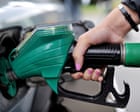
The air inside a petrol station forecourt at 5:30 PM carries a specific, metallic weight. It is the scent of deadline and exhaustion. For most people, the clicking of the fuel nozzle is merely the sound of a chore being completed, a necessary tax on their time and mobility. But for the person standing behind the reinforced glass of the till, that sound is a countdown.
Consider Sarah. She is twenty-four, working the late shift in a suburban station outside Manchester. She is not a policy maker. She does not set global Brent crude prices. She has no influence over the profit margins of multinational energy giants. Yet, when the numbers on the pump display climb higher than the previous week, Sarah is the one who bears the brunt of the national mood.
The British Petrol Retailers Association (PRA) recently sounded an alarm that has been ringing in Sarah’s ears for months. They pointed a finger directly at Westminster, claiming that "inflammatory language" from ministers has turned local garages into front lines. It is a classic case of political buck-passing that has tangible, physical consequences for the people who keep the country moving.
When a minister stands at a podium and suggests that retailers are "feathering their nests" or "failing to pass on savings," they aren't just engaging in a bit of populist theater. They are painting a target on the back of every cashier in the country.
The Math of a Misunderstanding
The disconnect between public perception and the ledger of a local petrol station is vast. Most consumers see the soaring price on the big digital monolith by the road and assume the owner is swimming in extra cash. The reality is far leaner.
After fuel duty, VAT, and the actual cost of the product, the margin for the retailer is often as thin as a few pence per liter. Sometimes, they lose money just to keep the lights on and the shop stocked with milk and bread.
Imagine a small business owner named David. He owns two stations. His electricity bills to keep the pumps running and the refrigerators cold have tripled. His insurance premiums have spiked because of the very unrest the PRA is reporting. When a politician suggests he is profiteering, they ignore the fact that his overheads are eating his business alive.
The rhetoric creates a narrative of "us versus them." The driver, already squeezed by a cost-of-living crisis that feels like a slow-motion car crash, arrives at the pump already angry. They have been told by the evening news that the reason their bank account is empty is the greed of the person behind the counter.
The explosion is inevitable.
Words as Weapons
It starts with a mutter. A customer swipes a card, looks at the total, and hurls a sarcastic comment about "buying a yacht" with the proceeds. Then it escalates. The PRA reports that staff are being subjected to verbal abuse, threats of violence, and in some cases, actual physical assault.
The psychology of a petrol station is unique. It is one of the few places where we pay for something after we have consumed it. You fill the tank, the value is already inside your vehicle, and then you must walk inside to face the bill. That moment of payment is a moment of vulnerability for the driver and a moment of extreme risk for the clerk.
When the government uses "inflammatory language," they are giving the customer permission to vent. They are providing a moral justification for bad behavior. If the person behind the counter is a "profiteer," then screaming at them isn't just a tantrum—it’s a form of protest.
But Sarah isn't a CEO. She is a neighbor. She is trying to save for a deposit on a flat. She is working a job that requires her to handle hazardous materials, manage complex logistics, and now, apparently, act as a human shield for government policy failures.
The Invisible Stakes of the Forecourt
The damage isn't just measured in bruises or broken glass. It’s measured in the slow erosion of a workforce. Retailers are finding it harder to recruit. Why would anyone take a job that pays near the minimum wage if it comes with a side of daily trauma?
If the staff leave, the stations close. If the stations close, the "fuel deserts" that already plague rural parts of the UK will expand. This isn't just about hurt feelings; it is about the structural integrity of the nation's infrastructure.
The PRA isn't asking for a handout. They are asking for a ceasefire. They are asking for the people in power to recognize that their words don't stay in the halls of Parliament. They travel. They filter down through the radio speakers in the cars of frustrated commuters. They land, eventually, on the forecourt.
There is a profound irony in a government accusing small businesses of greed while the state itself takes the lion's share of every liter sold through taxation. The "windfall" is often flowing into the Treasury, not the local station’s bank account. Yet, you don't see ministers standing behind the till at 11:00 PM on a Friday night, explaining the intricacies of fuel duty to a man who can’t afford to drive to work on Monday.
Beyond the Toughened Glass
We have become a society that communicates in headlines and soundbites, forgetting that there is a person on the receiving end of our rhetoric. The "retailer" is not a monolith. It is a collection of individuals, many of whom are just as worried about the price of heating their homes as the people they serve.
Consider the silence after a particularly nasty exchange. The customer drives away, heart racing, feeling they’ve "told them off." Inside, Sarah has to take a breath, wipe down the counter, and smile for the next person in line. She has to carry that adrenaline and that fear for the rest of her eight-hour shift.
The "inflammatory language" of politics is a cheap tool. It wins a news cycle. It deflects blame. But it leaves a residue that is harder to wash away than an oil spill.
When we talk about the economy, we often talk in percentages and growth targets. We talk about "retail sectors" and "consumer confidence." We rarely talk about the person whose hands shake while they process a payment because the last customer threatened to wait for them in the parking lot.
The true cost of fuel isn't just the price per liter. It’s the toll taken on the people who serve it. It’s the fear that has become a standard part of the job description.
Next time you stand at the pump, watch the numbers climb. Feel the frustration. It’s real, and it’s justified. But when you walk inside to pay, look at the eyes of the person behind the glass. They didn't write the speech. They didn't set the price. They are just trying to get through the shift without becoming a headline.
The glass barrier at the till is meant to protect the cashier from a robbery, but these days, it’s mostly there to protect them from the words we were told were okay to say.
Sarah locks the door at the end of her shift. She walks to her own car, checks the backseat, and drives home in the dark. She passes three other stations on her way. Each one is a small island of fluorescent light in the shadows, and in each one, someone is standing behind a counter, waiting for the next person to open the door and decide who they want to be today.
The light of the station fades in her rearview mirror, a small, glowing testament to a system that is running on empty.
Would you like me to look into the specific statistics regarding the rise of retail violence in the UK over the last twelve months?