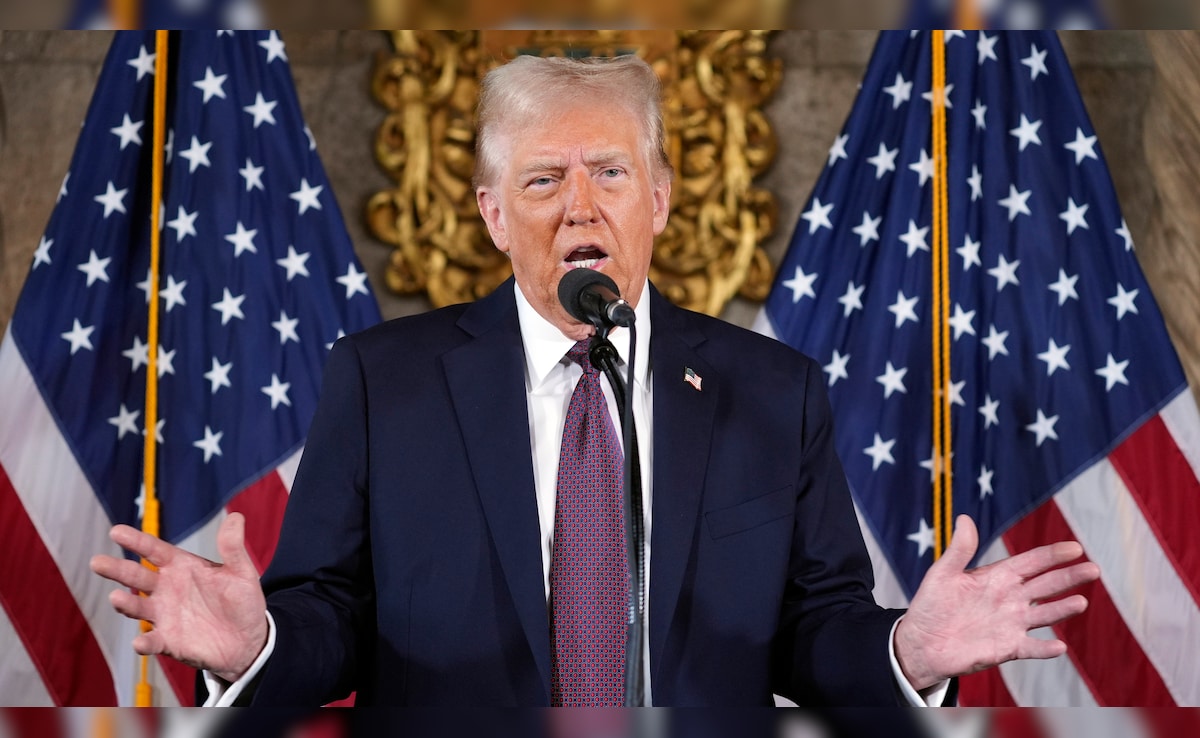
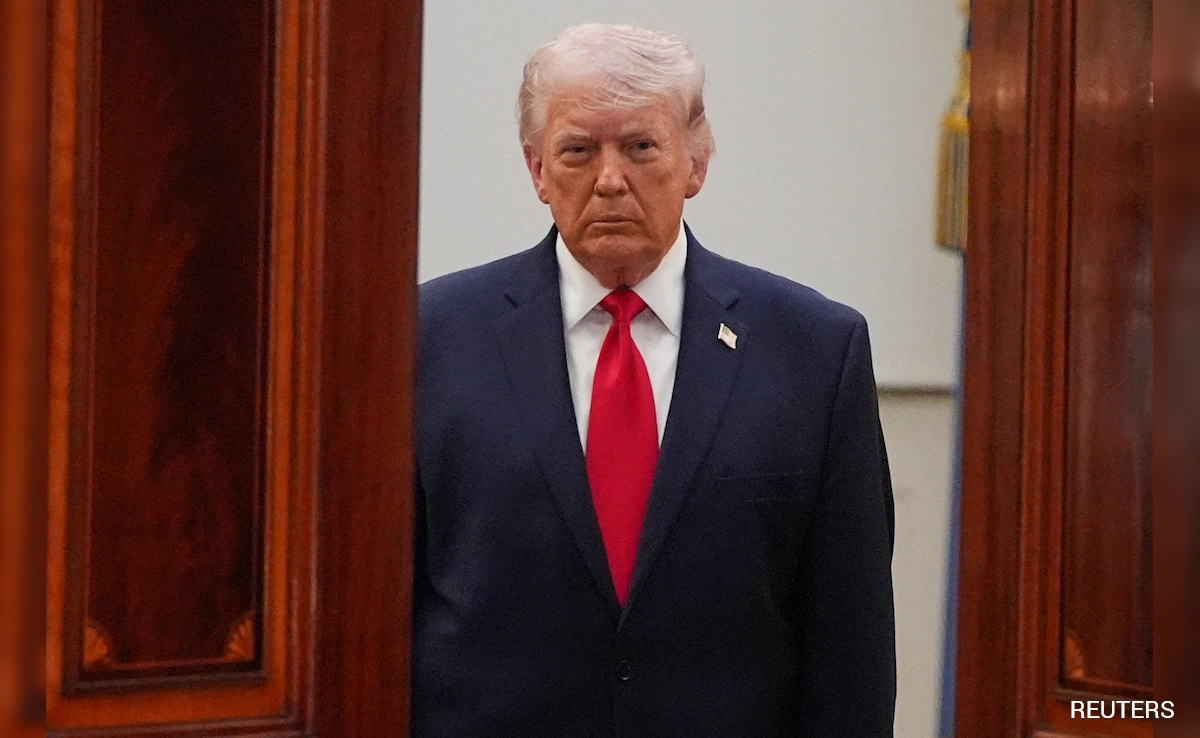
The air in the room changes when a man with a microphone decides to play with fire. It isn't just about the words. It is about the silence that follows a punchline, that heavy, expectant pause where a crowd decides whether to gasp or to howl. Politics has always been a theater of the absurd, but there is a specific, jagged edge to the way Donald Trump approaches the stage. He doesn't just address policies; he deconstructs people. He turns the high-stakes diplomacy of the world stage into a backyard brawl, and his latest target, Emmanuel Macron, found himself caught in the crosshairs of a very personal kind of theater.
Imagine the setting. Mar-a-Lago, perhaps, or a sun-drenched rally in the heart of America. The lights are blinding. The energy is a physical weight. Trump leans into the podium, not as a statesman reading a script, but as a storyteller who knows exactly where the bruises are. He begins to talk about the French President. But he isn't talking about trade deficits or NATO commitments. He is talking about a man’s pride. He is talking about a marriage.
The Weaponization of the Personal
There is a particular cruelty in mocking a man’s recovery. Trump’s rhetoric suggested that Macron was "still recovering" from their interactions, as if diplomacy were a physical sport that had left the younger man limping. It’s a classic power play. By framing Macron as fragile, Trump positions himself as the immovable object.
But the jab didn't stop at the office of the presidency. It pierced the veil of the private. Trump’s commentary on Brigitte Macron—suggesting she treats her husband "badly"—wasn't a slip of the tongue. It was a calculated strike at the foundation of a man’s public image. In the world of high-stakes ego, your partner is often seen as your greatest ally or your most visible vulnerability. Trump, a man who has lived his entire life under the neon glare of tabloid scrutiny, knows this better than anyone. He knows that to undermine a man’s standing at home is to undermine his standing in the world.
The crowd eats it up. Why? Because it makes the inaccessible accessible. Most people don't understand the nuances of the European Union’s agricultural subsidies. They don't spend their nights worrying about the intricacies of the Paris Agreement. But everyone understands a nagging spouse. Everyone understands the feeling of being "bossed around" by a partner. By dragging Brigitte Macron into the narrative, Trump stripped away the suit and the sash, leaving only a caricature of a man who couldn't even control his own household, let alone a nation.
The Invisible Stakes of the Roast
Diplomacy is usually built on a foundation of "face." You give a little, you take a little, but you always leave the other person with their dignity intact. That is the grease that keeps the wheels of international relations turning. When you remove dignity from the equation, the wheels don't just slow down; they grind and spark.
When Trump mocks Macron, he isn't just entertaining a crowd. He is signaling to every other world leader that the old rules are dead. He is saying that nothing is sacred, not even the sanctity of a marriage or the respect due to a head of state. This creates a ripple effect that extends far beyond a single soundbite.
Consider the hypothetical diplomat sitting in a windowless room in Brussels. Their job is to bridge the gap between American interests and European sensitivities. Suddenly, their task becomes infinitely harder. How do you negotiate a trade deal with a man who just called your boss "weak" and mocked his wife in front of thousands of people? You can’t. The professional becomes personal, and the personal becomes a barrier that no amount of policy white papers can overcome.
The Psychology of the Bully and the Beau
There is a fascinating contrast between the two men. Macron, the intellectual, the philosopher-king of the Elysee, who speaks in long, winding sentences about the future of European sovereignty. Trump, the builder, the brand, the man who speaks in short, punchy bursts of populist energy. It is a clash of civilizations played out in the form of two human beings.
Trump’s mockery relies on a very specific type of American machismo. It is the language of the locker room, the golf course, and the boardroom of the 1980s. In this world, there are winners and there are losers. There are those who "take charge" and those who are "treated badly." By casting Macron in the latter category, Trump is effectively trying to evict him from the club of "strong" leaders.
Macron’s response—or lack thereof—is equally telling. To respond is to validate the insult. To stay silent is to risk looking like the victim Trump claims he is. It is a trap. A perfectly executed, rhetorical snare. Macron is forced to play a game where the rules are written in a language he refuses to speak, yet he is judged by the outcome nonetheless.
The Human Cost of the Soundbite
We often forget that behind the headlines are actual people. We see the photos of Macron and Trump awkwardly clasping hands, the famous "white-knuckle" handshake that became a viral sensation. We see the forced smiles at state dinners. But we don't see the quiet conversations between a husband and a wife when the cameras are off.
Imagine being Brigitte Macron. You are a woman who has navigated the treacherous waters of French public life, a former teacher who became a First Lady under a storm of controversy. You have stood by your husband through riots, through falling approval ratings, and through the grueling grind of the presidency. And then, a man across the ocean—a man who holds the most powerful office in the world—uses you as a punchline to get a cheap laugh from a crowd in a different time zone.
It is easy to dismiss this as "just politics." But it isn't. It is the erosion of the basic empathy that allows society to function. When we stop seeing leaders as people and start seeing them as avatars for our own frustrations, we lose something vital. We lose the ability to see the human element.
The Mirror of the Audience
The most uncomfortable truth about these moments is what they say about us. Trump doesn't make these comments in a vacuum. He makes them because they work. They resonate. They tap into a deep-seated resentment toward the "elite," toward the polished, the intellectual, and the foreign.
When Trump mocks Macron’s "recovery," he is speaking to the person who feels like they’ve been looked down upon by people like Macron. He is giving them a voice. He is saying, "See? These people aren't better than you. They’re just as messy, just as weak, and just as henpecked as anyone else." It is an intoxicating message. It levels the playing field by dragging everyone down into the mud.
But mud is a difficult place to build a future.
The spectacle of the mock-fest is a distraction from the cold, hard facts of the world. While we are busy laughing at a joke about a French President’s marriage, the tectonic plates of geopolitics are shifting. Alliances are fraying. The very idea of the "West" is being questioned.
The Lingering Echo
The words eventually fade, but the feeling remains. The next time Macron and Trump meet—if they meet—there will be a ghost in the room. It will be the ghost of that mockery, the memory of that laughter. It will sit at the table between them, making every handshake a little more forced, every agreement a little more fragile.
Power isn't just about who has the biggest military or the strongest economy. It’s about who controls the narrative. For one night, on a stage under the lights, Trump took control of Macron’s story. He turned a world leader into a character in a soap opera, a man "still recovering" from the weight of his own life.
Whether Macron can rewrite that story remains to be seen. But the damage of a well-placed whisper is often more permanent than the damage of a loud shout. It lingers in the mind, a persistent itch that reminds us that in the theater of power, the cruelest lines are often the ones that hit closest to home.
The microphone is eventually turned off. The crowd goes home. The lights go dark. But somewhere, a president sits in a quiet room, wondering if the world is laughing with him or at him, and realization begins to dawn that in the game of global egos, no one ever truly recovers.