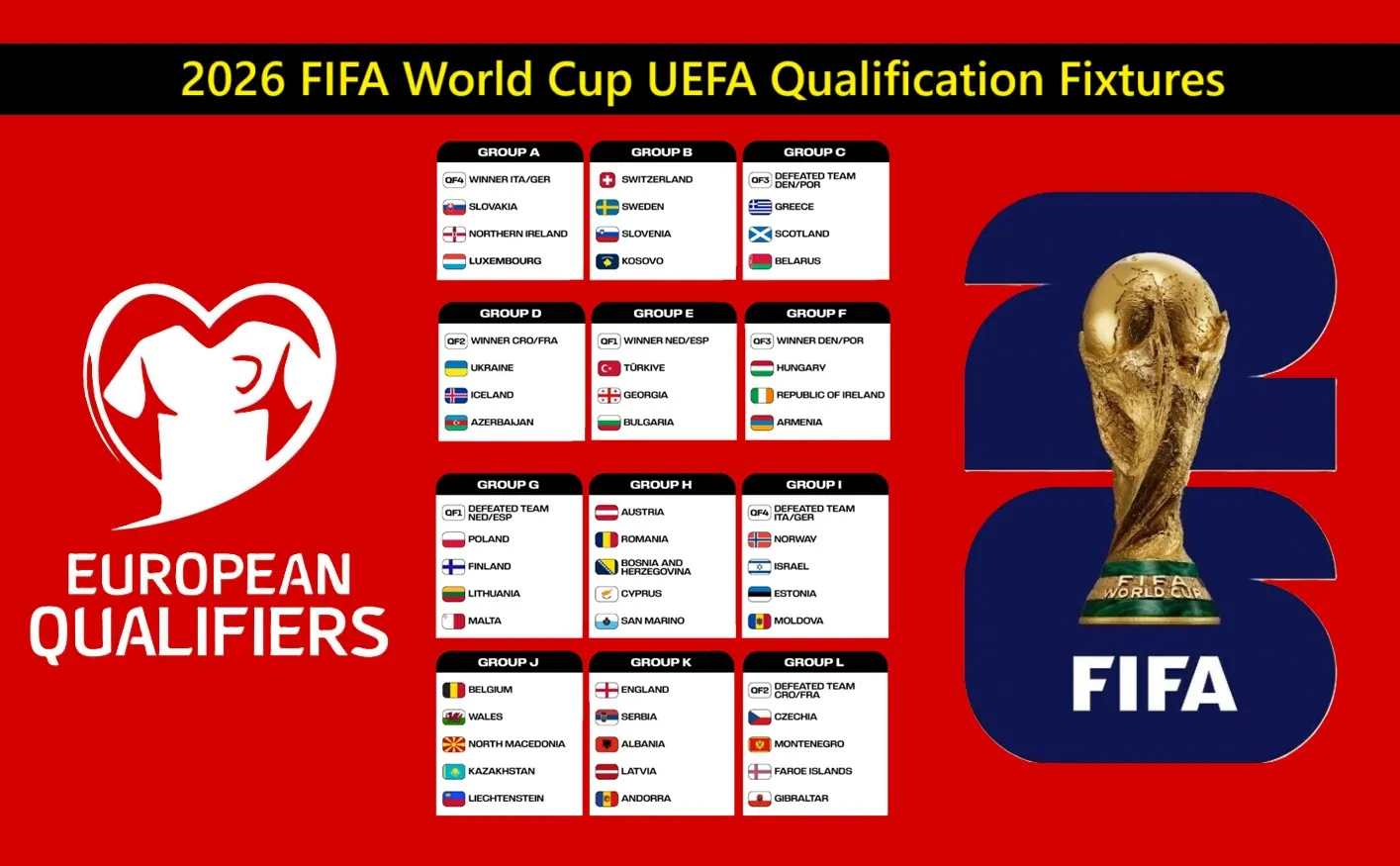
The sun in Mexico City doesn't just shine; it vibrates. It bounces off the volcanic stone of the Estadio Azteca, a cathedral of concrete that has seen Pelé and Maradona hoisted onto shoulders like gods. In this place, football is not a game. It is a secular religion, a collective heartbeat, and for a few weeks in 2026, it is supposed to be a sanctuary.
But outside the stadium gates, the air carries a different weight.
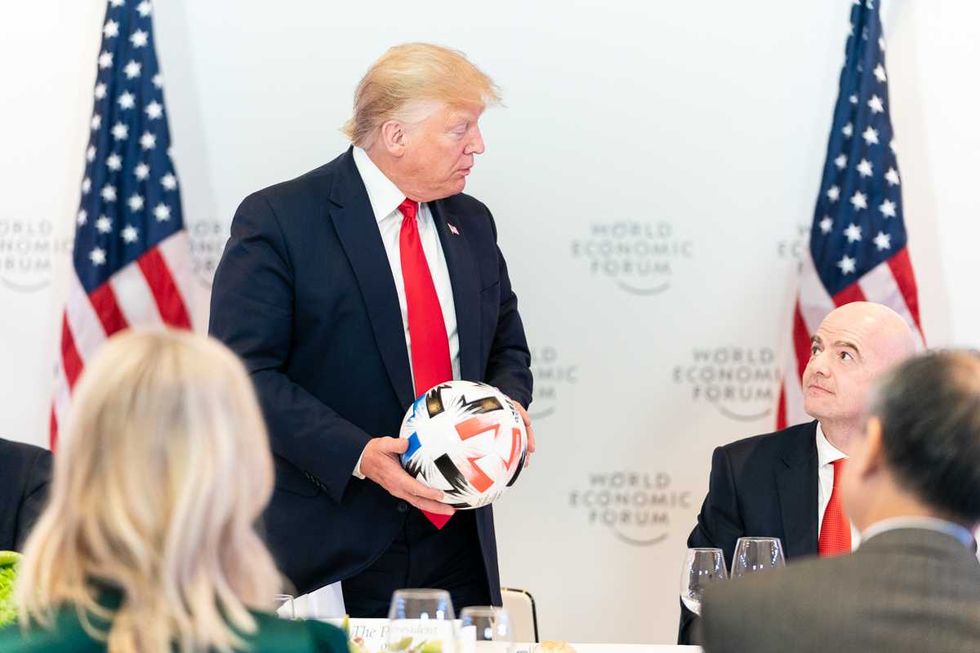
Gianni Infantino, the man who holds the keys to FIFA’s kingdom, recently stood before a microphone and spoke of "complete confidence." He looked at the blueprints for the upcoming World Cup and saw a celebration. He spoke of security, of cooperation, and of the transformative power of the tournament. He smiled the smile of a man who deals in billions, dismissing the whispered concerns about cartel violence as if they were nothing more than a light drizzle on a match day.
Confidence is a luxury. For the people who live along the arterial roads of Michoacán or the sun-baked streets of Sinaloa, confidence is a much more expensive currency.
The Two Mexicos
Consider a hypothetical fan named Mateo. He lives in a small suburb of Monterrey, one of the host cities. Mateo has saved his pesos for three years to buy a ticket to see a group stage match. To him, the World Cup is a bridge to the rest of the world. It’s a moment where his country is defined by a beautiful cross-field pass rather than a headline about a "clash" on a rural highway.
Mateo represents the soul of the tournament. He is the human element Infantino bankrolls. But Mateo also knows that the road to the stadium isn't always paved with FIFA’s good intentions. He knows that "security" in Mexico is a complex, shifting mosaic. It is a delicate dance between federal forces, local police, and the invisible entities that claim various territories.
When Infantino speaks of confidence, he is speaking from a VIP box. He is protected by layers of private security, diplomatic immunity, and the sheer inertia of a multi-billion-dollar organization. He sees the "Big Picture." The problem is that people like Mateo live in the pixels.
The disconnect between the boardroom and the boulevard is where the real story of the 2026 World Cup lives. FIFA’s assurance is based on the logic of the event: the government will surge troops, the tourist corridors will be sterilized, and the cameras will be pointed firmly at the pitch. It has worked before. It worked in South Africa, and it worked in Brazil. But Mexico is a different beast. The violence here isn't a temporary flare-up; it is a structural reality of the last two decades.
The Invisible Stakes
Why does it matter if a football executive is overly optimistic?
It matters because the World Cup acts as a giant magnifying glass. When the light hits it just right, it can start a fire. The stakes aren't just about whether a bus of tourists gets stopped on a highway—though that is the nightmare scenario. The stakes are about the "normalization" of the crisis.
If FIFA ignores the reality of the security situation to protect the brand, they aren't just hosting a tournament; they are providing a coat of paint for a crumbling wall. There is a tension here that no amount of marketing can resolve. On one hand, the Mexican people deserve this joy. They are among the most passionate fans on Earth. Depriving them of the World Cup because of the actions of criminals would be a secondary injustice.
On the other hand, the "complete confidence" expressed by leadership feels like a dismissal of the thousands of families who have lost someone to the very violence FIFA claims is under control.
History shows us that sporting mega-events often create a "state of exception." Laws are bypassed, "undesirable" populations are moved, and a temporary utopia is constructed. In Mexico, this will likely mean a massive military presence in the host cities. The stadiums will be fortresses. But a World Cup is not a stadium; it is a country. It is the train ride, the street food stall, the late-night walk back to an Airbnb.
The security plan for 2026 relies on a $P = S + V$ logic, where $P$ is the perceived safety, $S$ is the visible strength of the police, and $V$ is the temporary vacuum of criminal activity bought or negotiated for the duration of the event. It is a fragile equation.
The Ghost at the Feast
The cartel presence in Mexico is often misunderstood as a "side" in a war. In reality, it is a shadow economy. It is woven into the fabric of certain regions. For Infantino to say he has "complete confidence" suggests that the cartels will simply take a vacation because FIFA is in town.
Perhaps they will. There is a pragmatic side to organized crime; drawing the focused ire of the world’s superpowers by harming international tourists is bad for business. But that quiet is a chilling kind of peace. It is a peace dictated by the very forces the government is supposed to be fighting.
Imagine a family from Rotterdam or Tokyo landing in Mexico City. They have been told it is safe. They see the colorful banners and hear the music. They feel the electricity of the crowd. They are insulated. But three miles away, behind a line of federales, the reality of the drug war continues unabated. The World Cup becomes a brightly lit stage in a dark room.
The tragedy is that the sport itself is the perfect victim. Football is built on the idea of fair play, of rules that everyone agrees to follow. Violence is the ultimate rule-breaker. When the two meet, the sport usually loses its luster. We saw this in the lead-up to the 1978 World Cup in Argentina, where the cheers in the stadium could almost be heard in the detention centers where dissidents were being tortured.
Mexico is not 1978 Argentina, but the moral quandary is similar. How much "reality" are we willing to ignore for the sake of a goal in the 90th minute?
The Weight of the Armband
The players themselves are rarely asked about this. They are told to focus on their fitness and their tactics. But they aren't blind. Many of the Mexican national team players have seen the impact of the violence on their own communities. They carry the weight of being the ambassadors for a country that is constantly trying to redefine itself.
When a captain walks out onto the pitch, they aren't just representing a federation. They are representing the kid in Guerrero who uses a crumpled soda bottle as a ball. They are representing the mother who can't find her son but still wears a green jersey because it’s the only thing that feels like home.
Infantino’s confidence is a corporate necessity. If he expressed doubt, the sponsors would tremble. The stock prices of the partners would dip. The logistics would become a nightmare of insurance premiums and risk assessments. So, he must be confident. He must project an image of a world where the only thing that matters is the 120-by-80-yard rectangle of grass.
But the grass is thirsty. In Mexico, it is often thirsty for more than just water.
The Architecture of the Event
Hosting a World Cup in the modern era is an exercise in terraforming. You aren't just playing games; you are rewriting the geography of a city. New roads are built. Old neighborhoods are "revitalized." In Mexico City, Monterrey, and Guadalajara, this process is already underway.
The logistical challenge is staggering. 48 teams. Hundreds of thousands of fans. A billion eyes. The pressure on the Mexican government to perform is immense. This is their chance to show the world that they are a "modern, functional state."
But the "functional" part is what keeps the analysts up at night. The Mexican police force is a fractured entity. You have the municipal police, the state police, the federal forces, and the National Guard. Coordination is famously difficult, hampered by corruption and varying levels of training.
FIFA’s confidence is essentially a bet. They are betting that the Mexican government can maintain a "Green Zone" around the tournament for thirty days. They are betting that the prestige of the event acts as a shield.
It is a bet placed with other people's lives.
The Human Cost of Silence
If we peel back the layers of the official statements, we find a void. There is no mention of the 30,000-plus homicides a year. There is no mention of the "disappeared." There is only the "experience."
This is the hidden cost of the World Cup. It’s not just the billions spent on stadiums. It’s the silence required to make the event work. To have a "successful" World Cup in Mexico, everyone has to agree to look at the ball and nothing else.
But what happens when the ball stops rolling? When the confetti is swept up and the fans fly home, the "Green Zone" will evaporate. The federales will return to their barracks or their usual patrols. The international cameras will find a new story. And the people of Mexico will be left with the same shadows they had before, perhaps slightly lengthened by the debt incurred to host the party.
We need to stop asking if the World Cup will be safe for the fans. Of course it will be—mostly. The sheer force of will behind a FIFA event ensures a high level of protection for the paying customer. The better question is: what is the moral price of that safety?
The Final Whistle
There is a moment in every match, just before the opening whistle, when the stadium goes quiet. In that heartbeat, anything is possible. The violence outside doesn't exist. The corruption of the officials is forgotten. The poverty of the surrounding neighborhood is invisible. There is only the pitch, the players, and the hope of a nation.
That silence is beautiful, but it is also a lie.
Infantino’s "complete confidence" is an attempt to make that silence last for an entire month. He wants us to live in that heartbeat, suspended away from the gravity of the real world. He wants a World Cup that is a product, polished and gleaming, free from the grit of the Mexican reality.
But Mexico is not a product. It is a living, breathing, bleeding country that deserves more than a sanitized version of itself. It deserves a World Cup that acknowledges its struggles while celebrating its spirit. It deserves a leadership that doesn't just look at the VIP boxes, but looks at the streets.
The ball will be kicked. The goals will be scored. The world will watch. But as the roar of the crowd rises from the Azteca, it will struggle to drown out the quiet, persistent pulse of a country still waiting for the safety its leaders so casually promise to strangers.
The shadow is there, on the grass, moving with the sun. You can ignore it if you want. You can pretend it’s just a cloud passing over the stadium. But the people in the stands know the difference. They know that the most important game isn't happening on the field.
It’s happening in the streets they have to walk to get home.
Would you like me to analyze the historical safety records of previous World Cup host nations to see how they compared to Mexico's current trajectory?