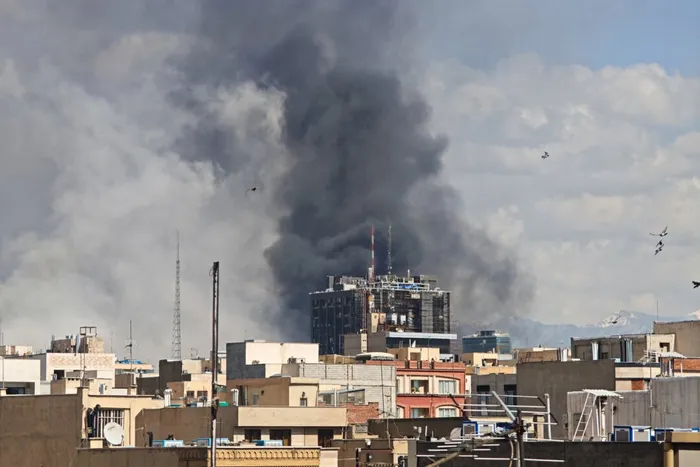
The sea has a way of hiding its sins, but it cannot hide the smell. Even years later, when the monsoon winds kick up along the coast of Sarakkuwa, the air carries a faint, chemical ghost of what happened in May 2021. It was the month the horizon turned black. It was the month the X-Press Pearl—a brand-new, Singapore-registered container ship—decided to die in Sri Lankan waters, spilling a toxic cocktail of nitric acid, lead, copper, and billions of plastic nurdles into the Indian Ocean.
Now, the Iranian government is asking questions that no one seems ready to answer.
Diplomacy is often portrayed as a series of handshakes in gilded rooms. In reality, it is more like a high-stakes game of forensics. Recently, Iranian diplomats in Colombo took a hard line, demanding a formal explanation for the disaster. On the surface, it looks like a standard maritime inquiry. Look closer. This isn't just about a sinking ship; it is about the invisible threads of global trade and the terrifying ease with which a single vessel can paralyze an entire ecosystem.
The Night the Water Died
Imagine a fisherman named Sunil. He is a hypothetical composite of the thousands of men who woke up that morning to find their livelihoods floating belly-up in the surf. Sunil doesn’t care about international maritime law or the intricacies of "Force Majeure." He cares that the sea, which has fed his family for four generations, suddenly looked like a giant vat of gray sludge.
The X-Press Pearl didn't just sink. It burned for twelve days. It was a floating chemical laboratory on fire. When the Iranian embassy demands an explanation, they are tapping into a vein of frustration that has been throbbing for years. Why was a ship known to be leaking nitric acid allowed to enter these waters? Why did two other ports—one in Qatar and one in India—turn it away, only for it to find its final resting place off the coast of Colombo?
The tragedy is that the ocean doesn't have borders, but the blame does.
The Chemistry of Deception
Nitric acid is a ruthless substance. When it meets the ocean, it doesn't just dilute; it reacts. It changes the very pH of the environment, turning a cradle of life into a graveyard. But the acid wasn't the only villain. The ship was carrying 1,486 containers. Inside those steel boxes were 25 tons of nitric acid, along with caustic soda, methanol, and enough plastic pellets to coat every beach in Sri Lanka in a layer of artificial snow.
These nurdles—tiny, translucent beads of plastic—are the true nightmare. They are roughly the size of a lentil. Fish eat them. Birds eat them. They settle into the sand and stay there for centuries. To the diplomats in Tehran, the sinking of this vessel represents a failure of the international "Duty of Care." If a ship is a ticking time bomb, who is responsible for the explosion?
The Iranian interest here isn't merely environmental. It’s about the precedent. If a sovereign nation’s waters can be used as a dumping ground for the failures of global shipping logistics without a clear, transparent accounting of the "why," then no coastline is safe.
A Silence That Screams
The core of the Iranian demand lies in the fog of the initial response. There are gaps in the timeline that could swallow a whale. Information was traded like a currency, and some of it was counterfeit.
- The Leak: The crew knew the acid was leaking long before they hit Sri Lankan waters.
- The Rejection: They were denied entry elsewhere. This made the ship a pariah of the seas.
- The Decision: Someone, somewhere, gave the green light to anchor near a sensitive maritime hub.
When diplomats ask for an "explanation," they aren't looking for a technical manual. They are looking for the names on the memos. They are looking for the moment when profit outweighed the protection of the Indian Ocean. The Iranians are signaling that they won't accept the "oops" defense.
Maritime law is a thicket of overlapping jurisdictions. The ship is owned by one company, flagged in another country, operated by a third, and carrying cargo for a hundred more. It is designed to be a ghost. When something goes wrong, the layers of corporate insulation make it almost impossible to find a human heart to hold accountable.
The Cost of the Invisible
We often measure disasters in dollars. The Sri Lankan government initially sought $6.4 billion in damages. They received a fraction of that. But how do you price the loss of a coral reef that took ten thousand years to grow? How do you calculate the cost of a child in a coastal village developing skin rashes because the "sand" she plays in is actually 40% microplastics?
The Iranians are pushing against a wall of institutional fatigue. The world has moved on to the next crisis, the next war, the next election. But the X-Press Pearl still sits there, a broken ribcage of steel beneath the waves, slowly leaking whatever remains in its hold.
Consider the ripple effect. If Iran—a major player in regional maritime routes—demands a higher standard of transparency, it forces every other nation in the Indian Ocean Rim to look at their own vulnerability. It’s a move that bridges the gap between environmental activism and hard-nosed geopolitics.
The Horizon is Watching
The sea is a mirror. Right now, it reflects a global shipping industry that is faster, larger, and more opaque than ever before. We want our goods delivered in two days, but we don't want to know about the leaking containers or the exhausted crews or the shortcuts taken to meet a deadline.
The demand for an explanation is an attempt to shatter that mirror. It is a refusal to let the X-Press Pearl become just another footnote in a maritime registry. It is a scream for the Sunils of the world, whose nets still come up empty or, worse, filled with the melted remains of a consumer society.
As the sun sets over the Laccadive Sea, the waves continue to wash over the wreck. The metal groans. The plastic persists. The diplomats will continue their letters, and the lawyers will continue their filings. But the ocean has a long memory, and it is waiting to see if we have the courage to tell the truth about what lies at the bottom.
Beneath the blue, the acid has already done its work, leaving behind a silence that no amount of gold can ever truly fill.