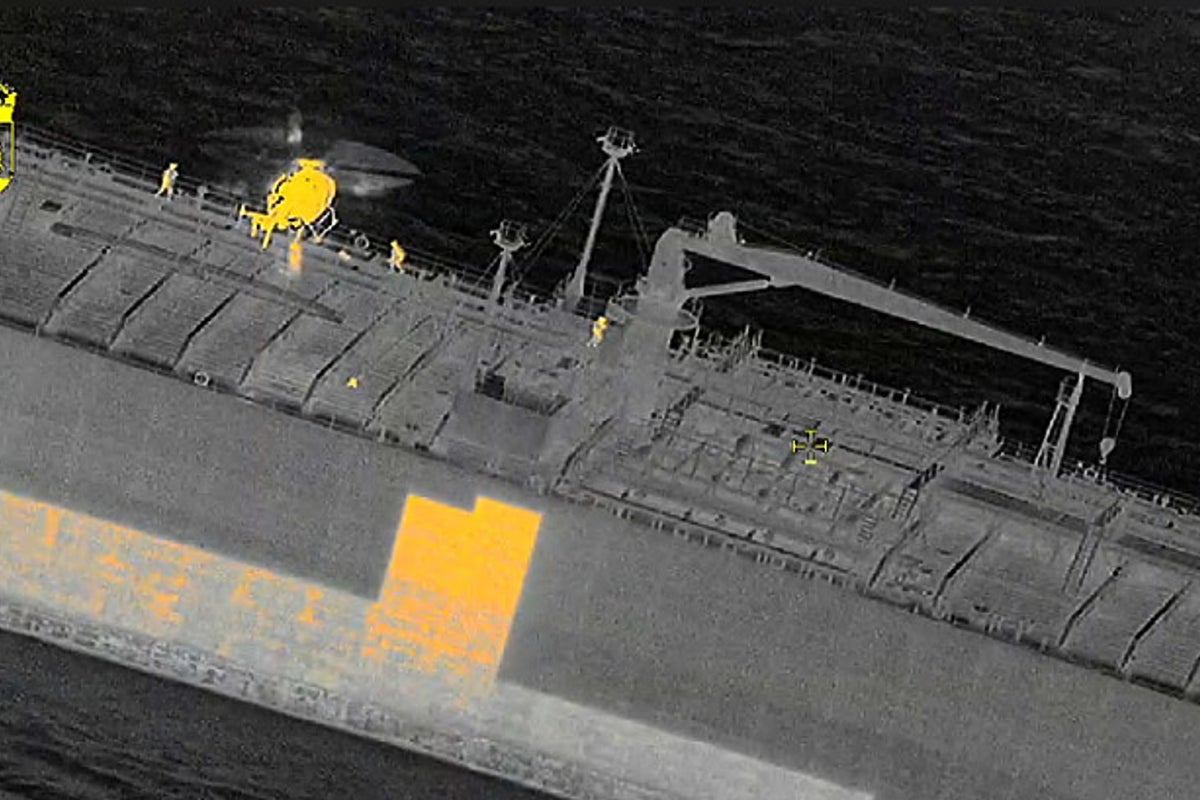
The iron hull of the Zaliv didn’t just cut through the Baltic water; it seemed to bruise it. Rust-streaked and salt-battered, the vessel moved with a deliberate, haunting anonymity. To a casual observer on the Swedish coastline, it was just another bulk carrier navigating the frigid grey expanse. But to the maritime authorities watching through digital eyes, the ship was a phantom. It was a "shadow" vessel, a cog in a clandestine fleet designed to bypass the world's ledger.
When Swedish coast guards finally boarded the ship and detained its captain, they weren't just arresting a man. They were pulling a thread on a global tapestry of deception that keeps a war machine fueled while the rest of the world looks for a paper trail that doesn't exist.
The Baltic Sea is crowded. It is a narrow, shallow bathtub of a sea, hemmed in by nations that have spent centuries watching one another with suspicion. Underneath the surface, cables carry the internet and pipelines carry energy. Above, the AIS—the Automatic Identification System—is supposed to act as a continuous shout, telling every other ship: Here I am, this is my name, this is where I am going.
The captain of the Zaliv chose silence. Or worse, he chose a lie.
The Anatomy of a Ghost
To understand why a captain would risk a Swedish prison cell, you have to understand the "shadow fleet." This isn't a small collection of rogue dinghies. It is a massive, aging armada—hundreds of tankers and cargo ships, often decades past their prime, owned by shell companies in jurisdictions where the sun always shines and the regulators never look.
These ships serve one purpose: moving Russian oil and goods under the radar of international sanctions.
They engage in "dark signaling." This isn't a high-tech spy maneuver; it is as simple as flipping a switch. By turning off their transponders, these ships disappear from global tracking screens. They become ghosts. Sometimes, they go a step further and engage in "spoofing," broadcasting a false location so that while the digital map shows them safely docked in a neutral port, the physical hull is actually bumping against a tanker in the middle of the ocean, transferring millions of barrels of crude oil in the dead of night.
The captain detained by Sweden was reportedly sailing under a "false flag." In the maritime world, your flag is your identity. It determines which laws you follow and who is responsible for you if things go wrong. When a ship flies a flag it isn't registered to, it is effectively a stateless actor. It is an outlaw.
The Invisible Stakes
Imagine you are standing on a pristine Swedish beach. The air is sharp, and the water is a deep, unforgiving blue. Now, imagine a ship built in the late nineties, poorly maintained and uninsured, carrying 100,000 tons of crude oil, navigating these treacherous, narrow channels without a pilot and with its lights effectively turned off.
If that ship hits a rock, there is no insurance company to call. There is no corporate headquarters to hold accountable. The "owner" is a PO Box in Dubai or a ghost office in Panama. The environmental catastrophe would be absolute. The Baltic, with its slow water exchange, would take decades to recover.
This is the gamble the shadow fleet plays every single day. They trade the safety of the global commons for the profit of a sanctioned state.
The Swedish detention of the Russian captain is a rare moment where the ghost was forced into the light. It happened near the strategic island of Gotland, a piece of land that has suddenly become the most important real estate in Northern Europe. Since the escalation of the conflict in Ukraine, the Baltic has transformed from a trade corridor into a front line.
A Game of Digital Cat and Mouse
The authorities didn't catch the Zaliv by luck. They used a combination of satellite imagery, synthetic aperture radar (SAR) that can see through clouds, and old-fashioned human intelligence.
Consider the pressure on the man on the bridge. The captain knows he is being watched. He knows that every time he nears a NATO coast, his "dark" status makes him a giant red flag rather than a hidden one. But he is part of a system that rewards the risk. The profits from a single successful "dark" run can be enough to pay for the aging ship itself.
The Swedish prosecutors have focused on the violation of maritime law, but the subtext is purely geopolitical. By detaining the captain, Sweden is sending a message to the Kremlin: the Baltic is no longer a backyard where you can break the rules without consequence.
But the problem is larger than one ship. Experts estimate that the shadow fleet now comprises nearly 10% of the world's large tankers. For every captain caught in the Baltic, ten more are navigating the Mediterranean, the Red Sea, or the South China Sea.
The Human Cost of High-Stakes Smuggling
We often talk about sanctions in terms of billions of dollars or geopolitical "leverage." We rarely talk about the sailors. These crews are often from developing nations, working on ships that wouldn't pass a basic safety inspection in any Western port. They are the frontline workers of a shadow economy, caught between the desperation of a paycheck and the looming threat of international maritime law.
When the Swedish coast guard climbed the ladder onto the Zaliv, they found a man who was likely exhausted. A man who had been told that his invisibility was his protection.
The legal battle ahead for this captain will be a test case. Can a coastal state hold a foreign national accountable for "dark" sailing in international waters that threaten the safety of their shores? The maritime law books are being rewritten in real-time.
There is a cold irony in the fact that the very technology meant to make the seas safer—AIS and GPS—has become the primary tool for deception. The more we rely on the digital map, the more dangerous it becomes when someone learns how to erase themselves from it.
The Zaliv remains anchored now, no longer a ghost but a physical piece of evidence. The mist has cleared, but the shadow fleet remains out there, just beyond the horizon, waiting for the next dark night to move.
The ocean has always been a place of secrets, but never before have those secrets been so closely tied to the survival of a global order. As the sun sets over the Baltic, the lights of legitimate trade flicker on, but the true story is being written by the ships that stay dark.
The captain sits in a room with white walls and no view of the sea, waiting to see if his silence was worth the price. Behind him, the machinery of global politics continues to grind, indifferent to the man, focused only on the shadow he tried to hide.
The Baltic remains cold, deep, and increasingly crowded with ghosts.