The screen flickers with the grainy, overexposed green of a night-vision sensor. In the center of the crosshairs, a silhouette moves. It is the unmistakable shape of a Lockheed Martin F-35 Lightning II—a jet that costs roughly $100 million and represents the absolute peak of Western kinetic engineering. A sudden bloom of white light erupts from the bottom of the frame. A missile streaks upward. There is a flash, a jagged distortion of the video signal, and then nothing but static and the triumphant shouting of men in a language thousands of miles removed from the cockpit of that aircraft.
This footage, circulated by Iranian-linked media channels, isn’t just a piece of war propaganda. It is a psychological Rorschach test. To a casual observer scrolling through a social media feed, it looks like the unthinkable: the world’s most advanced "stealth" fighter being swatted out of the sky by a regional power. But to those who understand the physics of light and the architecture of digital deception, the video tells a much more haunting story about the future of truth.
Victory in modern conflict isn't always measured by the number of airframes destroyed. Sometimes, it’s measured by how many people believe they saw one fall.
The Anatomy of a High-Stakes Illusion
If you were standing on the tarmac next to an F-35, you would feel the heat radiating from its skin, a byproduct of engines that generate $43,000$ pounds of thrust. You would smell the pungent, metallic scent of jet fuel and the ozone of high-end electronics. It is a visceral, heavy reality. However, the version of the F-35 that exists in the Iranian video is a phantom.
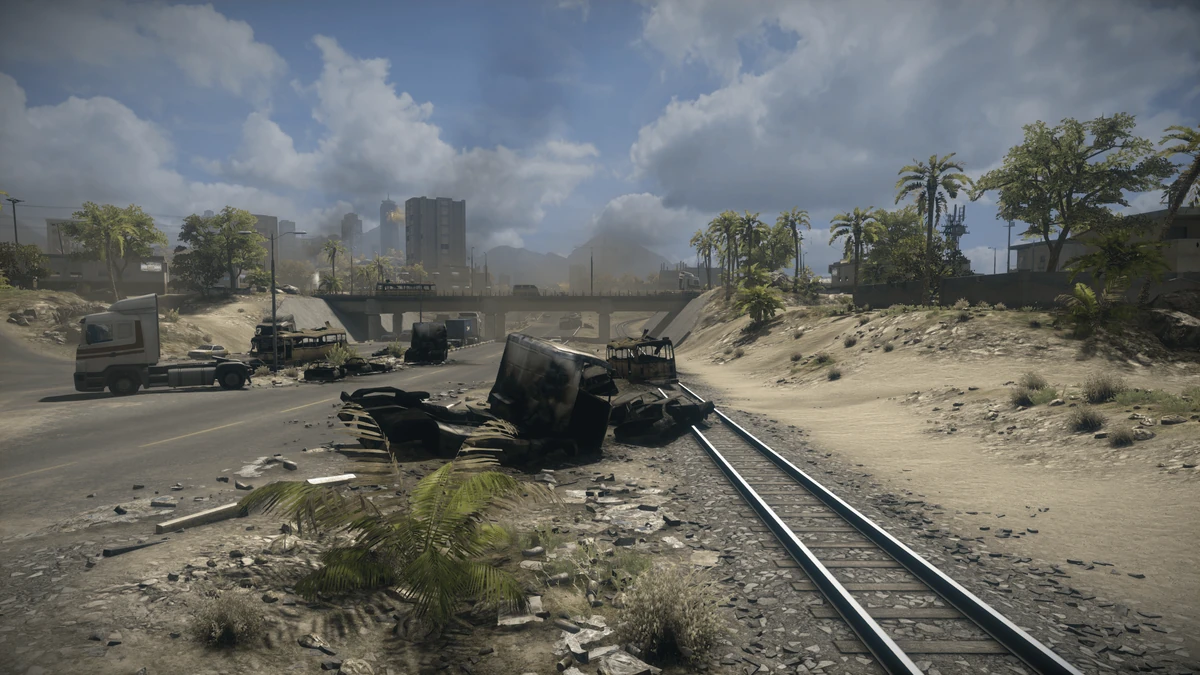
Military analysts and digital forensic experts began dissecting the frames almost as soon as the "hit" went viral. The red flags didn't wave; they screamed. The physics of the explosion didn't match the atmospheric pressure at that perceived altitude. The way the light from the missile reflected off the fuselage followed the rules of a rendering engine, not the chaotic, unpredictable scattering of a desert sun.
We are living in an era where the "kill" happens in the edit suite before it ever happens in the sky. By the time a government spokesperson issues a dry, technical denial, the emotional payload has already been delivered. Millions have already felt the jolt of seeing the "invincible" fall.
Why the Mirage Matters
Consider the pilot.
Let's call him Miller. Miller isn't a character in a movie; he represents the thousand-plus hours of training and the biological limits of a human being strapped into a carbon-fiber seat. When Miller flies, he isn't just looking through a canopy; he is wearing a helmet that projects a 360-degree view of the world around him. He sees through the floor of his own plane. He is the most interconnected "node" in the history of warfare.
The Iranian video targets Miller—not his physical body, but his aura of invulnerability. If the public, and more importantly, the adversary’s ground troops, believe that the F-35 can be tracked and killed by a standard surface-to-air battery, the strategic calculus shifts. Deterrence is a mind game. It relies on the enemy believing that the cost of engagement is 100% lethality.
When a video like this surfaces, it attempts to "demote" the technology. It tries to convince the world that the F-35 isn't a ghost—it’s just another target. Even if the video is a total fabrication, it creates a "lag" in the collective consciousness. It plants a seed of doubt. If it didn't happen today, the video suggests, it could happen tomorrow.
The Physics of Stealth vs. The Speed of Social Media
Stealth isn't an invisibility cloak. It is the art of delayed detection. An F-35 is designed to have the radar cross-section of a metal bird. By the time a radar operator sees it, the pilot has already released their payload and turned for home.
$$RCS \propto \sigma$$
In the formula for radar cross-section, $\sigma$ represents the reflectivity of the object. The lower the $\sigma$, the closer the jet can get before the "return" signal is strong enough to trigger an alarm.
But the internet has no radar cross-section. Information—true or false—travels at the speed of a fiber-optic pulse. In the time it takes for a stealth jet to cross a border, a faked video of its demise can circle the globe three times. This creates a bizarre disconnect in modern statecraft. We are spending billions on physical stealth to hide from sensors, while our adversaries are spending pennies on digital "loudness" to overwhelm our senses.
The Iranian footage utilized a specific type of graininess that mimics older Russian-made tracking systems. This was a deliberate aesthetic choice. It wasn't meant to look like a high-definition Hollywood movie; it was meant to look like a "leak." It was designed to feel like something you weren't supposed to see.
The Human Cost of the Digital Fog
There is a specific kind of exhaustion that comes from living in a world where your eyes can no longer be trusted. This isn't just about geopolitics or the Middle East; it’s about the fundamental erosion of our shared reality.
When we see a video of a jet being hit, our lizard brain reacts. We feel the surge of adrenaline. We feel the "weight" of the event. When we are told later that it was a composite of CGI and archival footage from a 2014 training exercise, the adrenaline doesn't just disappear. It turns into cynicism.
We start to wonder: If that was fake, what else is?
This cynicism is the ultimate goal of the disinformation architect. If you can’t make your own technology better than the F-35, you simply make the truth as murky as a dust storm. You create a landscape where the facts are so contested that the average person simply stops trying to discern them.
The Invisible Stakes
The real danger of the "Iranian F-35 hit" isn't that it will start a war. The danger is that it changes how we value human life and high-stakes technology. If we can "kill" a pilot in a video and have half the world believe it, we have achieved a tactical victory without firing a shot.
We are moving toward a period of "Post-Visual Verification." For decades, the video camera was the ultimate arbiter of truth. "Pic or it didn't happen" was the law of the land. Now, the existence of the picture is actually the first reason to be skeptical.
Imagine the room where this video was produced. It wasn't a bunker filled with generals. It was likely a small office with a few high-end workstations and a group of young people who are better at Adobe After Effects than they are at ballistics. They are the new front line. They aren't aiming at the wing-root of a jet; they are aiming at the trust you have in your news feed.
The F-35 remains, as far as all verifiable records show, untouched by Iranian fire. It continues to patrol the edges of contested airspace, a silent, dark shape against the stars. It relies on its cooling systems, its RAM (Radar Absorbent Material), and its sophisticated jamming suites to stay safe.
But against the digital mirage, the plane has no armor. The only defense against the fake explosion is a relentless, almost painful commitment to verification. It requires us to slow down, to look at the shadows, to check the metadata, and to resist the urge to share the "shocker" before we’ve checked the source.
The jet is still up there. The pilot is still breathing. The missile in the video was made of pixels and bad intentions, but the fire it started in the minds of the public is very, very real.
The sky is clear, but the ground is thick with smoke. We are all flying through it now, squinting at our instruments, trying to figure out which way is up.
A shadow passes over the dunes, silent and unseen, while on a million glowing screens, the same shadow is engulfed in a digital flame that never grows cold.