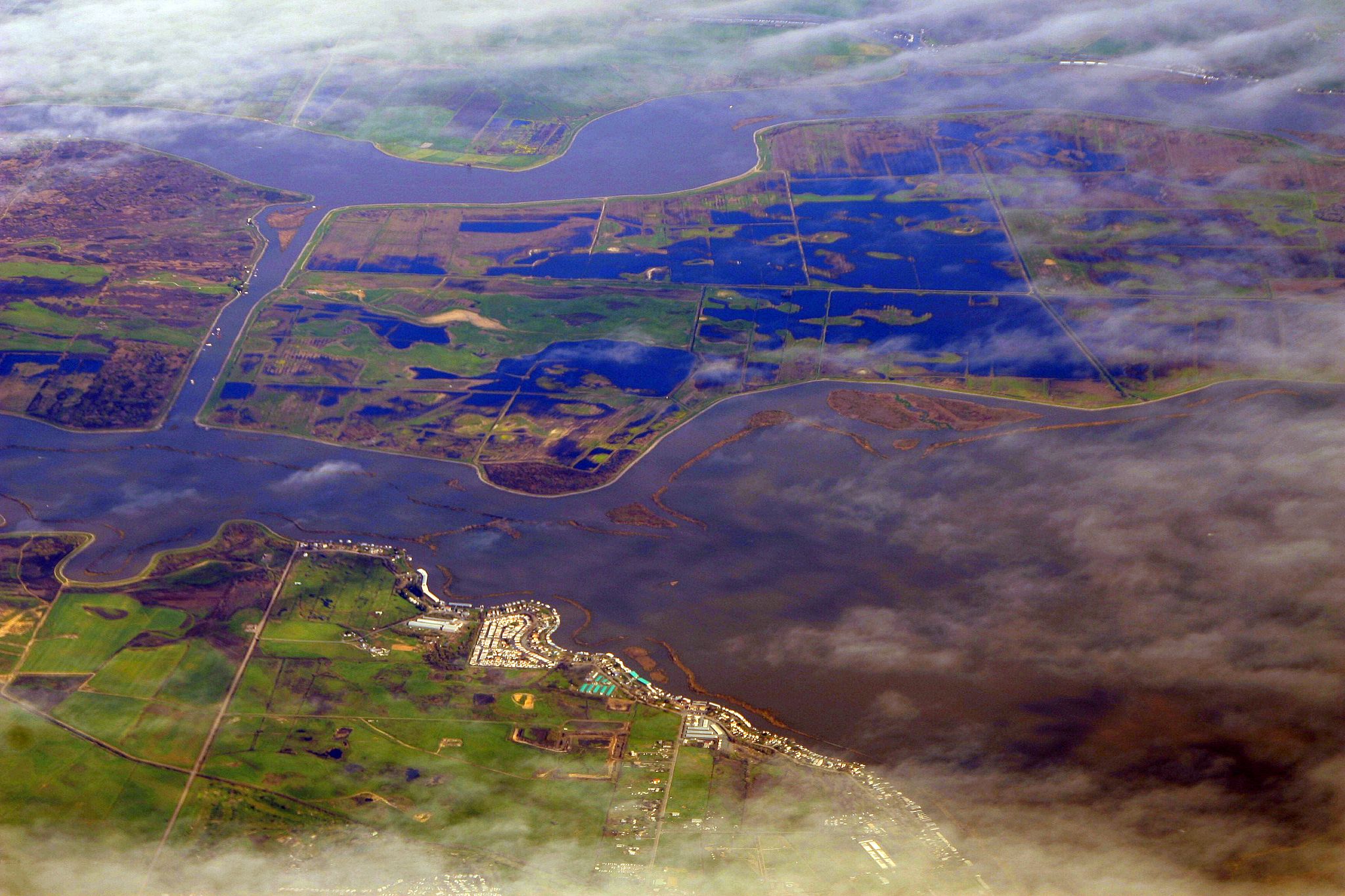
The dirt in the Sacramento-San Joaquin River Delta doesn’t just feel like soil. It feels like history. When you crumble a piece of that dark, peat-rich earth between your fingers, you are touching the remains of ten thousand years of tule fogs and tidal cycles. It is soft, light, and dangerously dry.
In the Central Valley, water isn't just a utility. It is a religion. It is the difference between a thriving emerald orchard and a skeleton of grey wood standing in a cloud of dust. But for the Chinook salmon and the tiny, translucent Delta smelt, water is something more fundamental. It is the air they breathe.
Right now, California is locked in a quiet, bitter war over a map. At the center of this map is the Voluntary Agreements—a bureaucratic name for a high-stakes gamble that could either save the state’s crumbling plumbing or deliver the final blow to an ecosystem that has been on life support for decades.
The Concrete Heart
To understand why people are shouting in hearing rooms in Sacramento, you have to look at the pumps.
South of the Delta, massive engines hum day and night. They are the heart of California’s water system, pulling fresh water out of the river channels and pushing it hundreds of miles into the California Aqueduct. It feeds the almond groves of Kern County. It keeps the taps running in Los Angeles. It makes the lifestyle we take for granted possible.
But there is a catch. When those pumps spin up to full power, they don’t just move water; they change the very direction of the rivers. The water begins to flow backward. Imagine being a young salmon, barely the length of a paperclip, trying to find your way to the Pacific Ocean. Your internal compass tells you to follow the current. Suddenly, the current flips. You are pulled away from the sea and toward the humming blades of a machine you cannot outswim.
For years, the rules were simple: the state set "unimpaired flow" requirements. These were hard limits on how much water had to stay in the river to keep the fish alive. Environmentalists loved them because they were predictable. Farmers hated them because they felt like a death sentence for their livelihoods during a drought.
The new plan, championed by Governor Gavin Newsom’s administration, tosses those hard limits out the window. In their place is a "voluntary" framework. Instead of the state forcing a specific flow, water agencies and the government are trying to shake hands on a deal that trades a bit less water for a lot more habitat restoration.
The Fisherman and the Farmer
Consider a hypothetical man named Elias. Elias is a third-generation commercial fisherman in Half Moon Bay. For him, the Delta isn't a series of pipes; it's a nursery. If the water in the Delta gets too salty, or too warm, or the "pulse flows" that signal it's time to migrate never come, his nets stay empty. When the salmon runs fail, Elias doesn’t just lose a paycheck. He loses the ability to look his daughter in the eye and tell her there is a future in the family business.
"It’s an ecosystem collapse in slow motion," says the advocate on the evening news. To Elias, it isn't slow. It’s a series of silent years followed by a federal closure of the fishing season.
Now, drive three hours inland and meet a hypothetical woman named Sarah. Sarah manages a family farm that has survived three major droughts. She isn't a villain in a black hat. She is a person who stares at satellite moisture maps at 2:00 AM. If the state mandates that 55% of the river flow must stay in the channel, her senior water rights might as well be scraps of paper. Without that water, her trees die. If the trees die, the local school loses tax revenue. The town starts to wither.
The Voluntary Agreements are meant to be the bridge between Elias and Sarah. The theory is that if the state can spend billions of dollars building new floodplains and spawning beds, the fish might be able to survive with slightly less water. It’s a "biology over bureaucracy" approach.
But there is a haunting question at the center of this: Can you really replace a river with a construction project?
The Science of Disappearing
The Delta smelt is a fish that smells like cucumbers. It’s a strange, fragile little creature that most Californians will never see in the wild. Biologists use it as the "canary in the coal mine." If the smelt is doing well, the water is healthy.
In recent years, the number of smelt found in annual surveys has frequently been zero. Not a low number. Zero.
Critics of the new water plan argue that the "voluntary" nature of the deal is a surrender. They point to the fact that the agreements rely on "adaptive management"—a term that sounds sophisticated but often means "we’ll figure it out as we go." If the fish continue to die, will the state have the courage to turn the pumps off? Or will the political pressure from a thirsty city of four million people be too great to ignore?
The logic of the ecosystem is brutal and binary. A species is either here, or it is gone forever. There is no "middle ground" for an extinction.
The state argues that the old way of doing things—litigation that lasts for decades—has failed. While lawyers argued in marble hallways, the fish disappeared anyway. They claim that doing something collaborative now is better than doing nothing perfectly for the next twenty years. It is a plea for pragmatism in a landscape that has become increasingly radicalized by scarcity.
The Invisible Stakes
We tend to talk about water in acre-feet, a measurement that represents the amount of water it takes to cover an acre of land one foot deep. It’s a cold, clinical term. It masks the reality of what water does.
Water is the sound of a creek behind a house in Redding. It is the mist rising off a vineyard in Lodi. It is the cold, clear current that pulls the heat out of a summer afternoon. When we argue about "flows," we are actually arguing about what kind of California we want to leave behind.
Do we want a state that is a highly efficient, concrete-lined factory for food and housing? Or do we want a state that still has a wild heartbeat?
The fear among environmentalists is that these agreements are a sleight of hand. By allowing water agencies to pay for habitat restoration instead of leaving water in the river, we might be building beautiful graveyards. You can build all the gravel beds you want, but if the water over them is 75 degrees Fahrenheit, the salmon eggs will cook in their shells.
Temperature. That is the silent killer. As the climate warms, the snowpack in the Sierras—California’s "frozen reservoir"—is melting faster and earlier. The timing of the water is becoming more important than the volume.
The Voluntary Agreements promise "pulse flows" to help the fish, but these are small bursts of water compared to the historic floods that once scoured the valley floor. We are trying to mimic the majesty of nature with a garden hose.
The Human Cost of Compromise
When you sit in a room with the people making these decisions, the air is heavy with the weight of "the possible." There is a profound exhaustion in the voices of state officials. They are trying to solve an impossible math problem: 100 units of demand and 60 units of supply.
They know that every drop given to a salmon is a drop taken from a kitchen sink. They know that every acre of fallowed land is a family that might lose their home.
This isn't a story of good vs. evil. It’s a story of different types of "good" colliding in a world that is running out of room.
The true tragedy of the California water debate is that we have waited so long to fix the plumbing that there are no painless choices left. We are now in the era of the "least-bad" option. The Voluntary Agreements are a gamble that we can engineer our way out of a biological crisis.
If the gamble works, Newsom will be remembered as the man who broke the gridlock and saved the Delta. If it fails, the Delta smelt and the winter-run Chinook will become myths—stories we tell our grandchildren about the fish that used to turn the rivers silver.
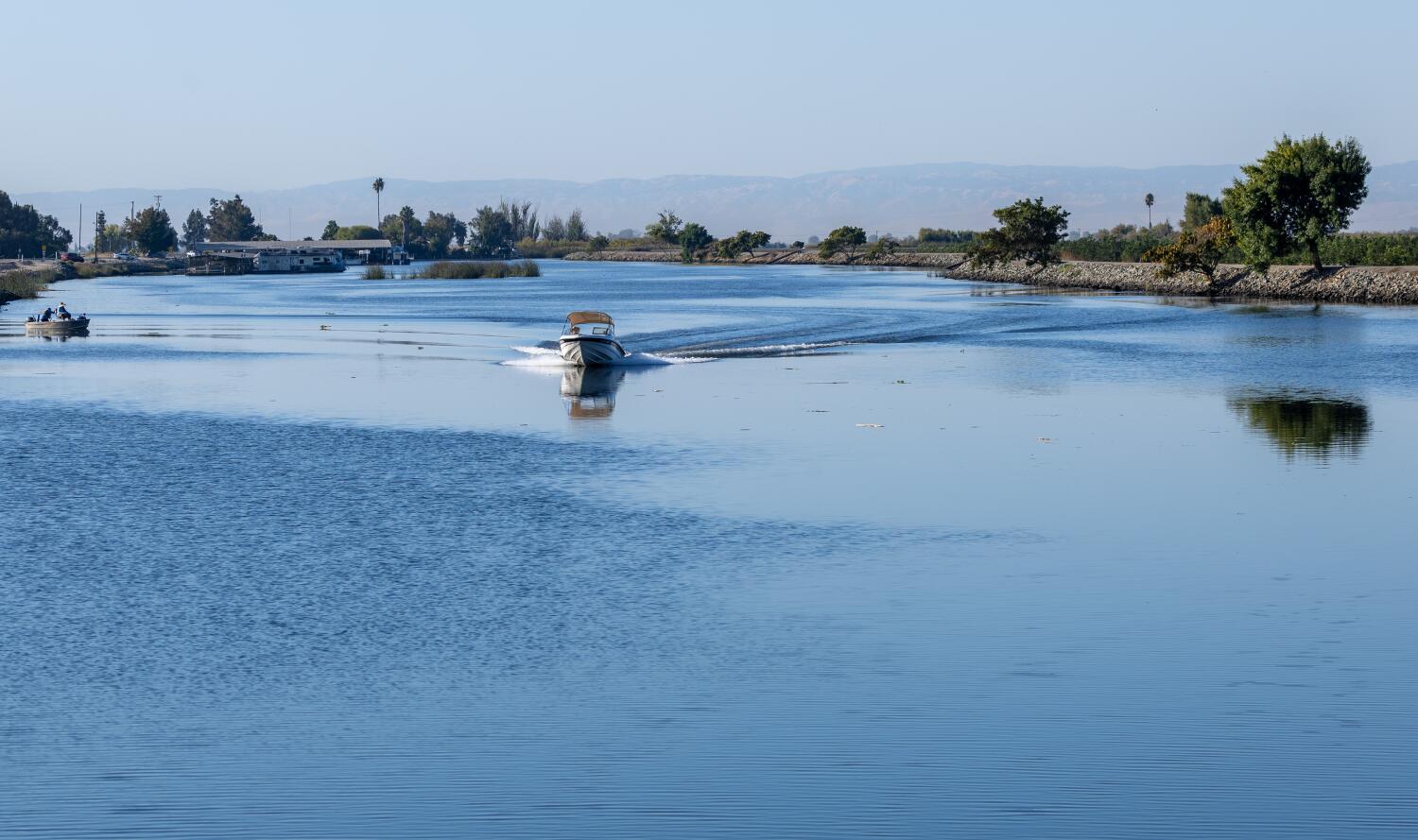
The Delta is quiet tonight. The tide is coming in, pushing salty water from the Golden Gate deep into the heart of the Central Valley. The pumps are humming. Somewhere in the dark, a tiny fish is swimming against a current that it doesn't know is unnatural. It is just trying to breathe. It is just trying to exist in a world that has decided its home is the most valuable commodity on earth.
We are all waiting to see if the handshakes in Sacramento can hold back the salt.
History suggests the river always wins in the end, but the river doesn't care if we are still around to see it.