A single tea glass sits on a lace tablecloth in a North Tehran apartment. It is untouched. The steam has long since vanished, leaving only a dark, amber ring against the glass. Outside, the sound of a motorbike backfiring makes an elderly woman flinch. For a split second, she isn't in 2026. She is back in 1980, hearing the first Iraqi jets scream over the city.
Fear has a long memory.
In the high-stakes poker rooms of Washington and Tel Aviv, the talk is of "surgical strikes," "regime stability," and "deterrence thresholds." But in the narrow alleys of Isfahan or the bustling markets of Tabriz, those words translate into a much simpler, more terrifying question: Will we become the next Iraq? Or worse, the next Libya?
The trilemma facing the United States, Israel, and Iran isn't just a geopolitical puzzle. It is a tightening noose. Every move made to loosen it seems to pull the knot tighter around the throats of eighty-five million people who are caught between a government that won't bend and an international community that doesn't know how to break them without destroying the house they live in.
The Shadow of the Smoking Gun
To understand the dread humming beneath the surface of Iranian society, you have to look at the scars of its neighbors. Iranians are a highly educated, globally connected people. They watched the 2003 invasion of Iraq on satellite dishes they weren't supposed to have. They saw the "statue toppling" moment turn into a decade of sectarian slaughter.
Later, they watched Libya.
In 2003, Muammar Gaddafi gave up his nuclear program in exchange for a seat at the table. By 2011, he was dragged from a drainage pipe and killed by rebels backed by Western airpower. To the hardliners in Tehran, the lesson was written in blood: If you have a shield, never put it down. If you don't have one, build it fast.
This is the first prong of the disaster trilemma. If the West pushes too hard, it reinforces the Iranian leadership’s conviction that only a nuclear deterrent can prevent the "Libya scenario." Yet, if the West does nothing, it faces an Iran that has effectively neutralized the threat of intervention, allowing it to project power across the Middle East with impunity.
The Hypothetical Case of Arash
Consider a hypothetical young man named Arash. He is twenty-four, an electrical engineer with a penchant for underground techno and a deep frustration with the morality police. He wants change. He has marched in the streets. He has felt the sting of tear gas and the weight of a baton.
But Arash is also a patriot.
If Israel strikes the Natanz enrichment facility, Arash doesn't necessarily rally to the flag of the Clerics. But he doesn't cheer for the bombers either. He knows that when the "surgical" strikes begin, the electricity goes first. Then the internet. Then the supply chains for the insulin his father needs.
The Western policy of "Maximum Pressure" assumes that if you make life miserable enough for Arash, he will eventually overthrow his oppressors. It ignores the reality that a starving man is rarely a revolutionary; he is usually just a man looking for bread. When a country's currency collapses—as the Rial has, losing massive value over the last decade—the middle class doesn't rise up. It disappears.
The teachers, the doctors, and the engineers spend their energy working three jobs just to buy meat once a month. The very people who should be building a modern, secular Iran are instead being ground into the dirt by sanctions that were meant to target their leaders.
The Jerusalem Dilemma
Across the border, the view from Jerusalem is one of existential claustrophobia. For Israel, an Iranian nuclear weapon isn't a bargaining chip; it is an end-of-days scenario. They see the "Ring of Fire"—the network of proxies from Hezbollah in Lebanon to the Houthis in Yemen—and they see a slow-motion strangulation.
Israel's strategy has long been the "Campaign Between the Wars." It involves cyberattacks, mysterious explosions at industrial sites, and the assassination of scientists. It is a strategy of friction. The goal is to delay the inevitable.
But delay is not a solution.
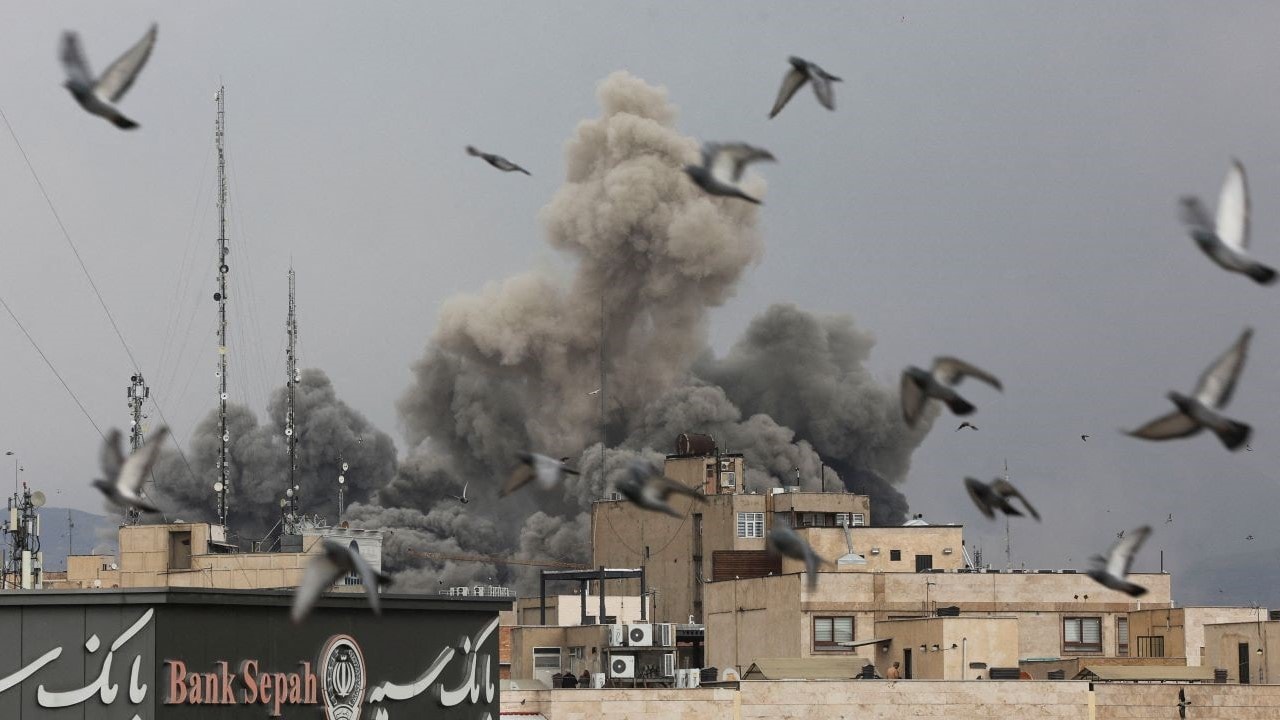
If Israel decides that the delay has reached its expiration date, they face a terrifying choice. A full-scale strike on Iran’s nuclear infrastructure would likely require hundreds of sorties. It would trigger a regional firestorm that would make the 2006 Lebanon War look like a skirmish. Hezbollah has over 150,000 rockets aimed at Tel Aviv.
The trilemma strikes again. A preemptive strike might stop the bomb, but it could start a war that consumes the very state it was meant to protect. Conversely, waiting allows the "threshold" to be crossed, changing the balance of power in the Middle East forever.
The Ghost of 1914
Historians often talk about the "Sleepwalkers"—the leaders of Europe who stumbled into World War I because of a series of alliances and "red lines" they couldn't back down from. We are seeing a modern remix.
Iran feels it must respond to Israeli strikes to maintain "face."
Israel feels it must strike to ensure "survival."
The United States feels it must back Israel to maintain "credibility."
Each player is locked in a room where the floor is covered in gasoline, and everyone is flicking a lighter to see who blinks first.
The tragedy of the "Iraq or Libya" comparison is that Iran is neither. Unlike Iraq in 2003, Iran is not a fractured state held together solely by a singular dictator’s personality. It is a deep-rooted civilization with a massive, centralized military apparatus (the IRGC) that is woven into the very fabric of the economy. Unlike Libya, it has a sophisticated air defense system and a population that, while frustrated, has a fierce history of resisting foreign intervention.
If Iran spirals, it won't be a quick collapse. It will be a black hole that sucks the entire region into its center.
The Human Cost of the "Big Game"
We talk about "regime change" as if it’s a software update. We talk about "containment" as if it’s a laboratory experiment.
Go back to that tea glass in Tehran.
The woman sitting there remembers the "War of the Cities." She remembers the sound of the sirens and the feeling of the floorboards vibrating. She doesn't care about "geopolitical pivots" or "centrifuge counts." She cares about whether her grandson will be drafted into a war that lasts eight years and settles nothing.
The invisible stakes are the dreams of a generation. Iran has one of the youngest, most literate populations in the world. They are more likely to watch Netflix via VPN than they are to attend a Friday prayer sermon. They are ready to join the world.
But the world they want to join is currently debating whether to bomb them or starve them into submission.
There is a profound irony in the fact that the more the West isolates Iran, the more it pushes the country into the arms of Russia and China. This "Eastward Pivot" isn't just a trade agreement; it's a structural shift. It creates a block of sanctioned nations that have nothing to lose. When you have no stake in the international order, you have no reason to play by its rules.
The Sound of the Loom
In the bazaar, the carpet weavers still work. They tie thousands of tiny knots, day after day, year after year. To make a Persian rug, you must have patience. You must have a vision of the finished product that spans months of labor.
Diplomacy is like those rugs. It is tedious. It is frustrating. It requires sitting in a cramped position for a long time.
But the alternative is the torch.
The "trilemma of disaster" suggests there are only three exits, and all of them lead to a cliff.
- War that destroys the region.
- An Iranian nuclear state that triggers a regional arms race.
- A collapsed Iran that creates a vacuum for extremism and mass migration.
But perhaps there is a fourth path, one that doesn't fit into a briefing paper. It is the path of strategic patience that recognizes the Iranian people as the primary agents of change. It is the understanding that the more you threaten a house from the outside, the more the people inside will huddle together, even with a landlord they hate.
The red lines are being drawn in permanent marker. The clocks are ticking in three different time zones. And somewhere in a quiet room, the tea grows cold, while the world waits to see if we have learned anything at all from the smoke of Baghdad and the ruins of Benghazi.
The most dangerous thing in the world is a leader who thinks they can predict the direction of a fire they started.
History doesn't repeat. It rhymes. And right now, the rhythm sounds a lot like the beat of a drum.