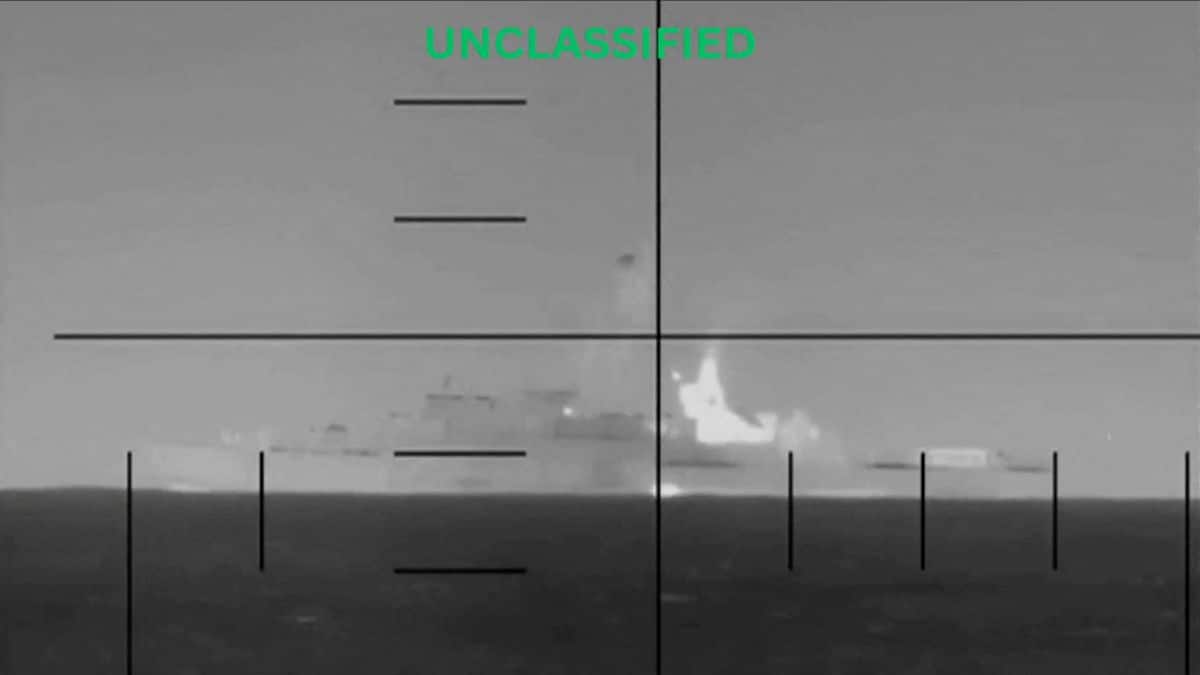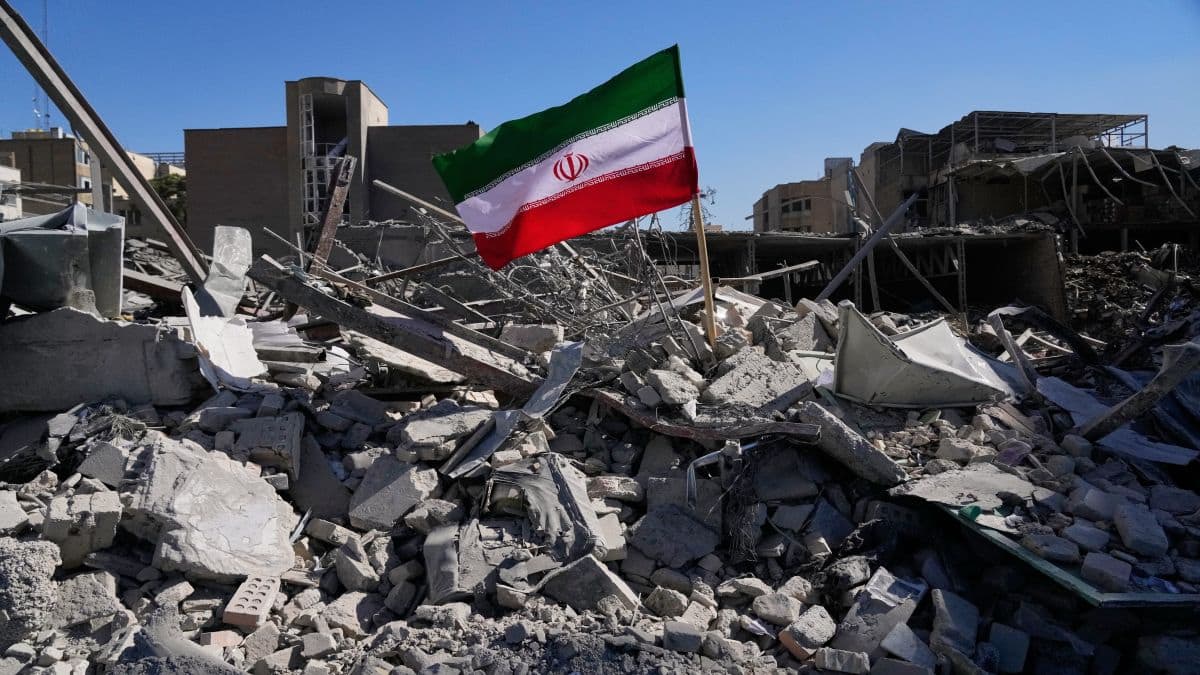
The tension between the UK government’s restrained response to Iranian aggression and the opposition’s demand for escalation is not a mere clash of political personalities; it is a fundamental disagreement over the mechanics of Integrated Deterrence. While Prime Minister Keir Starmer prioritizes the maintenance of a multilateral diplomatic coalition, Kemi Badenoch argues for a shift toward Punitive Deterrence, where the cost of Iranian provocation is made to exceed its perceived strategic benefits. This divergence exposes a critical friction point in British foreign policy: the trade-off between immediate regional stability and the long-term erosion of red lines.
The Trilemma of British Intervention
The UK’s strategic posture toward Iran is governed by three competing variables that rarely align. This "intervention trilemma" forces policymakers to choose, at most, two of the following priorities, often at the direct expense of the third:
- Multilateral Synchronization: Aligning actions with Washington and European partners to ensure legitimacy and shared resource burden.
- Strategic Autonomy: The ability to strike or sanction independently to protect specific British assets or respond to domestic political pressure.
- Risk Containment: Preventing a vertical escalation that leads to a full-scale regional kinetic conflict.
Starmer’s current strategy focuses heavily on variables 1 and 3. By defending a "measured" response, the administration is betting that the preservation of a unified G7 front is more valuable than a unilateral demonstration of force. The underlying logic suggests that a fragmented Western response would provide Tehran with "seams" to exploit via gray-zone tactics or maritime disruption.
The Mechanics of Deterrence Decay
Badenoch’s critique centers on the concept of Salami Slicing—a strategy where an adversary commits a series of small, provocative acts that individually do not warrant a major war, but collectively shift the status quo in their favor. The opposition’s call for more "robust" action is an attempt to address the Deterrence Gap created when an actor knows exactly where the threshold for a kinetic response lies and operates just below it.
The effectiveness of any deterrent is calculated through a simple probability function:
$$D = P(c) \times V(c)$$
Where $D$ is the strength of deterrence, $P(c)$ is the perceived probability of a consequence, and $V(c)$ is the perceived value or severity of that consequence.
The current administration is being accused of lowering $V(c)$ to a level that Iran finds acceptable. If the consequences for launching ballistic missiles or utilizing proxies are confined to diplomatic condemnation and targeted sanctions on low-level officials, the value of the consequence ($V(c)$) approaches zero in the eyes of a regime focused on regional hegemony.
Structural Constraints on British Power Projection
A significant portion of this debate ignores the material reality of the UK’s current military and economic overextension. For the UK to "do more," it must solve for three specific bottlenecks:
The Naval Sustainment Gap
The Royal Navy’s ability to maintain a persistent presence in the Red Sea and the Persian Gulf is constrained by hull availability and maintenance cycles. Escalating the UK's military response requires a commitment of Type 45 destroyers or Carrier Strike Group assets that are currently allocated to NATO's northern flank or undergoing refits. Without a surge in defense spending, "doing more" in the Middle East necessitates "doing less" in the Indo-Pacific or the High North.
The Economic Feedback Loop
Iran’s primary leverage remains the Strait of Hormuz and the Bab al-Mandab. Any UK action perceived as disproportionate increases the insurance premiums for commercial shipping (War Risk Surcharge). For a UK economy struggling with persistent inflationary pressures, a spike in energy costs or a disruption in the supply chain of liquid natural gas (LNG) represents a domestic political risk that Starmer is unwilling to take.
The Proxy Asymmetry
Iran operates through a network of non-state actors (The Axis of Resistance) which provides them with Plausible Deniability. When the UK strikes a Houthi launch site or a militia depot in Iraq, it is engaging in an asymmetric exchange. The UK uses high-cost precision munitions against low-cost, easily replaceable assets. This creates a negative cost-exchange ratio that favors the adversary in a long-term war of attrition.
Evaluating the "Proportionality" Fallacy
The term "proportionality" is often used in political discourse to mean "equal in scale." However, in strategic theory, a proportional response is one that is sufficient to achieve the objective of ending the provocation. If a response is equal in scale but fails to stop the behavior, it is, by definition, ineffective.
The Starmer-Badenoch divide illustrates two different interpretations of this principle:
- The Government’s View (Stabilization): Proportionality is a de-escalatory tool. By matching the intensity of the Iranian threat without exceeding it, the UK signals it has no desire for regime change or total war, thereby inviting a return to the status quo.
- The Opposition’s View (Restoration): Proportionality is a failure. To restore deterrence, the response must be disproportionate enough to reset the adversary’s risk calculus.
The Role of Sanctions as a Kinetic Substitute
The UK has increasingly relied on the Global Anti-Corruption and Iran Sanctions regimes to project power without firing shots. While these measures satisfy the demand for "action," their efficacy is limited by the Sanctions Circumvention Infrastructure Iran has developed over four decades.
The "Shadow Fleet" of tankers and the use of third-party financial hubs in the UAE and East Asia mean that UK sanctions often hit the "outer shell" of the Iranian economy without penetrating the IRGC’s (Islamic Revolutionary Guard Corps) core funding mechanisms. For Badenoch’s call for "more action" to be tangible, it would require secondary sanctions—penalizing third-country firms that trade with Iran—which would inevitably strain the UK’s diplomatic relations with neutral or "swing" states.
Strategic Forecast: The Pivot to Threshold Defense
The UK is likely to move toward a Threshold Defense model. This involves moving away from reactive statements and toward a pre-declared set of "Trigger Events."
If the government wishes to neutralize the opposition's critique while avoiding a regional war, it must define exactly what constitutes an unacceptable escalation—such as the direct targeting of UK sovereign assets or a specific leap in nuclear enrichment—and pre-authorize the military response for those scenarios. This removes the "decision-making lag" that Iran currently exploits.
The long-term viability of the UK’s Middle East policy depends on whether it can decouple its response from the US election cycle. Tehran currently views the UK as a secondary actor that will only move in tandem with Washington. Breaking this perception requires a targeted, independent demonstration of capability that does not trigger a full-scale war but proves the UK can impose costs on Iranian territory or high-value maritime assets.
The immediate strategic play for the UK is not a massive naval escalation, but the hardening of regional alliances with the Abraham Accords signatories and the deployment of advanced electronic warfare and counter-drone systems to protect trade routes. This addresses the hardware threat while maintaining the diplomatic "high ground" Starmer seeks to preserve.