The rejection by Tehran of Islamabad’s offer to mediate regional tensions is not a singular diplomatic snub but a calculated assertion of strategic autonomy within a shifting West Asian security architecture. Iran’s refusal to accept Pakistan as a neutral arbiter highlights a fundamental misalignment between Pakistan’s domestic economic imperatives and Iran’s long-term security doctrine. This dynamic is governed by three specific structural variables: the erosion of Pakistan’s neutrality due to its financial dependencies, the Iranian preference for bilateralism in high-stakes security negotiations, and the internal instability of the Pakistani border regions which compromises its status as a credible guarantor.
The Structural Failure of Peripheral Mediation
Mediation in international relations requires the arbiter to possess either significant coercive leverage or absolute perceived neutrality. Pakistan currently possesses neither in the eyes of the Iranian Revolutionary Guard Corps (IRGC) and the clerical establishment. The Iranian decision-making process operates on the principle of direct proportionality—security threats originating from state actors are met with state-level direct communication or asymmetric escalation, never through a third-party lens that might dilute the messaging.
The failure of the Pakistani proposal can be traced to a specific logic: the Strategic Dilution Effect. When a third party enters a sensitive negotiation, the primary actors often lose the ability to signal intent with precision. For Iran, involving Pakistan introduces a layer of complexity that serves Pakistani interests—specifically its desire to remain relevant to both the GCC and the Western bloc—without offering a tangible security dividend for Tehran.
The Three Pillars of Iranian Strategic Rejection
1. The Credibility Gap of the Dependent State
Pakistan’s economic landscape is currently defined by a high degree of reliance on external liquidity, specifically from sources that Iran views as adversarial or at least competitive. This creates a conflict of interest that Tehran cannot ignore.
- The Financial Constraint: Pakistan’s need for IMF bailouts and bilateral deposits from Gulf monarchies necessitates a foreign policy that aligns with the interests of its creditors.
- The Policy Constraint: This dependency renders Pakistan a "constrained actor." In the Iranian analytical framework, a constrained actor cannot function as a neutral bridge because its own survival depends on the approval of external stakeholders who may want the mediation to fail.
2. The Border Security Asymmetry
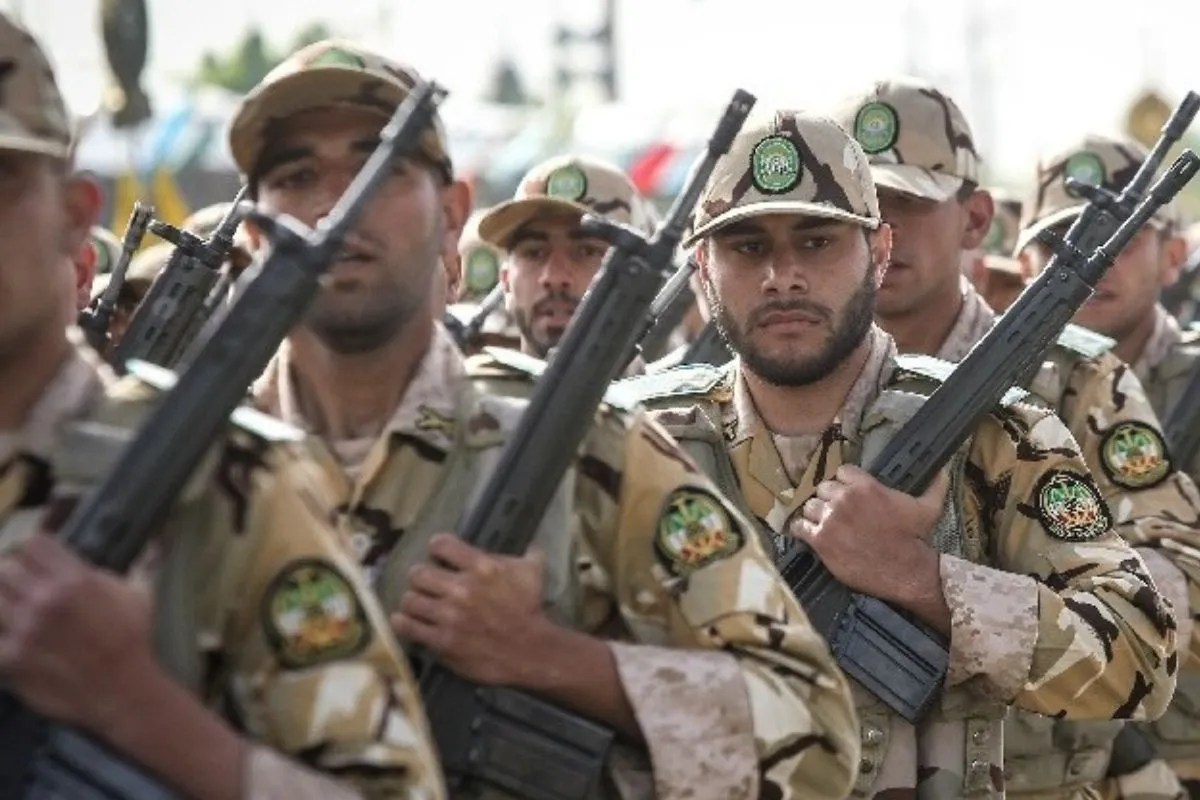
The Sistan-Baluchestan border represents a friction point where tactical failures have compromised strategic trust. Iran views the presence of militant groups like Jaish al-Adl within Pakistani territory not as a mere intelligence failure, but as a symptom of the Pakistani state's inability to project sovereignty.
- The Zero-Sum Border Logic: If Islamabad cannot secure its own western frontier against non-state actors, Tehran perceives it as lacks the operational capacity to mediate complex interstate conflicts.
- Operational Sovereignty: Iran has shifted toward a "Hot Pursuit" doctrine, preferring to take direct kinetic action across the border rather than waiting for a diplomatic process that has historically yielded minimal results.
3. The Shift to Direct Multi-Polarism
The Iranian diplomatic apparatus is increasingly focused on a "Look East" policy that prioritizes direct engagement with major powers—Russia and China—rather than regional intermediaries. By bypassing Pakistan, Iran signals that it belongs to a tier of regional powers that negotiates its own terms. This reflects a transition from a regionalized defense posture to a "Strategic Depth" model where the goal is to eliminate middlemen who might trade Iranian interests for their own diplomatic standing.
The Cost Function of Third-Party Intervention
For Iran, the cost of accepting mediation is higher than the cost of continued tension. This can be expressed as a function of Information Leakage and Agency Loss.
- Information Leakage: Mediation requires the disclosure of "red lines" to a third party. Given the intelligence ties between Pakistan and Western agencies, Tehran views this as a high-risk data transfer.
- Agency Loss: In any mediated settlement, the final outcome is influenced by the mediator's bias. Pakistan’s bias is toward regional stability at any cost to facilitate its internal economic recovery. Iran’s bias is toward "Maximum Resistance," which often requires calculated instability to deter adversaries. These two objectives are mathematically incompatible.
The Bottleneck of Pakistani Domestic Politics
The internal fragmentation of the Pakistani political and military establishment further complicates its role as a mediator. Iran’s intelligence assessments likely highlight the lack of a unified command structure in Islamabad regarding foreign policy. When the civilian government offers mediation, it is often unclear if the military establishment—the real arbiter of Pakistan's Iran policy—is fully aligned.
This creates a Policy Variance Risk. If Iran were to engage in a process led by the Pakistani civilian leadership, the risk remains that the military could pivot, rendering the negotiations void. Direct engagement with rivals, while more volatile, removes this layer of internal political uncertainty.
The Mechanism of the Iranian Counter-Proposal
Instead of a mediated dialogue, Iran is pushing for a "Regional Security Framework" that excludes external influence but emphasizes bilateral pacts. This is a move toward a Modular Security Architecture.
- Bilateralism: Solving specific issues (trade, border security, energy) through one-on-one committees.
- Economic Interdependence: Using the IP Gas Pipeline and the Chabahar-Gwadar relationship as leverage rather than relying on diplomatic goodwill.
- Kinetic Deterrence: Reserving the right to unilateral action as a prerequisite for any future formal agreement.
Strategic Forecast for Regional Alignment
The rejection of Prime Minister Shehbaz Sharif’s proposal forces Pakistan into a difficult position. It must now choose between escalating its own border security measures to prove its competence to Iran or leaning further into its alliances with the West and the Gulf, which would further alienate Tehran.
Iran will likely continue to utilize Pakistan as a geographic buffer but will deny it a seat at the high-level diplomatic table. This ensures that Iran maintains "Escalation Dominance"—the ability to control the tempo of conflict without being restricted by the "peace-brokering" timelines of a third party.
The strategic play for Tehran is the continued marginalization of secondary regional actors in favor of a direct, hard-power dialogue with its primary adversaries. This effectively turns the "mediation offer" into a litmus test for sovereignty; by saying no, Iran has confirmed that it views its regional standing as superior to the collective diplomatic reach of the South Asian bloc. Pakistan’s path forward requires a transition from offering "good offices" to demonstrating "hard control" over its internal territories—a task that remains the primary obstacle to its regional relevance.