The Biden administration’s decision to quietly decelerate the enforcement of Iranian oil sanctions during a period of escalating Middle Eastern conflict represents a calculated pivot from ideological containment to pragmatic price stabilization. This strategy acknowledges a brutal reality: the global oil market is currently a closed-loop system where the removal of Iranian barrels—estimated at 1.5 million per day—creates a supply-side deficit that Western strategic reserves can no longer bridge. By allowing Iranian crude to flow more freely into the "Teapot" refineries of China, the U.S. Treasury is effectively utilizing Iran as an unintentional buffer against the inflationary shocks that typically accompany Red Sea shipping disruptions and Israeli-Hamas hostilities.
The Trilemma of Energy Security
To understand the current shift in Washington, one must map the three competing variables that dictate U.S. foreign policy in the energy sector. These variables exist in a state of constant friction, where the optimization of one inevitably degrades the others.
- Sanction Efficacy: The ability to restrict the Iranian regime’s access to hard currency, thereby limiting its capacity to fund regional proxies.
- Price Containment: The necessity of keeping Brent crude within a $75–$85 range to prevent domestic political fallout and global recessionary pressures.
- Diplomatic De-escalation: Avoiding a direct kinetic confrontation with Tehran that would force the closure of the Strait of Hormuz, through which 20% of global oil consumption passes.
The current administration has deprioritized "Sanction Efficacy" to save "Price Containment." This is not a formal lifting of sanctions, but rather a "tactical blind eye." By slowing the pace of "shadow fleet" seizures and reducing the pressure on mid-tier Chinese banks facilitating these transactions, the U.S. has introduced a shadow supply of nearly 500,000 additional barrels per day compared to the 2021-2022 average.
The Mechanics of the Shadow Fleet and Discount Arbitrage
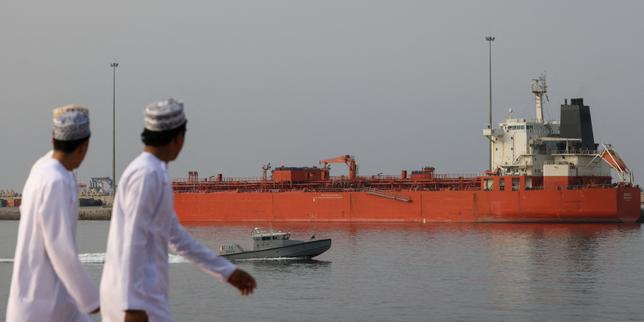
The flow of Iranian oil is no longer a clandestine operation; it is a sophisticated logistical ecosystem. The "Shadow Fleet"—composed of aging tankers with obscured ownership and disabled Transponders (AIS)—operates outside the Western insurance and shipping umbrella. This creates a dual-tier market.
- The Iranian Discount: Iranian Light and Heavy grades typically trade at a $10 to $12 discount to Brent. This discount covers the increased costs of ship-to-ship (STS) transfers and the legal risk premium absorbed by the buyers.
- The China Sink: Independent refineries in Shandong province, known as "Teapots," are the primary destination. These entities are largely insulated from the U.S. financial system, making secondary sanctions ineffective unless Washington is willing to penalize the People's Bank of China—a move that would trigger a global financial decoupling.
The logic of the U.S. Treasury is that as long as this oil reaches China, it reduces China’s demand for "clean" oil from Saudi Arabia or West Africa. This lowers the global bidding war for available barrels, effectively subsidizing the pump prices for American and European consumers through Iranian volume.
The Cost Function of Regional Conflict
The escalation between March 14 and March 20 highlights a critical bottleneck in the Red Sea. Houthi attacks on commercial shipping have forced a significant portion of the global tanker fleet to reroute around the Cape of Good Hope. This adds 10 to 14 days to transit times, effectively "trapping" millions of barrels of oil at sea and reducing the immediate global supply.
This logistical delay functions as a synthetic production cut. If Washington were to simultaneously enforce strict Iranian sanctions, the market would face a "double squeeze": reduced physical supply from Iran and increased "oil-on-water" inventory due to shipping delays. The resulting price spike would likely push Brent toward $100 per barrel, a threshold that historically triggers demand destruction and inflationary spirals.
The Strategic Failure of Strategic Reserves
The Strategic Petroleum Reserve (SPR) has traditionally served as the primary tool for dampening price volatility. However, following the massive releases in 2022 to counter the Russian invasion of Ukraine, the SPR sits at its lowest levels in four decades.
$$SPR_{current} \ll SPR_{historic_average}$$
With the SPR's "ammunition" depleted, the U.S. has lost its internal mechanism for market intervention. This leaves foreign production—even from adversarial nations—as the only remaining lever. The "sanctions relief" is therefore an outsourcing of the SPR’s job to the Iranian oil fields.
The Resilience of the Iranian Revenue Model
While the U.S. seeks price stability, Tehran seeks survival. The increase in volume has partially offset the impact of the price discounts. Reports suggest that Iranian oil exports reached a five-year high in early 2024. This revenue flow directly contradicts the stated goal of "maximum pressure," yet it serves the immediate requirement of preventing a global energy crisis.
This creates a moral hazard: Tehran gains the financial latitude to continue its regional maneuvering, knowing that its oil is too vital to the global economy for the U.S. to fully "zero out" its exports. The current policy is not a peace offering; it is a hostage situation where the global economy is the hostage and Iranian oil is the ransom.
The Bottleneck of Secondary Sanctions
The primary constraint on U.S. action is the potential for collateral damage to the Chinese economy. To truly stop Iranian exports, Washington would need to target:
- Sovereign Wealth Funds: Entities that may be backing the shadow fleet.
- Port Authorities: Specifically those in Malaysia and the UAE where STS transfers occur.
- Global Insurance Markets: Forcing a total breakdown of the P&I (Protection and Indemnity) clubs for any vessel that has ever touched an Iranian port.
The risk of these actions includes a retaliatory sell-off of U.S. Treasuries by China or a total cessation of cooperation on climate and fentanyl trade. The U.S. has determined that the "Price of Enforcement" is higher than the "Price of Iranian Non-Compliance."
The Pivot Point
The immediate strategic play for global energy observers is to monitor the spread between Brent and West Texas Intermediate (WTI). As long as this spread remains wide, and as long as the Red Sea remains a high-risk zone, the U.S. will maintain its "permissive enforcement" stance on Iranian crude.
Any sudden tightening of sanctions will not come from a desire to punish Tehran, but only if OPEC+ (specifically Saudi Arabia) agrees to bring its 2 million barrels of spare capacity back online. Without a guarantee from Riyadh to fill the gap, the U.S. is functionally tethered to the continued export of Iranian oil.
The move to allow Iranian barrels into the market is a admission of a multi-polar energy reality. The U.S. can no longer dictate terms to the market while simultaneously protecting its domestic economy from the consequences of those terms. The "sanction" has become a luxury that the current inflationary environment cannot afford.
The strategic priority for the next quarter is the management of the "Shadow Supply Chain." Expect the U.S. to continue making symbolic designations of individual tankers to maintain the appearance of pressure, while avoiding the systemic designations that would actually stop the flow. Investors and analysts should treat Iranian production as a permanent, albeit unofficial, fixture of the global supply stack until the Red Sea is stabilized or the SPR is significantly refilled.
Would you like me to analyze the specific impact of the 2026 OPEC+ production quotas on this U.S.-Iran dynamic?