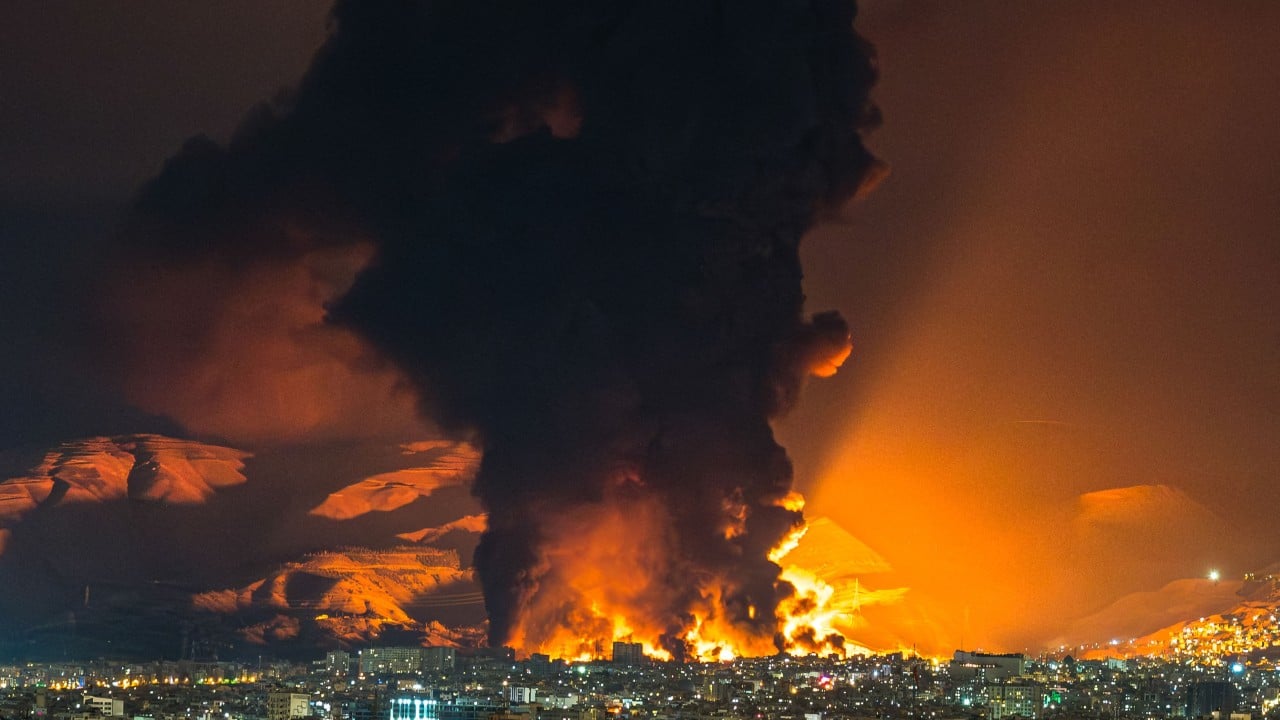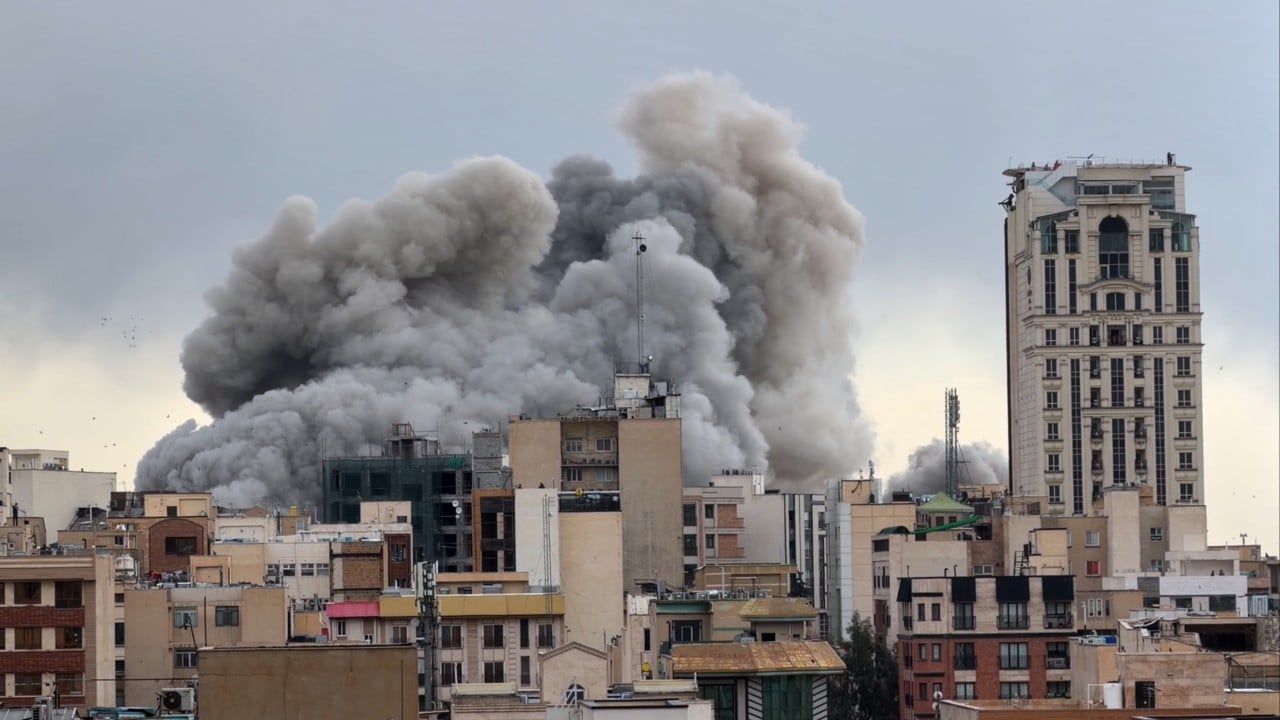
The announcement of a five-day suspension of military strikes against Iranian power generation facilities represents a tactical pivot from total kinetic pressure to a "controlled friction" model of diplomacy. This maneuver does not signal a cessation of hostilities but rather the opening of a high-stakes verification window designed to test the structural integrity of the Iranian leadership’s internal signaling. By isolating power plants—critical nodes in both civilian stability and industrial capacity—the U.S. administration is utilizing infrastructure as a primary lever in a broader psychological and operational sequence.
The Mechanics of Infrastructure Interdependency
Modern nation-states rely on a "stack" of integrated systems where the failure of one layer triggers a non-linear collapse in others. In the Iranian context, power plants are not merely electricity producers; they are the foundational layer for water desalination, medical refrigeration, and the centrifugal operations essential to specialized industrial output. You might also find this related story useful: The $2 Billion Pause and the High Stakes of Silence.
The decision to pause strikes on these specific assets introduces a strategic pause in the Cascade Failure Loop. When a power plant is neutralized, the resulting data suggests a predictable sequence of degradation:
- Level 1 (Primary): Loss of localized grid stability and immediate industrial downtime.
- Level 2 (Secondary): Failure of water pumping stations, leading to a secondary humanitarian crisis that consumes internal security resources.
- Level 3 (Tertiary): Erosion of the "Social Contract" as the domestic population faces sustained darkness, shifting the regime's focus from external defense to internal policing.
By halting strikes for exactly 120 hours, the U.S. provides a "restoration interval." This interval is calculated to allow for the assessment of Iranian repair capabilities and, more importantly, to observe how the regime reallocates energy resources under scarcity. If the regime prioritizes military bunkers over civilian hospitals during this window, it provides the U.S. with a high-fidelity intelligence map of the adversary’s true internal priorities. As highlighted in detailed coverage by Associated Press, the effects are widespread.
The Five-Day Window as a Game Theory Constraint
In strategic negotiations, a time-bound pause functions as a Stochastic Game. The five-day duration is insufficient for significant physical reconstruction—which usually requires weeks for turbine or transformer replacement—but it is ample time for diplomatic back-channeling.
The duration of 120 hours is statistically significant. It is long enough to bypass the immediate "fog of war" that follows a kinetic event, yet short enough to prevent the adversary from meaningfully hardening their positions or redistributing mobile air defense systems. This creates a "Pressure Cooker Effect." The Iranian leadership must decide whether to use this time to offer concessions or to prepare for a "Pulse-6" (the resumption of strikes on day six).
The Cost-Benefit Calculus of the Pause
For the U.S. administration, the cost of this pause is low. Satellite reconnaissance (IMINT) and signals intelligence (SIGINT) remain active. The "cost" is essentially the temporary loss of momentum. However, the benefits are categorized across three strategic domains:
- Intelligence Validation: Observing which nodes are repaired first reveals the Iranian "Critical Path" for recovery.
- Coalition Management: Providing a humanitarian "breather" satisfies international allies who may be wary of total energy grid collapse and the resulting refugee flows.
- Targeting Refinement: A five-day halt allows for the analysis of Battle Damage Assessment (BDA) without the visual interference of ongoing smoke or active fire suppression.
Distinguishing Kinetic Reality from Political Signaling
It is vital to differentiate between a halt in strikes and a lifting of sanctions. The former is a temporary tactical choice; the latter is a strategic shift. The power plants remain "on the target list," and the threat of re-engagement serves as a more powerful deterrent than the strikes themselves. This is the Paradox of Potentiality: a target is often more valuable while it still exists because it remains a bargaining chip. Once destroyed, the leverage disappears.
The Iranian power grid is characterized by significant aging infrastructure and a reliance on decentralized gas turbines. This makes the system resilient to single-point failures but highly vulnerable to systemic "Voltage Collapse" if multiple nodes are removed simultaneously. The U.S. strategy appears to be an application of Incremental Escalation, where the threat of returning to a state of total blackout is used to force a specific behavioral change in Tehran regarding regional proxies or enrichment levels.
Operational Risks and The Bottleneck of Credibility
Every diplomatic pause carries the risk of "Moral Hazard." If the five-day window passes without Iranian concessions and the U.S. fails to resume strikes immediately, the "Red Line" loses its psychological potency. This creates a credibility bottleneck. For the moratorium to be an effective tool of statecraft, the resumption of strikes on day six must be viewed by the adversary as an absolute certainty in the absence of a breakthrough.
The second risk is Asymmetric Response. While the U.S. halts strikes on physical infrastructure, Iran may utilize the window to launch cyber-attacks against Western financial systems or maritime interests. This "Domain Shifting" allows an adversary to maintain pressure while technically adhering to the terms of a kinetic ceasefire.
Strategic Requirement for the Post-Pause Phase
The transition from the 120-hour mark requires an immediate and decisive pivot. If the moratorium fails to yield a diplomatic opening, the subsequent kinetic phase must logically target the Interconnectors—the high-voltage lines that link regional grids. Neutralizing interconnectors is more efficient than destroying entire plants, as it prevents the redistribution of power from unaffected regions to the capital, effectively isolating the regime into "Energy Islands."
The tactical play here is not to pursue total destruction, but to manage the adversary's Functional Capacity. By toggling the energy supply of a nation-state on and off through a series of timed pauses and strikes, the U.S. establishes a new norm in digital-age warfare: the use of national infrastructure as a remote-controlled thermostat for geopolitical compliance.
The success of this five-day experiment will be measured not by the absence of fire, but by the volume of diplomatic traffic generated during the silence. If the signals remain flat, the return to kinetic operations must be calibrated to hit the "Recovery Nodes" identified during the five-day observation period, ensuring that the next period of darkness is not a choice, but a permanent structural reality.