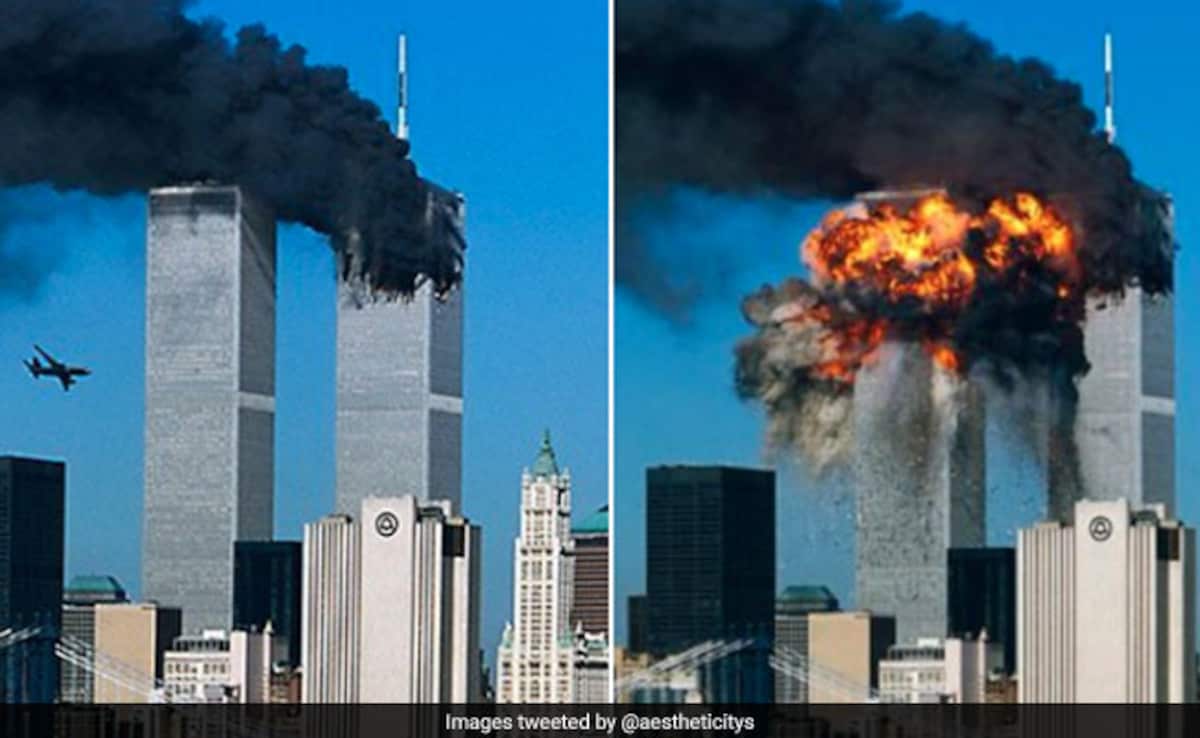
The utilization of "False Flag" narratives by state actors functions as a defensive signaling mechanism designed to preemptively delegitimize adversary kinetic actions. When Iranian state media or high-ranking officials invoke specific Western cultural trauma—such as the September 11 attacks—and link them to discredited networks like the Epstein enterprise, they are not merely engaging in conspiratorial rhetoric. They are deploying a specific information operations framework meant to create a "noise floor" that complicates the attribution of future conflicts. This strategy relies on the convergence of three distinct tactical pillars: historical trauma anchoring, the weaponization of domestic scandal, and the pre-emptive denial of casus belli.
The Triad of Pre-emptive Narrative Denial
State-level communication strategies in high-tension environments operate on the principle of Narrative Pre-emption. By identifying a potential catalyst for war before it occurs and labeling it a "False Flag," an actor attempts to strip an opponent of the moral high ground required to build an international coalition.
1. Historical Trauma Anchoring
The reference to "9/11 style" events serves as a cognitive anchor. In the logic of psychological operations, using a high-impact historical event creates an immediate, visceral association in the target audience. For Tehran, this serves two purposes:
- Mirroring: It suggests that the adversary is capable of the very atrocities they claim to fight.
- Scale Calibration: It sets the expectation for the magnitude of a "staged" event, suggesting that anything less than a catastrophic loss of life would be insufficient to trigger a full-scale regional war.
2. Strategic Convergence of Disparate Scandals
The integration of the "Epstein Network" into a geopolitical warning is a sophisticated attempt to leverage existing domestic distrust within Western populations. By linking intelligence operations to a widely reviled and verified criminal enterprise, the state actor attempts to bridge the gap between "fringe" theory and institutional critique. This creates a feedback loop where legitimate skepticism of elite misconduct is used to shield a state actor from legitimate international scrutiny.
3. The Attribution Nullification
The primary goal of these warnings is to complicate the OODA loop (Observe, Orient, Decide, Act) of Western intelligence agencies. If a legitimate provocation occurs—such as a mine attack on a tanker or a drone strike on infrastructure—the "False Flag" narrative is already embedded in the global information ecosystem. This forces the accusing party to spend critical time and political capital proving the event was not staged, rather than responding to the event itself.
The Mechanics of Proxy-Based Information Operations
Information warfare is rarely conducted through a single channel. It operates through a hierarchy of dissemination that provides the state with plausible deniability while ensuring maximum reach.
- Tier 1: Official State Organs: Direct statements from the Ministry of Foreign Affairs or IRGC leadership provide the "source code" for the narrative.
- Tier 2: Controlled Media: Outlets like PressTV or Tasnim News expand on the technical details, often inventing specific "intelligence reports" to add a veneer of evidence.
- Tier 3: Digital Echo Chambers: Bot networks and "independent" commentators on social media platforms amplify the message, stripping away the state branding to make the narrative appear grassroots or "alternative."
This structure ensures that even if the Tier 1 source is dismissed as propaganda, the Tier 3 ripple effect reaches audiences who are naturally predisposed to distrust official government narratives.
Quantifying the Cost of Credibility in Modern Geopolitics
The efficacy of a "9/11 style" warning is inversely proportional to the transparency of the international system. We can model this relationship through a Credibility Cost Function.
If $C$ represents the credibility of the accusing state and $N$ represents the volume of pre-emptive narrative interference, the threshold for international action $T$ is defined by the inability of the accusing state to overcome the domestic skepticism generated by $N$. When $N$ increases via high-saturation social media campaigns, the burden of proof $P$ required for kinetic intervention shifts from "clear and convincing" to "irrefutable and universally accepted," a standard rarely met in the fog of war.
The Mechanism of Institutional Decay
The strategy thrives on the erosion of trust in Western institutions. When intelligence agencies have a documented history of errors—such as the "weapons of mass destruction" failure in 2003—they provide the "logical infrastructure" for adversaries to build upon. Every historical intelligence failure reduces the $C$ variable in our equation, making the $N$ (narrative interference) significantly more effective.
The Role of Algorithmic Amplification in State Narratives
The modern information environment treats engagement as the primary metric of value. Narratives involving high-stakes conspiracies (Epstein, 9/11, secret networks) generate higher dwell time and sharing rates than nuanced geopolitical analysis. State actors exploit these algorithmic biases to ensure their "warnings" bypass traditional diplomatic channels and land directly in the feeds of Western citizens.
This creates a "Horizontal Escalation" of the conflict. While the physical tension remains in the Persian Gulf or the Levant, the psychological tension is exported to the domestic population of the adversary. This domestic friction acts as a drag on the adversary's decision-making speed. If a government knows that 30% of its population will immediately view any military incident as a "False Flag," the political cost of retaliation becomes a deterrent in its own right.
Limitations of the Pre-emptive False Flag Strategy
Despite its psychological utility, this strategy suffers from several critical bottlenecks that limit its long-term viability as a deterrent.
- The Boy Who Cried Wolf Effect: Repeatedly warning of "imminent" false flags that never materialize leads to narrative fatigue. Over time, the "noise" becomes predictable and is eventually filtered out by all but the most fringe elements of the audience.
- Evidence Asymmetry: Modern satellite imagery, open-source intelligence (OSINT), and signal intercepts have made it increasingly difficult to "stage" large-scale events without leaving a digital trail. The barrier for a successful false flag is higher than it has ever been in human history.
- Economic Blowback: Engaging in aggressive conspiratorial rhetoric can signal instability to global markets. For a state already under sanctions, the marginal gain of a psychological operation may be offset by the further alienation of neutral trading partners who prioritize predictability over propaganda.
The Strategic Path Forward: Identifying the "Event Horizon"
In the coming months, the focus must shift from the content of these warnings to the timing of their deployment. Information surges of this nature usually precede one of two things: a planned provocation by the state actor itself (using the "False Flag" claim as cover) or a genuine fear of an incoming strike.
To navigate this, analysts must track the "Verification Velocity"—the speed at which independent OSINT communities can debunk or confirm physical incidents. The faster an incident can be verified by non-aligned third parties, the less effective the "False Flag" narrative becomes.
The strategic play is not to argue against the conspiracy, but to saturate the environment with verifiable, multi-source data points that render the narrative mathematically impossible. Neutralizing state-sponsored information operations requires moving from a reactive "debunking" posture to a proactive "transparency" posture, where the data is released in real-time, leaving no vacuum for state-led myth-making to occupy.