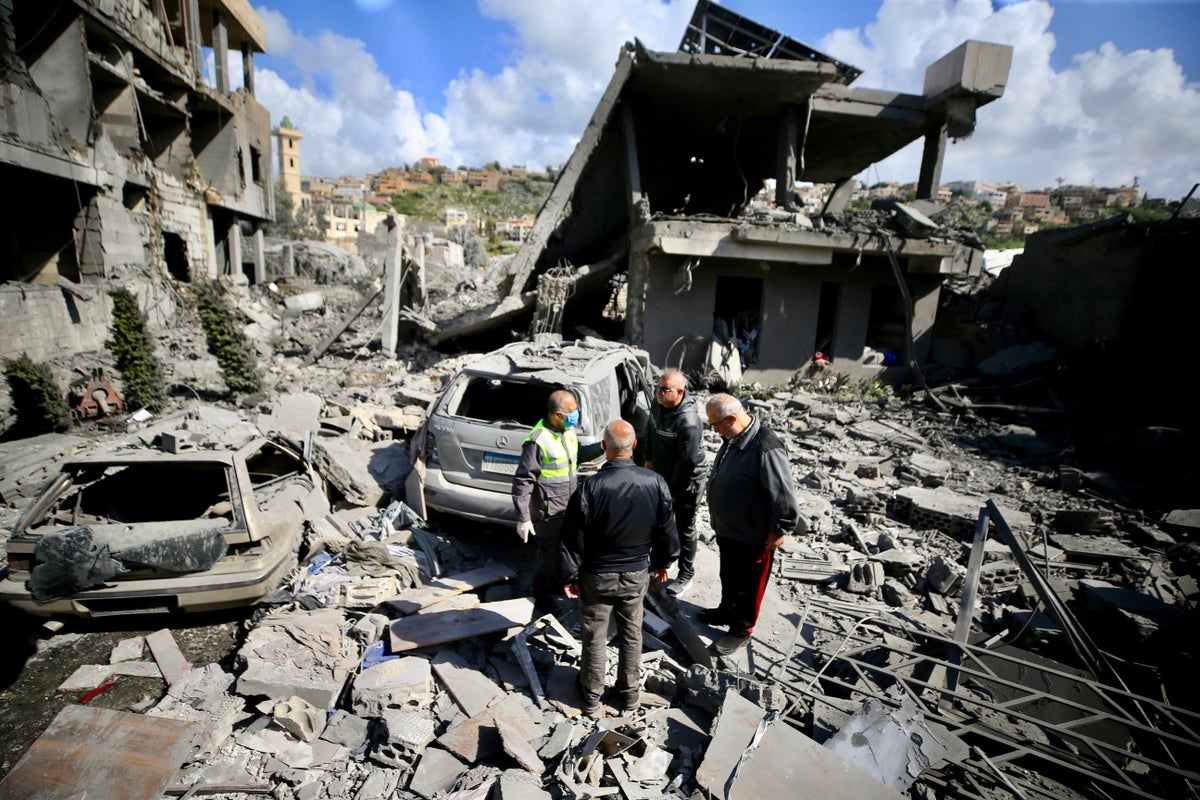
The assertion that "what happens in Gaza will happen everywhere" serves as a predictive model for regional destabilization rather than a mere rhetorical warning. This framework rests on three interlocking variables: the degradation of international legal norms, the proliferation of non-state kinetic capabilities, and the collapse of the "status quo" security architecture in the Middle East. Analyzing the current trajectory requires moving beyond emotive discourse to examine the structural incentives that drive actors toward total mobilization or systemic contagion.
The Erosion of Normative Deterrence
International relations function on the premise of predictable consequences for the violation of sovereign or humanitarian boundaries. When these boundaries are breached without high-attrition consequences, the "cost of escalation" for other regional actors drops significantly. This creates a moral hazard in geopolitical strategy. If a state or entity observes that the international community cannot or will not enforce its established red lines, that entity is incentivized to pursue its objectives through unilateral force.
The Palestinian envoy’s warning highlights a transition from a rules-based order to a capability-based order. In a capability-based order, security is not derived from treaties but from the physical capacity to deny an opponent’s objectives.
The primary mechanism of "spillover" in this context is the Demonstration Effect. This occurs when tactical innovations or political defiance in one theater provide a blueprint for actors in secondary theaters—such as the West Bank, Southern Lebanon, or the Red Sea.
The Three Pillars of Regional Contagion
To quantify the risk of the conflict expanding "everywhere," we must categorize the drivers into three distinct pillars of influence.
1. The Transnational Proxy Network
The conflict is not a closed system between two parties. It operates within a "Resistance Axis" framework where ideological alignment is backed by a shared logistics chain.
- Logistical Interdependence: The flow of advanced weaponry, such as precision-guided munitions and unmanned aerial vehicles (UAVs), creates a unified technical front.
- Simultaneous Attrition: By engaging Israel and its allies on multiple fronts (Gaza, Lebanon, Yemen, Iraq), non-state actors attempt to overextend the defensive capabilities of a technologically superior force. This is a classic "Saturation Strategy" intended to find the breaking point of Iron Dome-style interceptor inventories.
2. The Radicalization Feedback Loop
The humanitarian data coming out of Gaza serves as raw material for a globalized narrative war. This is not just a battle for "hearts and minds" but a functional recruitment tool.
- Information Asymmetry: In the digital age, tactical victories on the ground can be negated by strategic losses in the global information space.
- The Martyrdom Metric: For asymmetric actors, high casualty rates often translate into increased political legitimacy among domestic and regional audiences, complicating the exit strategy for conventional militaries.
3. The Diplomatic Vacuum
The absence of a viable "Day After" political framework creates a power vacuum. History dictates that vacuums in the Middle East are filled by the most organized, often most radical, elements. When moderate diplomatic channels are perceived as ineffective, the utility of violence increases as the only perceived lever for change.
The Cost Function of Prolonged Urban Warfare
Urban warfare in a densely populated environment like Gaza imposes a unique set of constraints that dictate the speed and outcome of the conflict. The "Cost Function" is defined by the ratio of military objectives achieved to the degradation of international standing and domestic resources.
$$C = \frac{M + R}{L \times T}$$
Where:
- $C$ = Total Strategic Cost
- $M$ = Military Expenditure (Munitions, Personnel, Intelligence)
- $R$ = Reputational/Diplomatic Attrition
- $L$ = Legitimacy of the Objective
- $T$ = Time (Duration of the kinetic phase)
As $T$ increases, $R$ grows exponentially. The longer the conflict persists without a clear political resolution, the more likely it is to trigger secondary "Black Swan" events—such as the collapse of neighboring economies or the sudden entry of a major regional power into the kinetic space.
Mechanisms of Tactical Diffusion
The warning that "Gaza will happen everywhere" refers to the diffusion of urban siege tactics and the normalization of high-casualty warfare. This diffusion happens through several technical channels:
- Open-Source Intelligence (OSINT) and Combat Footage: Real-time analysis of drone strikes and anti-tank maneuvers allows other militant groups to adapt their tactics without being present on the battlefield.
- The UAV Revolution: The use of low-cost, off-the-shelf drones for reconnaissance and strike missions has equalized the "surveillance gap" between state and non-state actors. This technology is easily exported and replicated.
- Subterranean Warfare Evolution: The sophistication of tunnel networks in Gaza has set a new global standard for "Hardened and Deepened" targets. Conventional air superiority is neutralized by subterranean persistence, forcing a slow, high-casualty ground clearance process that most modern democracies are politically ill-equipped to sustain.
The West Bank Bottleneck
While Gaza remains the kinetic center, the West Bank represents the most immediate "spillover" risk. The security architecture there relies on a fragile cooperation between the Israeli security apparatus and the Palestinian Authority (PA).
The erosion of the PA’s legitimacy, driven by its inability to protect its population or offer a political horizon, creates a "Security Deficit." When the PA can no longer provide internal order, the Israeli military is forced to increase its footprint, which in turn accelerates the cycle of friction and radicalization.
The bottleneck occurs because the Israeli Defense Forces (IDF) cannot maintain a maximum-intensity posture in both Gaza and the West Bank simultaneously without mobilizing reserves to a degree that threatens the national economy's viability.
Geopolitical Realignments and the Death of "Cold Peace"
The Abraham Accords represented a shift toward economic pragmatism over ideological conflict. However, the intensity of the Gaza operations has placed "Cold Peace" partners (Jordan, Egypt, UAE) in an untenable position.
- Domestic Pressure: Public opinion in Arab states acts as a hard constraint on executive action. No leader can remain indifferent to the perceived "liquidation" of the Palestinian cause without risking internal unrest.
- The Security Dilemma: If Israel succeeds in its military objectives but leaves a destroyed, ungovernable Gaza, the burden of reconstruction and security falls on its neighbors. None of these states are willing to inherit a "nest of insurgency."
This leads to a paradox: Israel’s pursuit of "total victory" may result in a "total vacuum" that is more dangerous than the original threat.
Strategic Forecast: The Shift Toward Multipolar Chaos
The core fallacy in current Western strategy is the belief that this conflict can be "contained." The interconnectedness of global energy markets, shipping lanes (as seen with the Houthi interventions), and the digital information space means that a local fire will inevitably produce global smoke.
The most likely strategic outcome is not a return to the 1993 Oslo-era paradigms but a descent into a fragmented, multi-polar Middle East where non-state actors hold the balance of power.
To prevent the "Gaza everywhere" scenario, the logic of the conflict must transition from a zero-sum kinetic game to a high-cost diplomatic trade-off. This involves:
- Establishing a "Sovereignty Guarantee": A credible, internationally-backed path to Palestinian statehood that de-incentivizes the "Axis of Resistance" by providing a non-violent alternative for political expression.
- Technological Containment: Aggressive interdiction of the component parts used in UAV and missile production to raise the barrier to entry for non-state actors.
- Regional Integration of Security: Moving beyond bilateral deals to a multilateral security framework that treats regional stability as a "Collective Good" rather than a pawn in a larger game of influence.
The window for a structured resolution is closing. The transition from "managed conflict" to "unmanaged escalation" is often invisible until the first regional domino falls.
Would you like me to map the specific economic impact of the Red Sea shipping disruptions on Mediterranean trade routes?