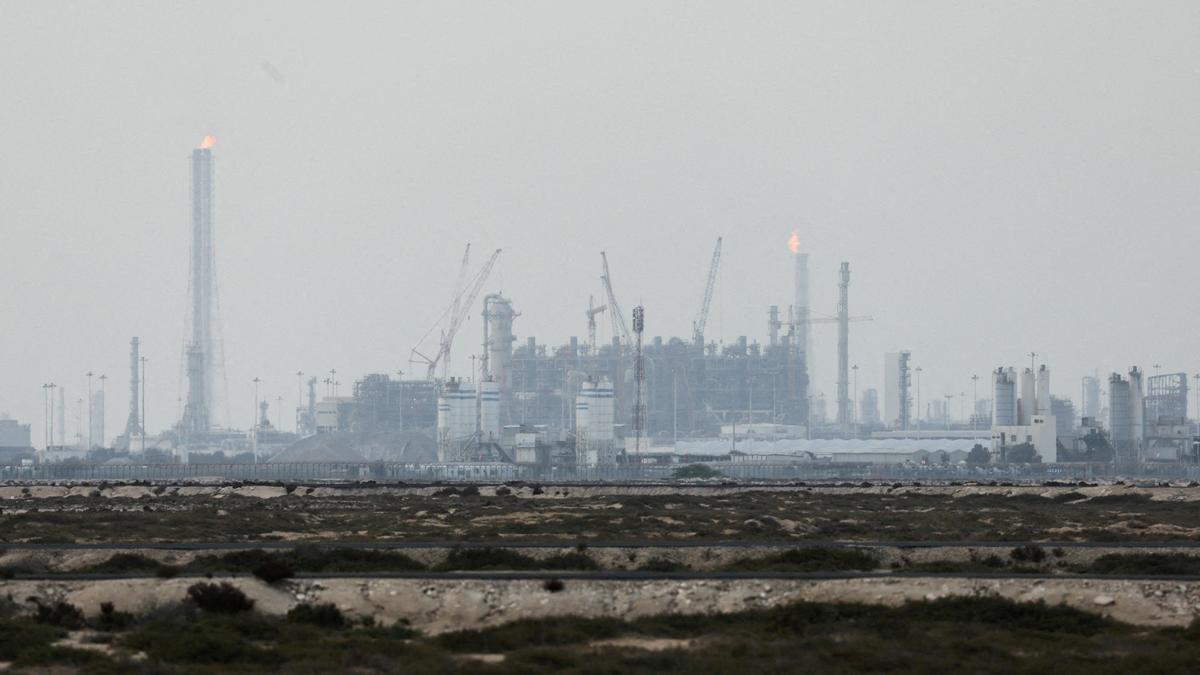
The expulsion of two Iranian diplomats from Doha marks a structural shift in the Gulf’s "quiet diplomacy" model, signaling that the inviolability of energy infrastructure now supersedes the necessity of regional mediation. Qatar’s decision to declare these officials persona non grata follows a verified kinetic or cyber-physical interference at a critical liquefied natural gas (LNG) processing node. This event is not a localized security breach but a data point confirming the breakdown of the tacit non-aggression pact governing the world’s largest non-associated gas field.
The Strategic Architecture of the North Field
To understand the severity of Qatar’s response, one must quantify the value of the North Field (known as South Pars in Iran). This single geological structure contains approximately 10% of the world’s known gas reserves.
The field’s operational continuity is the primary variable in Qatar’s sovereign wealth generation and its geopolitical leverage in Europe and Asia. The "Persona Non Grata" (PNG) designation is a specific diplomatic instrument used here to achieve three immediate strategic objectives:
- Attribution without Escalation: By naming specific embassy officials, Doha attributes the "attack" to state-sanctioned actors while providing the Iranian state a narrow "rogue element" exit ramp.
- Infrastructure Integrity Signaling: It informs global energy markets that Qatar will prioritize the security of its export capacity over its traditional role as a neutral interlocutor between Tehran and Washington.
- Internal Security Hardening: The expulsion facilitates a comprehensive audit of domestic vulnerabilities, particularly where human intelligence (HUMINT) may have intersected with industrial control systems (ICS).
The Mechanics of Kinetic Sabotage in LNG Value Chains
An "attack on a gas facility" in the Qatari context typically targets one of three bottleneck points. Sabotage at these stages yields exponential disruption relative to the energy expended:
- Wellhead and Gathering Pipelines: Disrupting the flow at the source. While repairable, these attacks create environmental hazards that necessitate immediate shutdowns across the manifold.
- Liquefaction Trains: These are the most capital-intensive components of the North Field Expansion (NFE). A disruption here creates a "bullwhip effect" on global spot prices, as LNG cannot be easily rerouted or stored in massive quantities without active cooling.
- Loading Terminals and Port Infrastructure: Targeting the Ras Laffan bottleneck.
The involvement of embassy officials suggests a sophisticated blend of cyber-reconnaissance and physical coordination. In modern industrial sabotage, the "attack" often begins months prior with the mapping of air-gapped systems or the subversion of maintenance protocols. If Iranian officials were involved, the logic suggests a strategy of "calibrated disruption"—creating enough friction to signal capability without triggering a full-scale military retaliation from the U.S. Central Command (CENTCOM), which maintains a massive presence at Al Udeid Air Base.
The Cost Function of Diplomatic Neutrality
Qatar has historically operated under a "Hedging and Engagement" framework. This involves maintaining deep economic ties with the West while sharing the world’s largest gas field with Iran. This shared geography creates a permanent state of mutual dependency, governed by the following variables:
The Shared Reservoir Pressure Problem
The North Field and South Pars are a single pressure-connected reservoir. If one party accelerates extraction, it can technically deplete the pressure on the other side. This creates a "Prisoner’s Dilemma" where cooperation is the only path to long-term resource maximization.
$$P_{total} = f(Q_{qatar} + Q_{iran})$$
Where $P$ is reservoir pressure and $Q$ is the extraction rate. Any kinetic attack on the infrastructure of one side disrupts this equilibrium, potentially leading to technical imbalances in the reservoir that could permanently damage the recovery factor.
The Intermediary Penalty
By expelling Iranian officials, Qatar is admitting that the "Intermediary Premium"—the benefit it gains from being the middleman—has been outweighed by the "Insecurity Discount"—the loss of investor confidence in its energy exports. When sabotage enters the equation, the cost of maintaining an open channel to Tehran becomes a liability for Qatar’s long-term supply contracts with Germany, China, and Japan.
Intelligence Convergence and the Attribution Gap
The transition from a "security incident" to a formal diplomatic expulsion requires a high threshold of forensic evidence. In the intelligence community, this is known as the "Attribution Confidence Interval." For a state like Qatar, which values discretion, the evidence likely included:
- Signals Intelligence (SIGINT): Intercepted communications between the embassy and the tactical actors.
- Digital Forensics: Traceable malware or unauthorized access logs linked to Iranian-sourced IP addresses or known Advanced Persistent Threat (APT) groups.
- Physical Surveillance: Direct observation of embassy staff engaging in activities outside their diplomatic remit, such as the surveying of Ras Laffan’s perimeter.
The decision to go public—even partially—indicates that the breach was not merely an attempt at espionage but an active "disruptive operation." Espionage is often tolerated in the shadows; sabotage is a violation of the host nation's primary survival mechanism.
Re-evaluating the Gulf Security Matrix
The expulsion recalibrates the regional security matrix. For years, the assumption was that Iran would not target Qatari soil due to Doha’s role in facilitating indirect talks with the United States. This assumption is now defunct.
We are seeing the emergence of a "Fragmented Escalation" strategy. Iran, facing increased pressure from Western sanctions and regional encirclement, may be testing the limits of its "shared interest" partners. By targeting the gas facility, Tehran signals to the global market that no energy source is immune to the "Shadow War," regardless of diplomatic friendship.
This creates a bottleneck for Qatari strategy. Doha must now:
- Accelerate the integration of AI-driven anomaly detection in its ICS/SCADA networks to reduce the "Dwell Time" of intruders.
- Increase its reliance on Western private security and intelligence firms, potentially diluting its "sovereign neutrality."
- Formalize a "Red Line" doctrine regarding the North Field, making it clear that any interference will result in immediate economic or diplomatic countermeasures.
The Strategic Play for Energy Stakeholders
For global energy analysts and institutional investors, the "Qatar-Iran Friction" is the new volatility baseline. The North Field is no longer a "safe haven" asset; it is a frontline asset.
The immediate tactical move for LNG off-takers is to reassess force majeure clauses in their Qatari contracts. If "state-sponsored sabotage" is categorized as an act of war or a political risk beyond the seller’s control, the financial exposure for European utilities could be catastrophic.
The broader strategic play involves a shift toward "Hard-Secured Infrastructure." This means moving beyond passive defense (fences and firewalls) to active deterrence. Qatar must now demonstrate a capability to impose costs on Tehran that exceed the perceived benefits of sabotage. This likely involves a silent pivot toward deeper intelligence sharing with the "Abraham Accords" nations, even if Doha remains officially outside that framework.
The expulsion of the two officials is the opening move in a high-stakes recalibration of the gas-to-power ratio in the Middle East. It proves that in the hierarchy of national interests, the flow of gas remains the ultimate priority, and even the most seasoned diplomats have a breaking point when the "liquefaction train" stops moving.
Shift all procurement risk assessments to include "shared-reservoir interference" as a Tier-1 threat. Monitor the North Field expansion project (NFE) for delays in the commissioning of Train 7; any timeline slippage in the next six months should be interpreted as a direct result of "security-hardening" pauses rather than technical issues. Diversify spot-market exposure immediately to mitigate the Qatari-centralization risk that has dominated the post-2022 energy landscape.