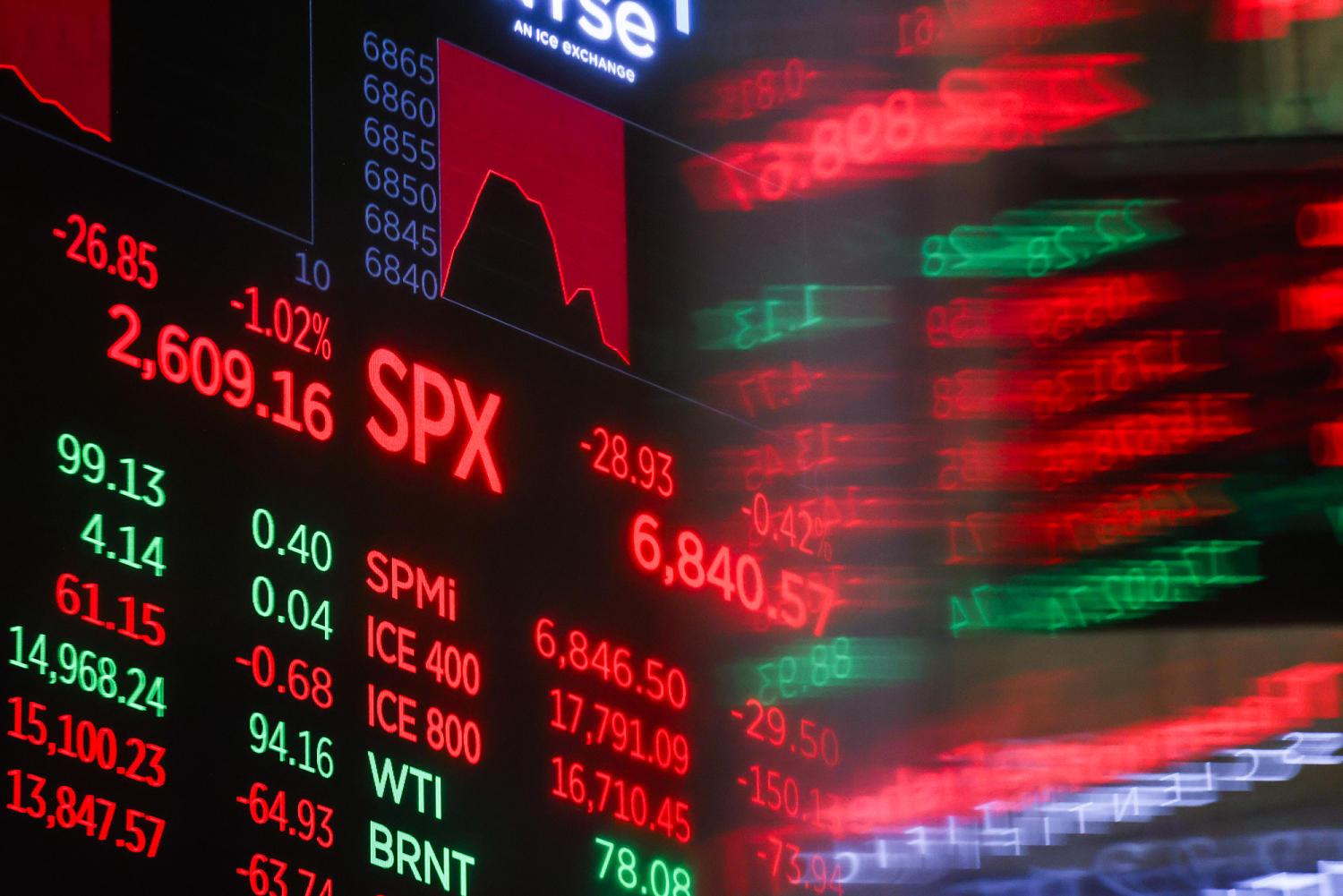
Financial markets currently operate under a compressed risk premium that fails to account for the asymmetric tail risks inherent in a direct military escalation between regional powers. When Iran signals a willingness to counter a ground invasion, the market reaction—characterized by a simultaneous slide in equities and a spike in Brent and WTI—is not merely a knee-jerk emotional response. It represents a rapid recalibration of the Cost of Energy Input against the Global Equity Discount Rate. The interplay between these two variables determines the velocity of capital flight from risk assets into commodities and defensive hedges.
The Three Pillars of Geopolitical Contagion
The escalation of rhetoric from Tehran creates a three-pronged threat to global economic stability. Understanding the mechanics of these pillars is essential for interpreting why certain sectors bleed while others remain resilient.
1. The Logistics of Supply Disruption
The most immediate concern is the physical bottleneck of global energy. The Strait of Hormuz remains the single most important chokepoint in the global oil trade, handling roughly 20% of the world's liquid petroleum consumption. Any credible threat to this passage forces a shift from "Just-in-Time" inventory management to a "Just-in-Case" hoarding strategy.
- The Risk Factor: If a ground invasion triggers a blockade or naval skirmishes, the sudden removal of 20 million barrels per day (bpd) would create a supply-demand gap that cannot be bridged by Strategic Petroleum Reserves (SPR) or spare capacity from non-aligned OPEC+ members in the short term.
- The Price Mechanism: Crude prices do not rise linearly with supply drops; they rise exponentially as refineries bid up remaining barrels to maintain operational continuity.
2. The Inflationary Feedback Loop
Equities fall during these periods because the rising cost of oil acts as a regressive tax on both consumers and corporations.
- Input Costs: For manufacturing and transport-heavy industries, energy is a primary variable cost. When oil climbs, margins contract unless companies can pass costs to consumers.
- Consumer Sentiment: High fuel prices reduce discretionary spending, lowering the earnings outlook for retail, travel, and technology sectors.
- Central Bank Intervention: Rising energy prices fuel headline inflation. This prevents central banks from cutting interest rates, effectively "trapping" the equity market in a high-rate environment despite slowing growth.
3. The Flight to Liquidity and Sovereign Debt
As uncertainty increases, the equity risk premium (ERP) expands. Investors demand higher returns to hold stocks compared to "risk-free" assets like U.S. Treasuries. This creates a mechanical sell-off in high-multiple stocks, particularly in the tech sector, where valuations are sensitive to the long-term discount rate.
Quantifying the Escalation Ladder
Market participants often misjudge the difference between a "skirmish" and a "systemic conflict." To analyze the impact of Iran’s statements, we must categorize the conflict levels and their specific economic outputs.
Level I: Proxy War and Rhetoric
Current market conditions reflect Level I. The impact is limited to volatility spikes ($VIX$) and speculative bidding in oil futures. The actual flow of goods remains largely unaffected, but the insurance cost of shipping (War Risk Premiums) begins to rise.
Level II: Targeted Infrastructure Attrition
If the conflict moves beyond words to targeted strikes on energy infrastructure—such as refineries or pumping stations—the market enters a state of structural deficit. At this stage, the correlation between oil and the USD strengthens, as the world rushes to the greenback as a safe haven while simultaneously needing more dollars to purchase expensive energy.
Level III: Total Regional Blockade
A ground invasion countered by a total closure of shipping lanes would decouple the energy market from standard economic fundamentals. In this scenario, the price of oil becomes a function of political desperation rather than marginal utility.
The Equity Discount Mechanism
The "slide" in stocks mentioned by observers is a direct result of the Gordon Growth Model under duress. The value of a stock is defined by:
$$P = \frac{D_1}{r - g}$$
Where:
- $P$ is the stock price.
- $D_1$ is the expected dividend.
- $r$ is the required rate of return (discount rate).
- $g$ is the expected growth rate.
Geopolitical instability causes $r$ to increase (due to higher risk premiums) and $g$ to decrease (due to higher energy costs and supply chain friction). When the denominator $(r - g)$ grows, the price $P$ must collapse to maintain equilibrium. This is why a 5% increase in oil can lead to a disproportionate 2-3% drop in broad market indices.
Strategic Vulnerabilities in Global Supply Chains
The threat of a ground invasion highlights the fragility of the "Globalized Production Function." Western economies have spent decades optimizing for efficiency, which often means extreme geographic concentration of critical components.
Energy-Intensive Industries
Chemicals, steel, and aluminum production are the first to experience "Value-Add Erosion." If energy prices stay elevated for more than one fiscal quarter, these industries face structural insolvency in high-cost regions, leading to plant closures and permanent shifts in global market share.
The Role of Spare Capacity
The market's ability to absorb a shock depends on the Spare Capacity Buffer. Currently, the margin for error is thin. While some analysts point to non-OPEC production increases, these sources are often "heavy" or "sour" crudes that cannot be processed by all refineries, leading to localized shortages even if global volumes seem adequate on paper.
Assessing the Credibility of Counter-Invasion Threats
The statement from Iran regarding a ground invasion must be viewed through the lens of Game Theory. In a "Chicken" game scenario, both actors signal maximum aggression to force the other to blink.
- Tactical Deterrence: By threatening an asymmetrical response, a state aims to increase the "Expected Cost" of an invasion to a point where the invader's domestic political base will no longer support the action.
- Market Manipulation: Geopolitical actors are aware of how their statements affect the $WTI/Brent$ spread. High oil prices provide an immediate revenue boost to energy-exporting nations, providing them with a "War Chest" before a single shot is fired.
The second-order effect of this rhetoric is the "Volatilty Tax" on Western economies. Even without a physical conflict, the mere threat keeps interest rates higher for longer, draining liquidity from the global financial system.
The Strategic Play for Institutional Portfolios
Standard diversification fails during systemic geopolitical shocks because correlations tend to move toward 1.0; almost everything sells off simultaneously as investors dash for cash.
The strategy requires a shift into Relative Value and Hard Asset Arbitrage.
- Long Energy Volatility: Rather than buying spot oil, utilize long-dated call options on energy ETFs. This limits downside risk while capturing the exponential upside of a "Level III" escalation.
- Short High-Duration Equities: Reduce exposure to companies whose valuations are based on cash flows ten years in the future. These are the most sensitive to the rising discount rates triggered by inflationary energy shocks.
- Commodity-Linked Currencies: Monitor the CAD and AUD. As net energy and mineral exporters, these currencies act as a natural hedge against the devaluation of import-dependent currencies during a Middle Eastern supply crunch.
- Defense Sector Reallocation: Physical conflict necessitates a rapid depletion of munitions and hardware. The "Replenishment Cycle" for defense contractors provides a non-cyclical growth hedge that is decoupled from broader consumer spending trends.
Exposure should be concentrated in assets that represent the Inelastic Portion of the Supply Chain. When the world enters a period of high-stakes kinetic threats, the value of "Optionality" and "Physicality" far outweighs the value of "Efficiency" and "Growth." Position for a sustained period of high-floor volatility rather than a return to the low-inflation, low-risk environment of the previous decade.