The celebration of Eid al-Fitr functions as a high-frequency sentiment indicator, revealing the profound friction between traditional communal resilience and the systemic degradation caused by protracted conflict. While superficial analysis focuses on the visual contrast of festive attire against rubble, a structural deconstruction identifies a complex "Resilience-Trauma Feedback Loop." This mechanism dictates how displaced and war-affected populations manage the psychological and economic capital required to maintain cultural continuity under duress.
The Dual-Spectrum Economy of Eid
The observation that Eid "brings smiles yet stirs scars" is an oversimplification of a bifurcated socio-economic reality. To understand the current landscape, one must categorize the celebration into two distinct operational modes: The Consumption of Normalcy and The Memory-Induced Deficit.
1. The Consumption of Normalcy
In regions categorized by active conflict or post-war instability, the purchase of new clothes and traditional sweets is not merely a retail activity; it is a strategic investment in psychological stability. Households often divert scarce financial resources from long-term needs—such as home repair or education—into immediate, high-visibility cultural markers. This creates an artificial "Normalcy Premium."
The logic follows a specific utility function:
- Signaling Value: Reaffirming social standing and communal belonging despite external chaos.
- Psychological Anchoring: Using the rigid structure of the lunar calendar to provide a sense of temporal order in environments where the future is unpredictable.
- Emotional Resilience: Creating a "joy buffer" that mitigates the long-term impact of cumulative stress.
2. The Memory-Induced Deficit
For many, the physical act of celebration triggers a surge in "Grief Liability." This occurs when the absence of deceased or displaced family members creates a delta between the expected communal experience and the lived reality. The festival does not just "remind" people of loss; it quantifies it. The empty seat at the table is a data point representing the erosion of the family unit, which remains the primary social security net in these regions.
The Three Pillars of Fragile Celebration
To quantify how a population navigates this period, we must examine the intersection of three specific variables: Economic Liquidity, Spatial Stability, and Communal Cohesion.
Variable 1: Forced Economic Prioritization
In high-inflation or sanctioned environments, the cost of Eid essentials often scales faster than the median income. This leads to a degradation of traditional gift-giving (Zakat al-Fitr and Eidi).
- Liquidity Constraints: Families shift from purchasing new goods to repairing old ones, a transition that signals a move from "Growth-Oriented Celebration" to "Survival-Oriented Observance."
- The Debt Trap: In many communities, the social pressure to maintain appearances leads to high-interest informal borrowing, creating a post-Eid economic hangover that further destabilizes the household's annual financial outlook.
Variable 2: The Geography of Displacement
The "scars" referenced in the competitor's narrative are often rooted in the loss of place. Eid is geographically dependent; specific rituals are tied to ancestral homes, local mosques, and community squares.
- The Displacement Penalty: Refugees and Internally Displaced Persons (IDPs) face a lack of "sacred space." Celebrating in a tent or a rented apartment in a foreign city introduces a sense of alienation that nullifies the restorative effects of the holiday.
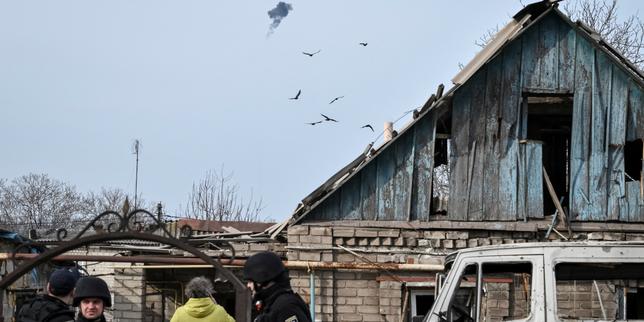
- Architectural Grief: For those living in ruins, the visual reminder of destroyed infrastructure during a time of celebration creates a cognitive dissonance that accelerates burnout.
Variable 3: The Erosion of the Social Fabric
Conflict alters the demographic makeup of communities, typically through the loss of young men or the fragmentation of extended families.
- Intergenerational Gap: The inability of elders to pass down specific oral or culinary traditions due to lack of resources or presence of family members leads to "Cultural Dilution."
- Security Friction: The presence of checkpoints, heavy military surveillance, or the threat of aerial bombardment during mass gatherings turns a religious obligation into a high-risk calculation.
The Causality of the Festive Paradox
The persistent tension between joy and trauma is not accidental but a direct result of Cumulative Adversity. Standard reporting treats these emotions as simultaneous but separate. In reality, they are causal. The intensity of the smile is often a direct reaction to the depth of the scar—a phenomenon known as "Post-Traumatic Growth" (PTG) or, more accurately in this context, "Counter-Cyclical Emotional Management."
- The Severity of Conflict increases the Need for Communal Ritual.
- The Scarcity of Resources increases the Symbolic Value of Small Luxuries.
- The Presence of Loss increases the Observed Fragility of the Moment.
This explains why populations in the most devastated areas often display the most fervent commitment to Eid rituals. It is an act of defiance against the dehumanizing effects of war, but it comes at a significant metabolic and psychological cost.
Structural Limitations of the "Smiles and Scars" Narrative
Media portrayals frequently fail to account for the Diminishing Returns of Resilience. While the ability to find joy in ruins is lauded, this resilience is a finite resource. Each successive Eid spent in displacement or under siege depletes the population’s collective "Coping Capital."
- Emotional Fatigue: After several years of conflict, the effort required to manufacture a celebratory atmosphere becomes prohibitive.
- Apathy Shift: Younger generations, having never experienced a "stable" Eid, develop a different relationship with the holiday—one characterized by a lack of historical context and a focus on immediate survival rather than long-term cultural preservation.
Strategic Realignment for Aid and Observation
If we accept that Eid is a period of peak psychological and financial stress for vulnerable populations, the approach to humanitarian intervention must shift. Rather than viewing the holiday as a pause in the struggle, it should be treated as a critical window for targeted support.
- Liquidity Injections: Direct cash transfers in the weeks preceding Eid have a higher multiplier effect on local morale and small-scale economies than the distribution of pre-packaged food aid.
- Psychosocial Integration: Integrating grief counseling into communal spaces during festive periods acknowledges the "Memory-Induced Deficit" rather than ignoring it in favor of "happy" imagery.
- Infrastructure Priority: Prioritizing the restoration of communal spaces (mosques, parks, markets) provides the necessary "Spatial Stability" for cultural rituals to function as restorative tools.
The long-term stability of a post-conflict society depends on its ability to maintain these cultural anchors. When the cost of celebrating becomes too high—either economically or emotionally—the social fabric begins to unravel permanently. The "scars" then cease to be reminders of the past and become the defining feature of the future.
The most effective strategy for international observers and policymakers is to de-romanticize the image of the "smiling child in the ruins." Instead, recognize that smile as a high-cost survival mechanism. The objective must be to lower the "Normalcy Premium" by stabilizing the economic and security environments so that celebration is no longer an act of desperation, but a sustainable expression of cultural health. This requires a move away from sporadic holiday-based charity toward a model of consistent, structural support that treats cultural resilience as a vital metric of regional stability.