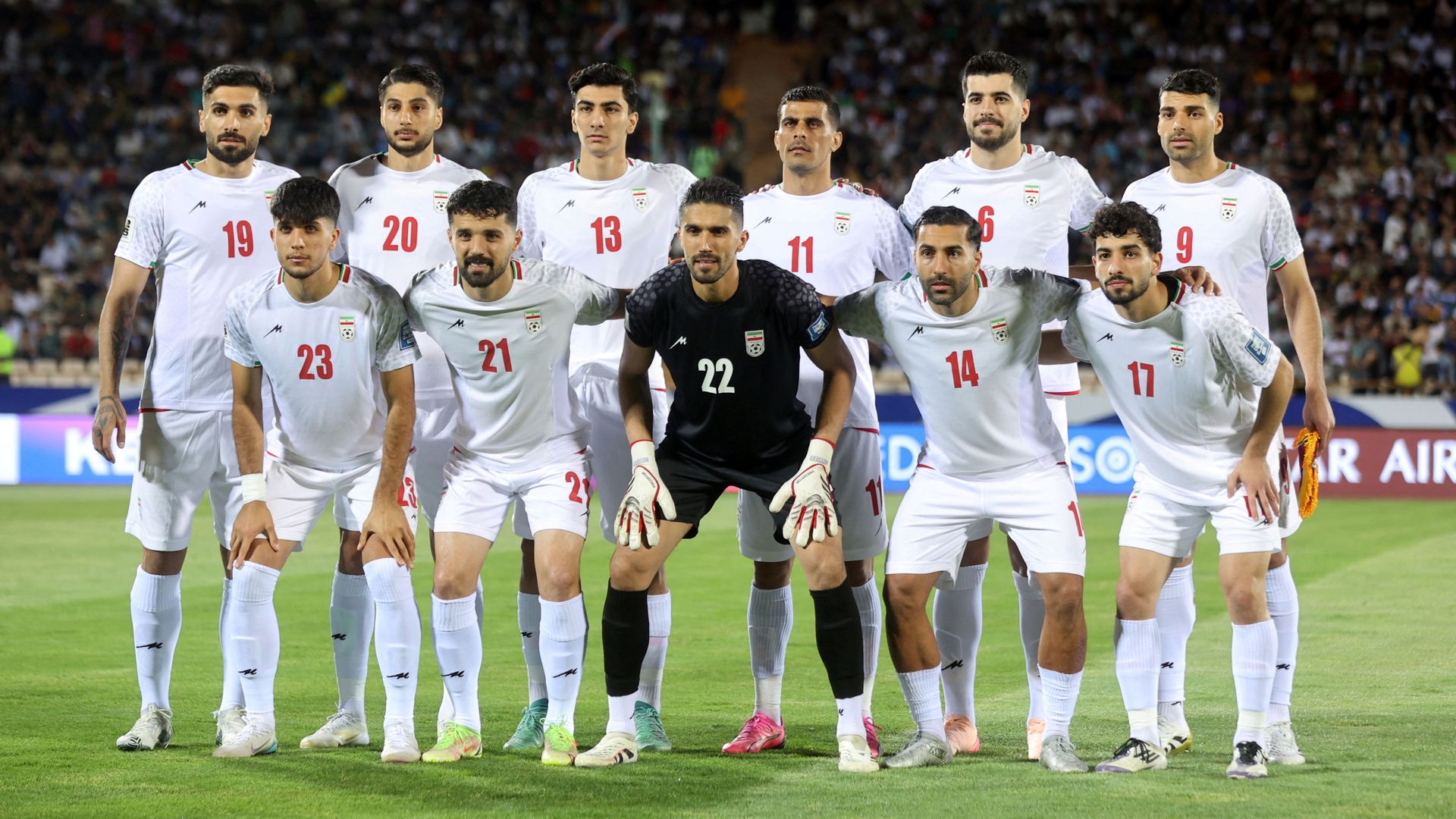
The decision by Iranian authorities to withdraw from the World Cup represents a total realignment of the state’s sports-diplomacy calculus, prioritizing domestic narrative control over the accumulation of international soft power. In high-stakes geopolitical environments, international sporting events function as specialized communication channels where a nation's internal stability is broadcast to a global audience. When a state chooses non-participation, it signals that the perceived risk of public dissent or athlete defection outweighs the benefits of global visibility. This withdrawal is not a passive refusal; it is an active strategic retreat designed to mitigate "platform risk"—the danger that a global stage will be used to amplify domestic instability.
The Triad of Decision Drivers
To understand why a nation-state would abandon the most-watched sporting event on the planet, we must analyze the decision through three distinct risk vectors: domestic optics, internal security, and diplomatic leverage. For another look, check out: this related article.
1. The Domestic Optics Trap
Participation in the World Cup requires the state to cede control over the narrative for 90-minute intervals. For Iran, the primary threat is not the outcome on the pitch, but the behavior of the fans and the players during the national anthem and post-match interviews. The "Anthem Risk" became a quantifiable liability during previous tournaments, where silence acted as a potent form of protest. By withdrawing, the state eliminates the possibility of high-definition broadcast images showing dissent to millions of viewers within Iran’s borders.
2. The Defection and Logistics Vector
International tournaments create significant security bottlenecks for authoritarian regimes. Monitoring a full roster of athletes, coaching staff, and support personnel in a foreign jurisdiction requires an immense security apparatus. The probability of an athlete seeking asylum or making a symbolic gesture of defiance increases linearly with the duration of the tournament. The state's cost-benefit analysis suggests that the security resources required to prevent "on-field contagion" are better utilized internally. Further reporting regarding this has been published by The Athletic.
3. Diplomatic Leverage and Isolationism
Non-participation serves as a blunt instrument of foreign policy. By removing itself from the competition, Iran attempts to delegitimize the event or protest perceived biases in international governing bodies. However, this creates a vacuum. In the absence of an Iranian presence, rival regional powers often fill the narrative space, leading to a net loss in regional influence.
The Mechanism of State Withdrawal
The process of withdrawing from a global tournament follows a specific structural sequence. It begins with the delegitimization of the organizing body, followed by the prioritization of "national dignity" over athletic competition, and concludes with the total severance of the engagement.
Structural Sequencing of Withdrawal
- Stage 1: Grievance Identification. The state identifies specific instances of "unfair treatment" or "political interference" by FIFA or the host nation. This provides the necessary pretext for domestic consumption.
- Stage 2: The Security Audit. Internal intelligence agencies evaluate the likelihood of player-led protests. If the probability of a "non-sanctioned symbolic act" exceeds a specific threshold, the recommendation shifts toward non-participation.
- Stage 3: Narrative Pre-emption. State media begins a campaign to devalue the tournament, framing it as a "politicized tool of Western influence" rather than a sporting achievement.
- Stage 4: Formal Severance. The official announcement is made, often timed to distract from specific domestic pressures or to signal defiance during international negotiations.
The logic follows a simple cost function: $C(p) = S + O + D$, where $C$ is the total cost of participation, $S$ is the security expenditure, $O$ is the risk of optical failure (dissent), and $D$ is the potential for diplomatic blowback. If $C(p)$ exceeds the value of the soft power generated, the state will exit.
Examining the Opportunity Cost of Absence
The withdrawal creates a "Soft Power Deficit." Unlike economic sanctions, which are externally imposed, this is a self-inflicted wound to the nation's cultural export capability.
The Erosion of Cultural Currency
Sports are one of the few remaining "universal languages" that allow a country to bypass traditional diplomatic friction. By exiting the World Cup, Iran loses the ability to project a humanized, non-political image of its citizens to the global public. This absence reinforces a monolithic, state-centric view of the country, further entrenching its international isolation.
The Impact on the Domestic Talent Pipeline
Beyond the immediate political implications, there is a long-term decay in the national sporting infrastructure.
- Capital Flight: Elite athletes will seek opportunities to represent other nations or play in foreign leagues where their careers are not subject to sudden state-mandated shutdowns.
- Infrastructure Stagnation: Without the goal of World Cup participation, funding for youth academies and training facilities often enters a period of managed decline.
- Loss of Technical Knowledge: International tournaments provide a feedback loop where coaches and tacticians learn from global peers. Severing this link results in technical provincialism.
The Defection Probability Model
States with high levels of internal tension must account for the "Defection Probability." This is the likelihood that an athlete will use the international platform to request political asylum. Historically, sporting events have been the primary theater for such actions.
The risk is not merely the loss of a single athlete. It is the symbolic power of the "Empty Chair." Every time the Iranian team was supposed to take the field, their absence serves as a more powerful reminder of state instability than a loss would have been. This creates a paradox: the state withdraws to hide dissent, but the act of withdrawal itself becomes a global headline about that very dissent.
Quantifying the Geopolitical Fallout
The immediate result is a loss of "Diplomatic Friction Points." When nations interact through sports, they create low-stakes environments for high-stakes diplomacy. These interactions often serve as precursors to formal negotiations. By removing these points of contact, the Iranian government is choosing a path of maximum friction.
Regional Power Dynamics
In the Middle East, football is a critical component of regional rivalry. Saudi Arabia and Qatar have invested billions into the sport to enhance their global standing. Iran’s exit leaves a power vacuum that its rivals are eager to fill. This is not just about sport; it is about which nation-state defines the cultural identity of the region on the world stage.
The FIFA Bottleneck
International governing bodies like FIFA generally demand a separation of "politics and sport." However, this is a functional impossibility. When a nation-state uses its football federation as a wing of the government, it risks long-term suspension. This suspension can extend beyond the current cycle, potentially barring the nation from the 2030 and 2034 cycles, creating a multi-decade gap in international presence.
The Failure of the "Security First" Strategy
The Iranian government is betting that domestic stability is more valuable than international prestige. This "Security First" strategy assumes that the population will accept the loss of the World Cup as a necessary sacrifice for national sovereignty. This assumption is flawed for several reasons.
- The Passion Gap: Football is the most popular sport in Iran. Depriving a young, restless population of their primary source of national pride creates a new grievance that did not previously exist.
- The Information Leakage: In a hyper-connected world, "blacking out" a global event is impossible. Iranian fans will still watch the tournament via VPNs and satellite, but they will be watching it without their own team to support, focusing their attention on the reasons behind the absence.
- The Martyrdom of the Team: The national team athletes are often viewed as heroes. Forcing them to stay home or "voluntarily" withdraw turns them into victims of state policy, potentially radicalizing a previously neutral segment of the population.
Mapping the Post-Withdrawal Landscape
The state must now manage the "Day After" effects. This involves a heavy reliance on domestic leagues to simulate a sense of normalcy. However, the lack of international competition makes these leagues feel insular and irrelevant.
The structural integrity of the Iranian Football Federation (FFIRI) is now in jeopardy. As an organization, it is tasked with following FIFA guidelines while answering to state mandates. These two masters are now in direct conflict. The likely outcome is a formal de-recognition of the FFIRI by FIFA, leading to a complete excision of Iranian football from the global ecosystem.
Strategic Realignment and the Path Forward
The Iranian state has calculated that the World Cup is a liability. This is a defensive maneuver by a regime that feels its grasp on the internal narrative slipping. To counter this, the state will likely attempt to create alternative, "politicized" tournaments with other aligned nations, though these will lack the prestige and viewership of the FIFA-sanctioned world stage.
For the international community, this withdrawal marks the end of an era of "engagement through sport" with Iran. The focus will now shift toward how FIFA and other international bodies handle the formal expulsion of the Iranian federation. The strategic play for the Iranian government is to maintain a state of "permanent crisis" where the lack of sports is framed as a badge of honor against external interference. This requires a constant escalation of rhetoric to justify the loss of cultural assets.
The long-term risk for Iran is "Cultural Obsolescence." A nation that does not participate in the shared rituals of the global community eventually loses its place in the global imagination. By retreating behind its borders, the Iranian state may achieve a temporary reduction in "Anthem Risk," but at the cost of its future standing in the international order. The exit from the World Cup is not a sign of strength, but a formal admission of fragility.
Would you like me to analyze the specific economic impact of the loss of World Cup broadcasting rights and sponsorship revenue on the Iranian Football Federation's budget?