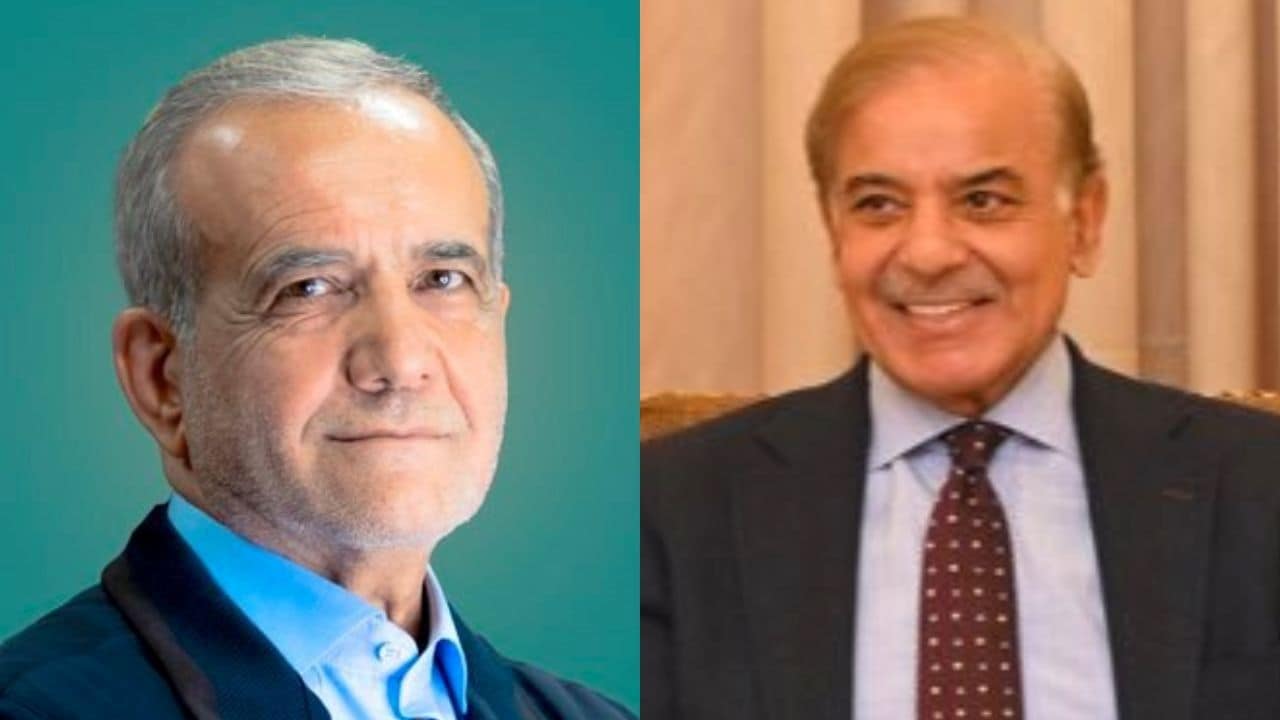
The hour-long diplomatic exchange between Iranian President Masoud Pezeshkian and Pakistani Prime Minister Shehbaz Sharif represents a recalibration of the "security-economy trade-off" that defines the borderlands of Southwest Asia. While surface-level reporting focuses on the cordiality of the call, a structural analysis reveals a high-stakes attempt to synchronize two divergent national crises: Iran’s need for regional legitimacy following its executive transition and Pakistan’s urgent requirement for energy security and border stabilization.
The Tripartite Framework of Bilateral Alignment
To understand the substance of this communication, one must categorize the dialogue into three distinct functional pillars. These pillars operate as a feedback loop where failure in one destabilizes the others.
1. The Security-Sovereignty Equilibrium
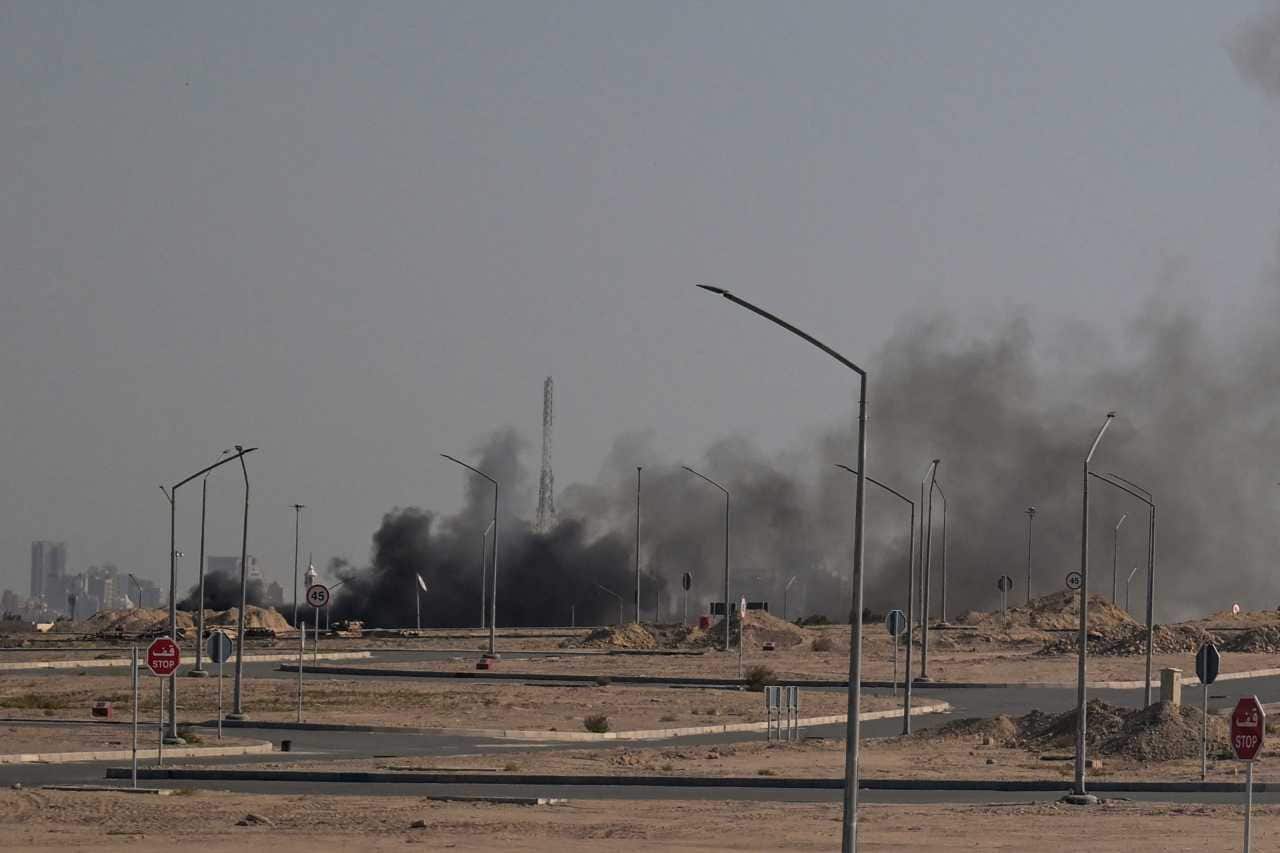
The border between Iran’s Sistan-Baluchestan province and Pakistan’s Balochistan remains a friction point characterized by non-state actor volatility. The "security-sovereignty" problem dictates that any unilateral kinetic action by one state—as seen in the cross-border strikes of early 2024—shatters the trust required for economic integration.
The conversation between Pezeshkian and Sharif indicates a return to the Joint Border Management Strategy. This framework moves away from reactive military posturing and toward a "shared intelligence theater." By acknowledging the threat of insurgent groups as a mutual liability rather than a geopolitical lever, both leaders are attempting to lower the risk premium for future infrastructure projects.
2. Energy Arbitrage and the IP Pipeline Bottleneck
Pakistan faces a chronic energy deficit that threatens its industrial output. The Iran-Pakistan (IP) Gas Pipeline is the dormant solution to this crisis, but it is currently strangled by secondary sanctions and the fear of a $18 billion penalty if Pakistan fails to complete its section of the project.
During the hour-long exchange, the technical discussion likely pivoted around "sanction-resilient trade." This involves:
- Barter Mechanisms: Swapping Pakistani agricultural goods (primarily rice) for Iranian petroleum products.
- Border Markets: Formalizing informal trade zones to generate localized economic stability while avoiding the international banking systems monitored by the US Treasury.
- The Energy-Currency Paradox: Pakistan’s inability to settle debts in USD creates a structural ceiling for how much energy can be imported from Iran.
3. The Regional Integration Multiplier
The conversation extended beyond the bilateral to include the broader "West-South Asia Link." With Pezeshkian’s presidency aiming for a more pragmatic engagement with its neighbors, Pakistan serves as a gateway to the broader Chinese-led Belt and Road Initiative (BRI) and the China-Pakistan Economic Corridor (CPEC).
Quantifying the Strategic Costs of Non-Cooperation
A failure to align these two administrations results in a predictable set of negative externalities that can be calculated through a geopolitical "cost function."
The Cost of Border Friction
When border security fails, the economic loss is not merely the cost of military mobilization. It includes:
- Trade Opportunity Cost: A 20% increase in border volatility typically correlates with a 40% drop in formal trade volume within those specific zones.
- Investment Deterrence: External investors viewing the Sistan-Balochistan region see it as a "high-risk, low-return" environment, stifling the growth of the Chabahar and Gwadar ports.
The Energy Deficit Drag
For Pakistan, every month the IP pipeline remains stalled translates to a measurable drag on GDP. High energy costs for manufacturers make Pakistani exports less competitive in the global market. The "energy-cost multiplier" means that expensive LNG imports divert capital from essential infrastructure, creating a cycle of debt and underdevelopment.
The Operational Logic of the Pezeshkian-Sharif Alignment
The shift in tone under President Pezeshkian is a departure from the purely ideological rhetoric of his predecessors. He is operating under a Pragmatic Realism Model, where regional stability is the primary variable in Iran's survival strategy.
Sharif, conversely, is managing a Survivalist Economic Strategy, where any source of affordable energy or border calm is essential for the longevity of his coalition government.
The Institutional Stabilization Factor
The call serves as a "reset button" for institutional cooperation. By establishing a direct line between the presidency and the prime minister’s office, the two nations are bypassing the bureaucratic and military delays that often stall diplomatic progress.
The mechanism for this stabilization involves:
- The Joint Ministerial Commission: Re-energizing this body to handle technical disputes regarding trade and energy.
- Counter-Terrorism Protocols: Establishing a "hotline" for real-time intelligence sharing to prevent future border escalations from spiraling into a national crisis.
Geopolitical Constraints and the Role of Third Parties
While the bilateral intent is clear, two external variables dictate the ceiling of this partnership.
The U.S. Sanctions Regime
The shadow of CAATSA (Countering America's Adversaries Through Sanctions Act) remains the primary deterrent for Pakistani banks and energy firms. No amount of bilateral goodwill can bypass the reality that the US financial system remains the gatekeeper for Pakistan's IMF-dependent economy.
The China-Afghanistan Variable
Both Iran and Pakistan share a border with a Taliban-led Afghanistan. The "trilateral instability" caused by groups like the TTP and ISKP forces Tehran and Islamabad into an uncomfortable but necessary alliance. They must manage the "spillover effect" of Afghan instability, which acts as a common denominator for their security concerns.
Strategic Play: The Shift to "De-Hyphenated" Diplomacy
The ultimate trajectory for Iran and Pakistan is a "de-hyphenated" approach where their security issues are handled separately from their economic goals. This is a difficult but essential pivot.
The immediate tactical move for both administrations is the formalization of the Five-Year Trade Plan, aiming to push bilateral trade toward the $5 billion mark. This will not be achieved through grand declarations but through the granular work of opening new border crossings, simplifying customs procedures, and establishing a clearinghouse for barter trade that circumvents the US-dominated financial architecture.
If Pezeshkian can provide Pakistan with the energy it needs at a discounted rate, and Sharif can guarantee a "non-hostile" border, they will have successfully navigated the most complex diplomatic corridor in Southwest Asia. The next phase of this engagement will be defined by the first physical movement of gas or the opening of the next major border market—metrics that will prove whether the hour-long call was a structural shift or merely a diplomatic formality.
Would you like me to analyze the specific trade commodities that could dominate the proposed $5 billion barter agreement?