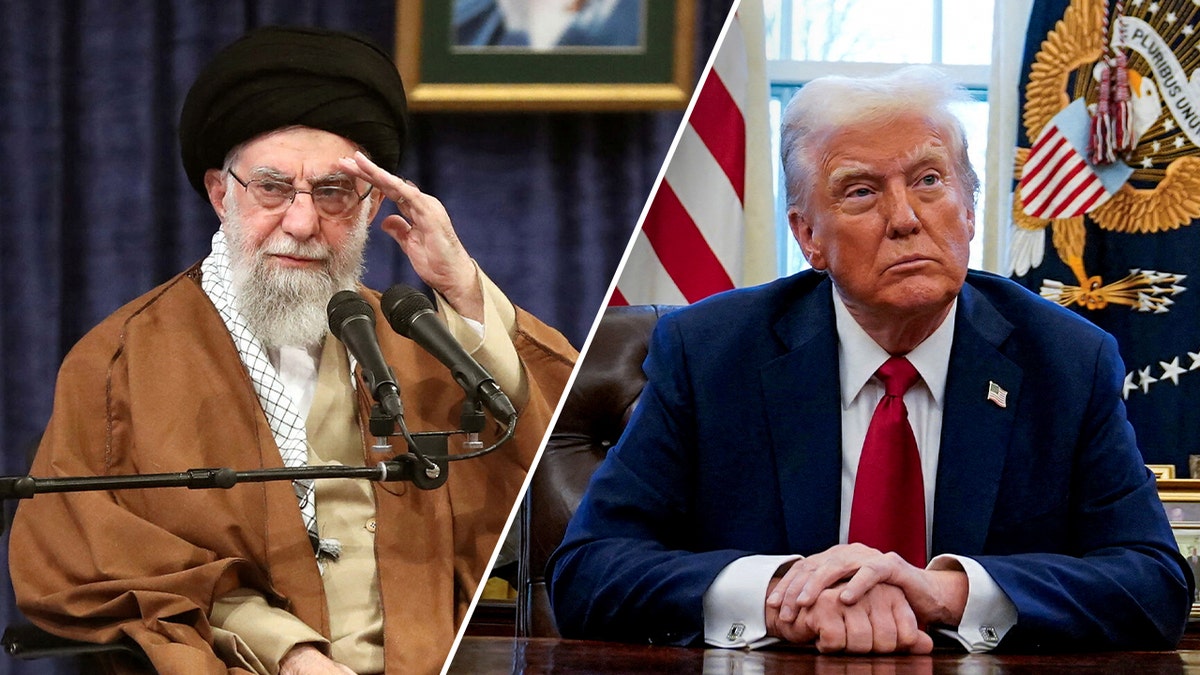
The strategic intersection of Middle Eastern military escalation and East Asian trade negotiations is governed by the Theory of Integrated Leverage. When the United States engages in or supports a kinetic strike against Iranian infrastructure, it does not merely address a regional security threat; it fundamentally alters the cost-basis of Chinese energy security and diplomatic maneuvering. The prevailing assumption that Middle Eastern instability distracts the U.S. from its "Pivot to Asia" ignores the reality of commodity dependency asymmetricity. China imports roughly 1.5 million barrels of Iranian crude per day, often through "dark fleet" tankers and secondary financial circuits. A disruption in this supply chain shifts the burden of energy stability from the global market to the bilateral negotiation table between Washington and Beijing.
The Triple-Constraint Framework of Chinese Energy Security
To understand why an attack on Iran empowers a U.S. administration—specifically in the context of a Trump-Xi summit—one must analyze the three variables that dictate China’s strategic autonomy:
- Supply Elasticity: China’s Strategic Petroleum Reserve (SPR) is opaque but estimated to cover 90 days of net imports. However, the physical infrastructure of Chinese refineries is optimized for specific grades of crude. A sudden removal of Iranian supply forces China into the spot market, where it competes with U.S. allies, driving up prices and depleting foreign exchange reserves.
- The Malacca Dilemma: Approximately 80% of China’s oil imports pass through the Strait of Malacca. Kinetic action in the Persian Gulf or the Strait of Hormuz creates a localized choke point that precedes the Malacca bottleneck, effectively placing a "toll" on Chinese industrial output before the cargo even reaches the Indian Ocean.
- Sanction Arbitrage: Iran provides China with "discounted" oil, often $5 to $10 below Brent benchmarks, settled in Yuan. This bypasses the SWIFT system and limits U.S. Treasury oversight. A strike on Iranian export terminals (such as Kharg Island) destroys this arbitrage opportunity, forcing Beijing back into the dollar-denominated global market where U.S. financial statecraft is most potent.
The Trumpian Negotiation Architecture: Threat Credibility as a Trade Variable
The efficacy of a summit between Donald Trump and Xi Jinping relies on the Probability of Non-Linear Escalation. In traditional diplomacy, actors move incrementally. Trump’s historical pattern suggests a preference for "Maximum Pressure" cycles where geopolitical volatility is used as a lubricant for economic concessions.
If an attack on Iran occurs shortly before or during a trade summit, the U.S. side gains a Volativity Premium. The logic follows a specific causal chain:
- Step 1: Resource Scarcity Signaling. By demonstrating a willingness to disrupt the energy status quo, the U.S. signals that it values geopolitical objectives over global market stability. This undermines China’s long-term "Belt and Road" energy security projections.
- Step 2: The Security-for-Trade Swap. The U.S. enters the room with the ability to offer "de-escalation" or "maritime security guarantees" in exchange for structural trade changes—such as IP protection, removal of EV subsidies, or increased purchase mandates for U.S. LNG.
- Step 3: Forced Alignment. China, prioritizing internal social stability and 5% GDP growth, cannot afford a sustained $120/barrel oil environment. To lower the temperature in the Gulf, Beijing must offer concessions in the Pacific.
Quantitative Impact on the "Phase One" Style Agreements
A renewed trade negotiation under these conditions moves away from tariffs and toward Structural Dependency Reversal. If the U.S. disrupts the Iranian supply, it simultaneously positions itself as the primary alternative supplier. The U.S. is currently a net exporter of petroleum products.
The "Ask" from the U.S. delegation becomes binary:
- A: Continued Iranian dependency with the risk of total supply chain destruction via kinetic strikes.
- B: Long-term U.S. LNG and Crude contracts, which provides China with energy but grants the U.S. a "kill switch" over the Chinese industrial base through contract enforcement and dollar hegemony.
Strategic Bottlenecks: Why This Isn't a Guaranteed Victory
The "Attack on Iran" gambit contains significant tail risks that a data-driven analyst must account for. The primary constraint is Inflationary Backlash. If the U.S. domestic economy is suffering from high CPI (Consumer Price Index) figures, a spike in global oil prices caused by a Gulf conflict could erode the U.S. President's domestic political capital faster than it erodes China’s negotiating position.
Furthermore, the Sino-Russian Energy Pivot acts as a pressure valve. If Iranian supply is throttled, China will accelerate the Power of Siberia 2 pipeline and other land-based Russian energy projects. This moves the leverage away from the maritime domain—where the U.S. Navy is supreme—to the Eurasian landmass, where U.S. influence is minimal.
The Cost Function of Regional Containment
The U.S. must calculate the Marginal Benefit of Conflict (MBC) against the Marginal Cost of Containment (MCC).
- MBC: The percentage increase in trade concessions from China + the degradation of Iranian proxy networks.
- MCC: The cost of carrier strike group deployment + the risk of Iranian "asymmetric retaliation" against U.S. bases in Iraq/Syria + the potential for a closed Strait of Hormuz.
If the Strait of Hormuz is closed, global oil prices could realistically see a $30-$50/barrel "war premium" within 48 hours. For China, this is a tax on manufacturing; for the U.S., this is a tax on the voter. The strategist’s goal is to keep the conflict "sub-threshold"—large enough to destroy Iranian export capacity, but small enough to avoid a total blockage of the Strait.
Deployment of the "Two-Front" Intellectual Framework
The U.S. strategy essentially treats the Middle East and the South China Sea as a Linked Liquidity Pool. In this framework, "Security Liquidity" (the ability to project power) can be moved from one theater to another to force a change in "Economic Liquidity" (the flow of capital and goods).
By striking Iran, the U.S. proves it can manage a two-front pressure campaign. This disproves the "Overextension Hypothesis" often cited by Beijing. If the U.S. can dismantle a regional power's infrastructure while simultaneously maintaining a massive naval presence in the First Island Chain, the "cost of defiance" for Xi Jinping increases exponentially.
Immediate Strategic Requirement
The U.S. must secure pre-emptive energy supply agreements with the GCC (Gulf Cooperation Council) states—specifically Saudi Arabia and the UAE—to flood the market the moment kinetic action begins. This "Supply Buffer" ensures that while Iran’s specific exports to China are cut, global prices remain somewhat tethered, protecting the U.S. consumer while maximizing the specific pain felt by the Chinese energy-import apparatus. Success in the Xi-Trump summit is therefore not won in the meeting room, but in the tactical destruction of the adversary's lowest-cost alternative energy source.