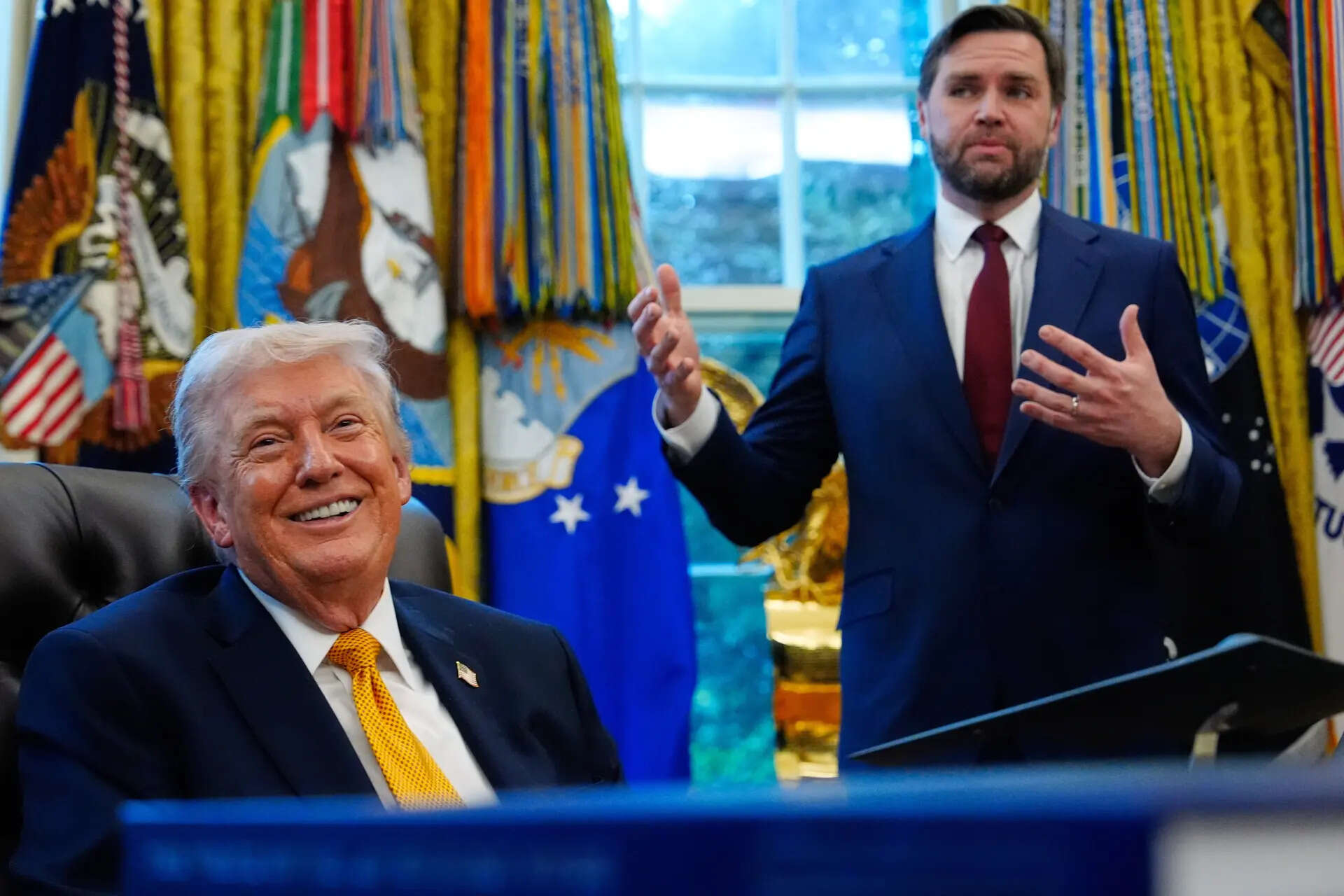
The media is obsessed with a phantom. They are hunting for "daylight" between J.D. Vance and Donald Trump on Iran, treating every rhetorical shimmer as a sign of a crumbling coalition. It is a fundamental misunderstanding of how power actually operates in a post-consensus world.
The "lazy consensus" among political commentators is that a presidential ticket must be a monolith. They want a single, rigid script because it’s easier to report on. When Vance pivots on the specifics of kinetic action versus diplomatic pressure, the punditry screams "inconsistency."
They are wrong. They are looking at a tactical masterclass and calling it a mistake.
The Myth of the Unified Front
In traditional diplomacy, we are told that a "unified voice" is the gold standard. If the President and Vice President aren’t reciting the same teleprompter notes, the world supposedly sees weakness.
That’s a relic of the 1990s. In the current global volatility, a unified front is actually a predictable target. If an adversary knows exactly where the ceiling and floor of your policy sit, they can maneuver around you with ease.
What the media calls a "wedge" is actually a Strategic Ambiguity Buffer.
When Trump leans into the "maximum pressure" rhetoric and Vance counters with a focus on avoiding "needless escalation," they aren't arguing. They are expanding the strike zone. They are forcing Tehran to account for two different, yet simultaneous, realities. This isn't a policy failure; it’s a pincer movement.
Why the Media Asks the Wrong Question
The "People Also Ask" sections of the internet are littered with variations of: "Does J.D. Vance agree with Trump’s Iran policy?"
The question itself is flawed. It assumes "policy" is a static document sitting in a drawer at the State Department. Real policy is a living, breathing reaction to intelligence, economic shifts, and domestic appetite for risk.
Vance is playing the role of the Realist Anchor. Having seen the carnage of the Iraq War firsthand—an experience he shares with a massive portion of the Republican base that the D.C. elite still ignores—Vance provides a necessary friction to the more impulsive "Neocon" remnants that still try to whisper in a President's ear.
- Misconception 1: Differences in rhetoric equal a lack of coordination.
- Misconception 2: Trump wants a war with Iran. (He wants a deal; he just uses the threat of war to get it).
- Misconception 3: Vance is an isolationist. (He is a prioritizer).
The Mathematics of Modern Deterrence
Deterrence isn't a binary state. It’s a calculation of probability.
$$D = P(r) \times C(r)$$
In this simplified model, Deterrence (D) is the product of the Probability of Response (P) and the Cost of that Response (C).
When you have a ticket that presents multiple potential paths—one that suggests immediate, overwhelming kinetic force and another that suggests a more calculated, regional containment strategy—the adversary's ability to calculate $P(r)$ collapses.
If Tehran doesn't know which version of the administration will show up on a Tuesday morning, they have to prepare for both. Preparing for both is exponentially more expensive and paralyzing than preparing for one.
I have watched corporate boards fail for this exact reason: they project such a singular, predictable path that their competitors can price in their moves six months in advance. The Trump-Vance dynamic prevents that "pricing in" on the global stage.
The Battle Scars of the Neoconservative Failure
The critics currently pearl-clutching about Vance's "caution" are often the same voices that cheered for the disastrous interventions of the early 2000s. They view any hesitation to drop bombs as a "departure" from American strength.
Let’s be brutally honest: the era of the blank-check intervention is dead. Vance knows it. The voters know it.
The "wedge" the media is trying to drive is actually a bridge back to a base that is tired of seeing trillions of dollars evaporated in the sands of the Middle East with zero ROI. Trump’s instinct is to dominate; Vance’s instinct is to preserve. When you combine them, you get a foreign policy that is aggressive enough to keep enemies at bay but disciplined enough to keep the country out of another thirty-year quagmire.
Stop Looking for Consensus Start Looking for Results
If you are waiting for Vance to fall perfectly in line with every syllable Trump utters, you are going to be waiting forever. And you’re missing the point.
The strength of this partnership isn't in its uniformity; it's in its tension. It’s the tension between the veteran’s skepticism and the dealmaker’s bravado. That tension is exactly what has been missing from American foreign policy for decades—a period defined by a "unified" Washington consensus that led us from one failed regime-change project to the next.
The media wants a script. The American people need a strategy.
Stop asking if they agree. Start asking if the confusion they are sowing in foreign capitals is working.
The answer is written in the frantic reactions of the very institutions that failed us in the first place.
Build the pincer. Ignore the pundits.


