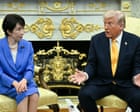
Media cycles thrive on the low-hanging fruit of "outrageous" remarks. When reports surfaced that Donald Trump brought up Pearl Harbor during a high-stakes discussion about Japan and Iran, the establishment press followed a predictable script. They framed it as a diplomatic stumble, a historical non-sequitur, or a "mocking" of a key ally.
They missed the point entirely.
The obsession with "decorum" in international relations is a luxury for those who don't understand how leverage actually works. What the pundits labeled a gaffe was actually a masterclass in psychological anchoring. In the world of high-stakes negotiation—the kind where billions in trade deficits and military expenditures are on the line—politeness is a liability.
The Fallacy of the Fragile Alliance
The prevailing narrative suggests that the U.S.-Japan alliance is a delicate piece of porcelain that might shatter if a President mentions 1941. This is nonsense. I’ve sat in rooms where trade deals are hammered out; the Japanese Ministry of Foreign Affairs is not staffed by Victorian debutantes. They are cold, calculating realists.
When a U.S. leader invokes Pearl Harbor, they aren't "mocking" the dead. They are reminding a junior partner of the fundamental power dynamic that has defined the Pacific since 1945. The "lazy consensus" argues that we must move past history to secure the future. The reality? History is the only collateral that never depreciates.
By bringing up the start of the Pacific War, the subtext isn't "I hate Japan." The subtext is: "We rebuilt you, we protect you, and your current economic surplus exists because we allow it." ### The Iran Connection: Why the Comparison Matters
Critics scratched their heads at why Iran and Japan were even in the same sentence. If you can’t see the link, you aren't looking at the map. Japan is one of the world’s largest importers of oil. Iran controls the spigot at the Strait of Hormuz.
The "experts" want you to believe that diplomatic maneuvers should be siloed. They think you talk trade with Tokyo and security with Tehran. That’s an amateur’s view of the chessboard.
Trump’s rhetorical style uses historical trauma as a "reset button" to remind allies that their security concerns—specifically regarding Iranian oil disruptions—are ultimately an American problem that the American taxpayer is subsidizing. If Japan wants the U.S. to play hardball with Iran to keep the sea lanes open, the U.S. is going to demand a steeper price on trade. Pearl Harbor is the ultimate shorthand for: "Don't forget who the guarantor of your sovereignty is."
The Diplomacy of Discomfort
Modern diplomacy has become a stagnant pool of canned statements and "productive dialogues" that produce zero change. The status quo is a slow-motion decline for American manufacturing and a ballooning deficit.
I’ve seen executives lose millions because they were too afraid to "offend" a partner during a contract renewal. They prioritize the relationship over the result. Trump operates on the inverse. He bets that the relationship is strong enough to withstand the truth, or weak enough that it needs a shock to the system.
- Truth 1: Japan’s defense budget has been artificially low for decades because they’ve outsourced their survival to the U.S. Navy.
- Truth 2: Any mention of the "Day of Infamy" is a blunt reminder that the U.S. is the only reason Japan isn't a satellite state of a regional hegemon today.
- Truth 3: Calling out an ally isn't a "gaffe" if it results in a better trade deal or increased defense spending from the partner.
Analyzing the "Outrage" ROI
Follow the money. Who benefits from the "Trump mocks Japan" headline?
- The Legacy Media: High engagement from the "Orange Man Bad" demographic.
- Corporate Lobbyists: Who want to keep the lopsided trade status quo under the guise of "stability."
- Foreign Bureaucrats: Who use American media outrage as leverage to avoid making concessions.
When you see a headline claiming a President "embarrassed" the nation, look at the underlying data. Check the trade balance. Check the percentage of GDP spent on defense by the "offended" party. Usually, you’ll find that the "embarrassment" is actually a uncomfortable truth being dragged into the light.
The Myth of the "Rules-Based Order"
The term "Rules-Based Order" is a sedative. It’s a phrase used by people who haven't had to compete in a market in thirty years. In the real world, the "rules" are whatever the strongest player says they are, provided they are willing to enforce them.
The competitor article suggests that mentioning Pearl Harbor undermines this order. In fact, it reinforces it. It defines the order by its origin point: total American victory. By reminding Japan of the stakes of the 1940s, the U.S. isn't looking backward; it is defining the terms of the 2020s.
Why You’re Reading It Wrong
You’ve been trained to view political communication as a series of IQ tests. If a leader says something "crude," the media signals that they "failed" the test.
Stop looking at the words and start looking at the intent.
Imagine a scenario where a CEO walks into a board meeting of a subsidiary that is underperforming but taking massive bonuses. The CEO mentions the bankruptcy that nearly wiped them out ten years ago. Is he "mocking" their struggle? No. He’s telling them the gravy train has reached the station.
Japan is the subsidiary. The U.S. is the parent company. Pearl Harbor is the bankruptcy filing.
The Cost of Politeness
The downside to this contrarian approach is obvious: it’s exhausting. It creates friction. It makes for bad dinner parties in Davos. But the cost of the alternative—a polite, smiling descent into irrelevance—is far higher.
We have spent forty years prioritizing the feelings of our "allies" while they systematically hollowed out our industrial base. If a few uncomfortable references to 1941 are the price of rebalancing the scales, it’s a bargain.
The New Doctrine of Leverage
If you want to understand modern geopolitics, stop reading the Op-Eds of former State Department officials who haven't won a negotiation since the Cold War. Start looking at the world through the lens of distressed debt restructuring.
You don't get what you deserve. You get what you have the leverage to take.
The Pearl Harbor comment wasn't a mistake. It wasn't a joke. It was a cold-blooded assessment of the hierarchy of power. The media focused on the "insult" because they aren't equipped to handle the "instruction."
Japan heard the message loud and clear. It’s time the American public did too.
Stop asking if the President is "fit" to speak to allies. Start asking why the allies haven't been paying their fair share for the last half-century.
Negotiation doesn't start until someone says something that makes the other side want to leave the room.