The world’s top oil exporters are terrified of a war with Iran, or at least they want you to think they are. They use words like "catastrophic" and "apocalyptic" to describe the potential closure of the Strait of Hormuz. They paint a picture of a global economy frozen in its tracks, with $300-a-barrel oil and gas lines stretching across continents.
It is a lie. Or, more accurately, it is a convenient narrative used to maintain a status quo that benefits high-cost producers and terrified speculators.
The "lazy consensus" among energy analysts is that Iran holds the world’s jugular. They point to the map, see the narrow pinch point of the Strait, and assume that a few well-placed mines would end modern civilization. I have sat in boardrooms where the mere mention of a drone strike in the Persian Gulf causes hedge fund managers to reach for their smelling salts.
They are looking at the wrong map. They are fighting the last war.
The Myth of the Irreplaceable Barrel
The central fallacy of the "catastrophic consequences" argument is the belief that the global oil market is a fragile, rigid system. It isn't. It is a hydraulic one. If you squeeze one end, the fluid simply moves faster elsewhere.
We are told that 20% of the world's oil flows through the Strait of Hormuz. That sounds terrifying until you realize that "flowing through" does not mean "originating from." In the event of a kinetic conflict, the world doesn't lose that oil; it loses the efficiency of that specific route.
The immediate reaction to a conflict would be a price spike, yes. But that spike is the very mechanism that cures the problem. High prices act as a massive, instantaneous signal to every non-OPEC producer on the planet to open the taps.
- US Shale is the Global Shock Absorber: Unlike the 1970s, the United States is now the largest producer in the world. The "Duchy of Permian" can ramp up production with a speed that makes traditional state-run monopolies look like they are moving through molasses.
- Strategic Reserves are Overstuffed: The SPR isn't just a political football; it's a massive physical short against Iranian aggression.
- The Redirection Reality: Pipelines across Saudi Arabia to the Red Sea already exist. They are underutilized. The capacity to bypass the Strait is much higher than the "disaster" crowd admits.
Why High Prices are the Cure, Not the Disease
The "catastrophe" predicted by oil exporters is actually their greatest fear: a permanent destruction of demand.
If oil hits $200 because of a war in the Gulf, the transition to alternative energy sources doesn't just "accelerate." It turns into a stampede. Every logistics company on earth would swap their fleet to EV or hydrogen within a hardware cycle. Every government would treat energy independence as a matter of national survival rather than an ESG goal.
The exporters warning of "catastrophe" aren't worried about your gas prices. They are worried that a war would finally break the world's addiction to their specific product. They are protecting their market share, not the global economy.
The Strait of Hormuz is a Paper Tiger
Let’s talk about the physics of "closing" the Strait. People act as if Iran can just turn a key and lock the door.
I’ve looked at the naval logistics. To actually stop the flow of oil, you don't just need mines; you need to sustain a blockade against the combined naval power of the United States, the UK, and likely every East Asian economy that depends on that oil (China, Japan, South Korea).
The Strait is deep. It is wide enough for multiple lanes of traffic. To effectively "close" it, you would have to sink a tanker every few miles and keep the area under constant fire. Iran's navy is designed for asymmetric harassment, not sustained territorial denial against a Tier-1 carrier strike group.
Could they cause a week of chaos? Sure.
Could they stop the world's oil supply for a month? No.
The cost of insurance would skyrocket. Shipping rates would go parabolic. But the oil would move. The idea that the world's energy supply can be held hostage by a mid-sized regional power is a fantasy designed to keep the "risk premium" baked into every gallon of gas you buy.
The Hidden Winner: China’s Strategic Calculus
The competitor article ignores the most important player in this theater: Beijing.
China is the largest importer of Iranian oil. They are also the largest importer of Saudi oil. If Iran starts a war that shuts down the Strait, they aren't just attacking the "Great Satan" in Washington. They are cutting the throat of the Chinese economy.
Do you think Xi Jinping is going to sit back and watch his manufacturing sector collapse because of a regional religious feud?
A war with Iran doesn't lead to a global collapse; it leads to a Chinese intervention that would likely end the conflict faster than anything the West could coordinate. The "catastrophe" is mitigated by the fact that the world's biggest buyer cannot afford for the shop to be closed.
Stop Asking "What if the Oil Stops?"
The question you should be asking is: "Why are we still pretending the Strait of Hormuz matters as much as it did in 1979?"
The premise of the fear-mongering is based on a world that no longer exists. A world where there was no fracking, no massive-scale renewables, and no globalized, flexible supply chain.
When an oil minister from a Gulf nation warns of "catastrophic consequences," they are performing a script. They want the West to stay out of their business while keeping the price of crude high enough to fund their sovereign wealth funds. It’s a protection racket wrapped in a diplomatic warning.
The Brutal Truth of Conflict Economics
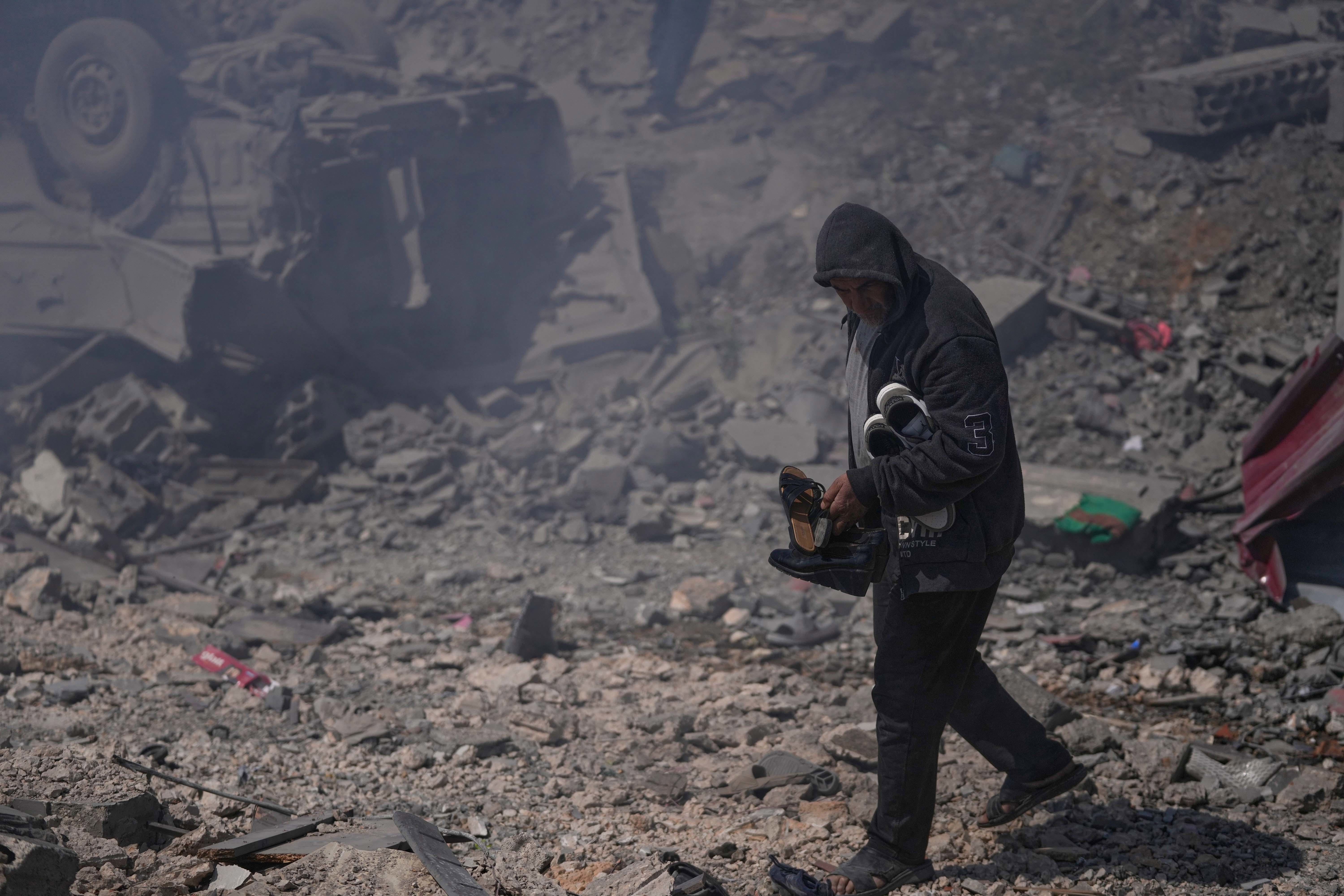
If a war breaks out, the "catastrophe" will be localized. It will be a tragedy for the people living in the crossfire. It will be a disaster for the Iranian regime, which would likely be dismantled within ninety days.
But for the global economy? It would be a volatility event, followed by a massive reshuffling of the energy deck.
- Winners: US Shale producers, Venezuelan debt holders (as their oil becomes "clean" again), and the EV industry.
- Losers: The Iranian people and any country that failed to diversify their energy mix over the last forty years.
We have spent decades being told that the Middle East is the heart of the world. It’s not. It’s the appendix. We can live without it, and the surgery, while messy, won't kill the patient.
Stop buying the fear. The "catastrophe" is a ghost story told by people who want to keep you dependent on their shadows.
If you want to hedge against a war in Iran, don't buy gold and canned goods. Buy the companies that make the Middle East irrelevant.