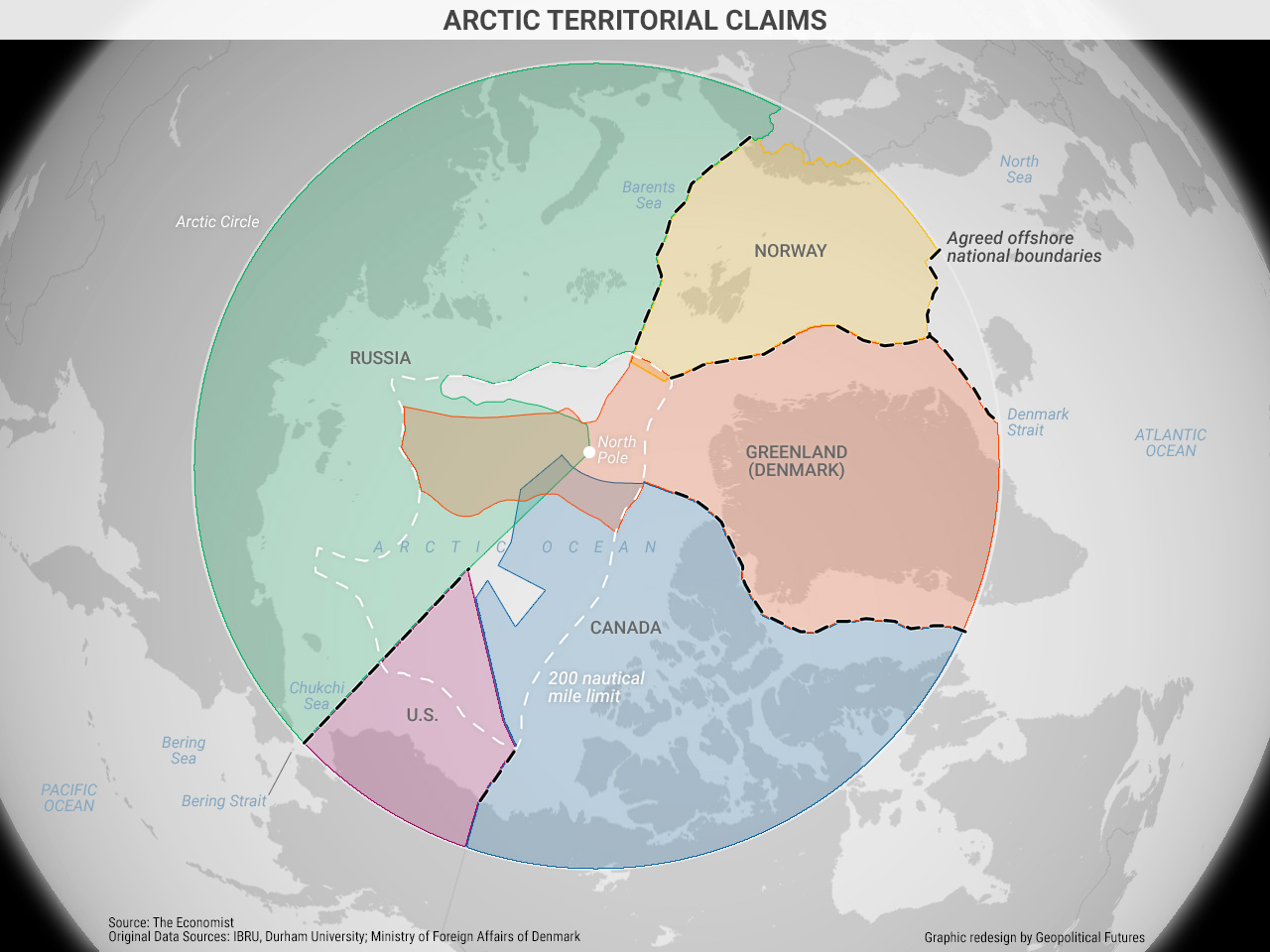
Canada’s Arctic strategy currently faces a structural paradox: the deployment of military assets creates a security umbrella that fails to address the underlying fragility of the civilian ecosystem it is meant to protect. Mark Carney’s proposed military expansion in the Far North operates on a top-down security model, yet the operational reality of the Arctic dictates that defense is impossible without a resilient, dual-use civilian foundation. The current tension between federal defense priorities and local "everyday needs" is not a simple budgetary disagreement; it is a fundamental misalignment of strategic objectives.
The Triad of Arctic Vulnerability
To analyze the efficacy of any Northern expansion plan, one must evaluate the three distinct pillars of regional stability. When military investment ignores these pillars, it creates "islands of capability" surrounded by a sea of logistical failure.
- The Infrastructure Deficit: High-latitude operations require specialized energy and transport solutions. In most Canadian Northern communities, the energy grid relies on isolated diesel generation, and transport is limited to seasonal ice roads or expensive air bridge logistics.
- The Human Capital Bottleneck: Sophisticated military hardware requires a local support tier. Without a trained, healthy, and housed local workforce, every military installation becomes an "expeditionary" site, doubling the long-term maintenance cost.
- The Sovereignty Perception Gap: Sovereignty is not merely a flag planted on a tundra; it is the continuous, effective administration of territory. If the state provides radar systems but fails to provide food security, the legitimacy of its sovereignty diminishes in the eyes of the global community and the local populace.
The Dual-Use Deficiency in Defense Spending
The friction surrounding Mark Carney’s plan stems from the "Binary Investment Trap." Defense spending is historically siloed, meaning a dollar spent on an F-35 or a tactical radar station has zero utility for a local community facing a housing crisis. A more sophisticated strategic approach utilizes Dual-Use Infrastructure (DUI).
In a DUI framework, every dollar of defense spending must serve a civilian secondary function. For example, a military-grade landing strip should be designed to handle heavy civilian cargo to lower the cost of living. A deep-water port intended for naval patrol ships must include facilities for commercial fishing and sealifts.
The current Carney proposal appears to prioritize "Hard Defense" (kinetic and detection capabilities) over "Soft Security" (health, housing, and connectivity). This creates a tactical bottleneck. A military base cannot function efficiently if the local town—which provides the base's civilian labor and local supplies—is suffering from systemic infrastructure collapse. The base becomes a drain on local resources rather than a contributor to regional stability.
The Cost Function of Northern Logistics
The economic reality of the North is governed by the Distance-Density Penalty. Costs do not increase linearly with distance; they increase exponentially due to the lack of interconnected grids.
- Energy Costs: While Southern Canada averages $0.12 to $0.18 per kWh$, some Northern communities face costs exceeding $1.00 per kWh$ without subsidies.
- Construction Premiums: Building a single unit of housing in the High Arctic can cost three to four times the national average due to the short "sealift" window (the few weeks a year when heavy materials can be shipped via sea) and the complexities of permafrost engineering.
When military planners overlook these variables, they underestimate the "Tail-to-Tooth" ratio of their operations. In the North, the "tail" (logistics, heating, food, waste) is significantly more expensive than the "tooth" (the actual military capability). If Carney’s plan focuses only on the "tooth," the "tail" will eventually break under the weight of local neglect.
Connectivity as a Strategic Asset
Modern warfare and modern survival both rely on data. The Canadian North remains one of the least connected regions in the G7. Military installations often utilize dedicated satellite uplinks or closed-circuit fiber, leaving the surrounding communities with high-latency, low-bandwidth connections.
This digital divide creates a security risk. In a conflict scenario, the resilience of the North depends on the ability of local governments, search and rescue, and health services to coordinate in real-time. If the military builds a proprietary network that excludes civilian nodes, they lose the "eyes and ears" of the local population. A unified broadband strategy—using Low Earth Orbit (LEO) constellations or undersea fiber—serves both the intelligence requirements of the Canadian Armed Forces and the educational/economic requirements of the residents.
The Demographic Imperative
A common oversight in Southern-led defense strategies is the treatment of the Northern population as a static variable. In reality, the demographics of the North are shifting. The population is young and growing, yet the lack of opportunity leads to a "brain drain" or social instability.
Effective Arctic defense requires a "Stationing Model" rather than an "Expeditionary Model."
- Expeditionary: Personnel are flown in for short rotations, live on-base, and have no interaction with the community. This is expensive and provides no long-term sovereignty benefit.
- Stationing: Personnel live in integrated housing, their children attend local schools, and their spouses participate in the local economy. This model builds a permanent, resilient presence that reinforces sovereignty.
Carney’s plan must shift toward the Stationing Model to be viable. This necessitates massive investment in the "everyday needs" that critics are currently highlighting: schools, healthcare facilities, and housing. Without these, the military presence remains a temporary, fragile veneer.
Quantifying the Strategic Trade-off
If the federal government allocates $10 billion to Arctic defense, the allocation matrix typically looks like this:
- 80% Procurement (Ships, Jets, Sensors)
- 15% Operational Costs
- 5% Local Infrastructure
A refined, data-driven strategy would rebalance this to a 50/30/20 split. The 20% allocated to local infrastructure (DUI) reduces the long-term operational costs by creating a self-sustaining local ecosystem. This is the difference between buying a house and building an entire neighborhood. The former is a liability; the latter is an asset.
The mechanism of "Overlooking Everyday Needs" is not just a moral failure; it is a tactical error. In the Arctic, the environment is the primary adversary. Extreme cold, permafrost degradation due to climate change, and isolation are more immediate threats to Canadian interests than foreign incursions. A military plan that cannot survive the environment because its supporting community has collapsed is a plan that will fail at the first sign of pressure.
The Logical Path Forward
The path to a secure North lies in the synchronization of the National Defense Act with the Arctic and Northern Policy Framework. We must move away from the "Fortress Arctic" mentality toward a "Resilient Arctic" model.
The immediate strategic play is the creation of an Arctic Infrastructure Bank (AIB). This entity would mandate that any defense project above a certain capital threshold must include a civilian benefit clause. For example, if a new power plant is built for a NORAD facility, it must be sized to provide surplus power to the nearest civilian settlement at a subsidized rate. This eliminates the competition for resources between the military and the public, instead creating a symbiotic relationship.
Furthermore, the government must prioritize "Cold-Climate R&D" as a core component of defense. By innovating in modular, permafrost-stable housing and small-scale nuclear reactors (SMRs), Canada can solve its Northern housing and energy crises while simultaneously creating a technological export market for other circumpolar nations. This transforms the North from a "cost center" to an "innovation hub," providing the economic floor necessary to support a permanent military presence.
The true measure of Arctic sovereignty is the ability of a citizen to live a dignified, connected, and safe life in the highest latitudes. Any defense plan that treats this reality as a secondary concern is fundamentally detached from the mechanics of modern geopolitics. The focus must shift from defending a map to empowering a territory.


