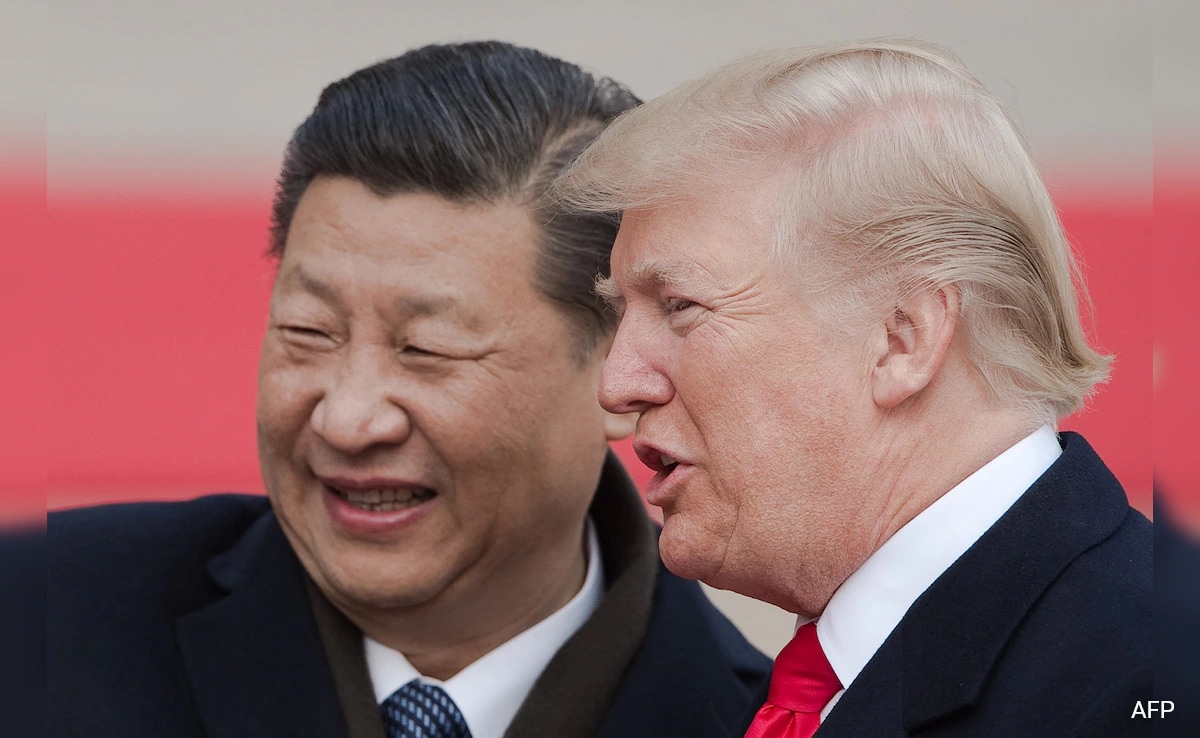
The decision to delay a high-level summit between the United States and China functions as a deliberate injection of volatility into a complex bilateral negotiation. While conventional political narratives frame such delays as "walk-away power" or a display of leverage, a rigorous structural analysis reveals a different mechanism: the postponement transfers the burden of uncertainty from the state to the private sector while granting the side with the longer planning horizon—in this case, Beijing—precious time to insulate its domestic economy from external shocks.
The Asymmetry of Time Preference
In game theory, the "discount factor" determines how much a player values future payoffs compared to immediate ones. The delay of the Mar-a-Lago summit highlights a fundamental mismatch in the time horizons of Washington and Beijing.
- The Electoral Cycle Constraint: The United States operates on a compressed timeline dictated by quarterly earnings and the four-year election cycle. Every month of delay brings the US administration closer to an election year, where the "political cost of failure" rises exponentially.
- The Institutional Continuity Advantage: China’s centralized leadership faces no such immediate electoral pressure. For Beijing, a delay is not a vacuum; it is an opportunity to execute "import substitution" strategies and reduce reliance on American agricultural and technological inputs.
When a summit is postponed, the US loses the "momentum premium." Negotiations of this scale rely on a psychological sense of inevitability to force concessions from domestic interest groups. Without a hard deadline, those interest groups—such as state-owned enterprises in China or the industrial lobby in the US—re-mobilize to protect their specific protected niches, hardening the negotiation positions on both sides.
The Three Pillars of Chinese Resilience
Beijing interprets a delay not as a setback, but as a tactical window to address three critical vulnerabilities. If the US administration intended the delay to "squeeze" China, they may have inadvertently provided the breathing room necessary for Beijing to recalibrate its defensive posture.
1. Monetary and Fiscal Calibration
China utilizes delays to synchronize its domestic stimulus packages with the external trade environment. By pushing back the summit, the People’s Bank of China (PBOC) can adjust reserve requirement ratios and liquidity injections without the optics of "conceding" to US demands for currency stability. This allows for a more controlled deleveraging process within the Chinese shadow banking sector.
2. Supply Chain Redundancy
The "threat of escalation" loses its potency the longer it remains a threat without becoming a reality. During the postponement period, Chinese technology firms accelerate the "de-Americanization" of their supply chains. This includes diverted procurement toward European or South Korean semiconductor equipment and increased R&D credits for domestic lithography and chip design.
3. Diversification of Agricultural Sourcing
One of the primary US levers is the purchase of soy and energy products. Delaying a final agreement allows China to finalize long-term purchase agreements with Brazil and Argentina. By the time a summit actually occurs, the "buy American" concession may have a lower marginal utility for Beijing because their baseline food security requirements have already been mitigated through alternative markets.
The Cost Function of Market Uncertainty
While the political actors weigh the delay in terms of optics, the private sector calculates it through the lens of the Equity Risk Premium. Uncertainty is a tax on capital expenditure.
The "Wait-and-See" trap creates a specific set of economic frictions:
- Capex Stagnation: Multinational corporations freeze investment decisions in both the US and China. This stagnation disproportionately affects the US, where GDP growth is more sensitive to private fixed investment fluctuations.
- Inventory Bloat: Fearing future tariffs, firms engage in "front-loading," which creates artificial demand spikes followed by deep troughs. This volatility complicates the Federal Reserve’s ability to manage interest rate cycles effectively.
- Relocation Inertia: While some manufacturing leaves China, it does not necessarily return to the US. Instead, it migrates to Southeast Asia or Mexico. The delay allows this migration to become permanent, meaning that even if a "perfect deal" is eventually signed, the US may have already lost the underlying industrial infrastructure it sought to protect.
The Mechanism of Negotiating Fatigue
Strategic postponement eventually leads to a phenomenon known as negotiating fatigue. As the "will they or won't they" narrative persists, the public and the markets become desensitized to the stakes. This desensitization reduces the political capital available to the US administration to walk away entirely.
If the public grows weary of the trade war’s impact on 401(k)s and consumer prices, the pressure on Washington to accept a "sub-optimal deal" increases. Conversely, the Chinese leadership can utilize state-controlled media to frame the delay as a sign of "American indecision," bolstering domestic nationalist support and making it harder for them to offer the structural reforms—such as ending forced technology transfer—that the US demands.
Logical Failure Points in the "Pressure" Strategy
The assumption that "delay equals pressure" relies on a fragile premise: that the target's economy will degrade faster than the initiator's political will. This premise fails under two conditions:
- Condition A: The target has access to non-US capital markets (China’s "Belt and Road" and European investment ties).
- Condition B: The initiator's domestic economy is more sensitive to short-term price signals (the US consumer market).
Because both conditions are currently met, the delay shifts the leverage toward the party that can better absorb localized economic pain. In a centralized economy, the state can socialize the losses of its firms; in a market economy, those losses lead to layoffs, stock sell-offs, and political volatility.
Strategic Realignment Requirements
To regain the initiative, the US must move beyond the "Summit Model" of diplomacy, which creates binary win/loss scenarios and high-profile targets for delay.
The optimal play involves a "Disaggregated Negotiation" framework:
- Decouple the Issues: Separate immediate commodity purchase agreements (Soy, LNG) from long-term structural issues (IP theft, Subsidies). This allows for "small wins" that stabilize markets while maintaining the "long-game" pressure on systemic changes.
- Multilateral Enforcement: Rather than a bilateral summit, move the dispute into a coordinated framework with the EU and Japan. Beijing finds it significantly harder to "delay" a three-front economic alignment than a single bilateral meeting.
- Hard-Trigger Timelines: Replace "tentative summits" with "automatic escalation/de-escalation triggers" based on independently verified data. If China meets a specific IP protection metric by Date X, Tariffs Y are removed. If not, they increase. This removes the "theatre" of the summit and replaces it with a predictable, algorithmic trade policy.
The current trajectory suggests that by prioritizing the "grand deal" at a single summit, the US has granted China the ability to use the calendar as a defensive weapon. The longer the silence persists between Washington and Beijing, the more the status quo—which favors the established incumbent in the region—solidifies. The strategic move is to cease treating the summit as the goal and start treating it as a distraction from the incremental, daily erosion of trade leverage.