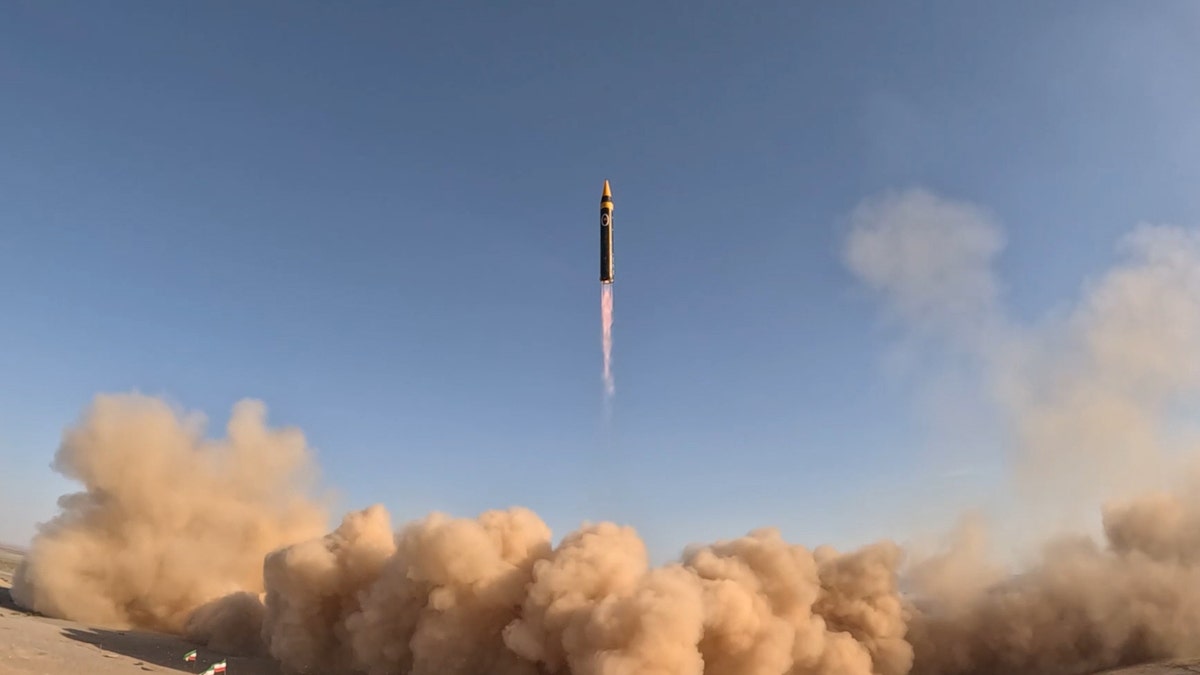
Capital markets operate on the assumption that political actors are rational utility maximizers, yet the current friction between the United States and Iran suggests a misalignment between perceived diplomatic intent and the actual cost of kinetic engagement. Investors are currently attempting to calculate the "pain point"—the specific threshold of economic or political friction—that would force a pivot in the Trump administration’s stance toward Iran. This calculation is not a matter of sentiment; it is a cold assessment of how specific variables, from domestic gasoline prices to global shipping insurance premiums, dictate the limits of hawkish foreign policy.
The primary friction point lies in the tension between "Maximum Pressure" as a conceptual strategy and the physical realities of the global energy supply chain. While the administration seeks to utilize sanctions as a non-kinetic weapon to force a renegotiation of regional influence, the efficacy of this strategy is tethered to the global price of Brent crude. If the price of oil exceeds the domestic political tolerance of the American electorate, the "Maximum Pressure" campaign reaches a functional ceiling. This creates a feedback loop where the success of the policy (strangling Iranian exports) creates the very condition (higher energy costs) that necessitates its abandonment.
The Triad of Escalation Constraints
To analyze the probability of a policy pivot, one must evaluate three distinct pillars of constraint that govern the administration's decision-making matrix. Each pillar has a quantifiable trigger that, when tripped, shifts the cost-benefit analysis from escalation toward de-escalation or containment.
1. The Domestic Energy Elasticity Threshold
The most immediate constraint is the correlation between Middle Eastern instability and the U.S. Consumer Price Index (CPI). Unlike previous decades, the U.S. is now a net exporter of petroleum products, yet the domestic price at the pump remains indexed to global benchmarks.
- The Political Toll Rate: Historical data suggests that a sustained 20% increase in gasoline prices over a 90-day period significantly degrades the approval ratings of an incumbent administration.
- The Strategic Petroleum Reserve (SPR) Fallacy: While the SPR can mitigate short-term supply shocks, it cannot offset the long-term risk premium that markets bake into prices during a prolonged naval standoff in the Strait of Hormuz.
Investors are watching for a specific price ceiling—likely between $90 and $100 per barrel—where the economic damage to the American middle class outweighs the perceived national security benefits of isolating Tehran. At this juncture, the administration faces a "pivot or perish" scenario regarding its domestic agenda.
2. The Maritime Insurance and Logistics Bottleneck
The Strait of Hormuz acts as a physical choke point for approximately 21% of the world's total petroleum liquids consumption. A pivot becomes inevitable when the "War Risk" premiums charged by maritime insurers render the passage of tankers economically unviable.
- Insurance Escalation: When Lloyd’s Market Association’s Joint War Committee widens the "Listed Areas" (high-risk zones), shipping costs do not rise linearly; they spike.
- The Shadow Fleet Variable: Iran’s ability to utilize non-tracked vessels to bypass sanctions provides a pressure valve, but a total blockade or active kinetic engagement removes this valve, forcing all regional oil onto the transparent—and taxable—market, further driving up global costs.
The pivot point here is reached when Asian allies, specifically Japan and South Korea, face an energy crisis that threatens their industrial output. The diplomatic pressure from these partners creates a secondary friction layer that forces the U.S. to choose between its Iran policy and its broader Indo-Pacific alliances.
3. The Congressional Budgetary Ceiling
A full-scale conflict with Iran requires a shift from "surgical strikes" to "sustained presence." This transition triggers a massive reallocation of capital.
- Opportunity Cost of Deployment: Every dollar spent on carrier strike group rotations in the Persian Gulf is a dollar removed from the technical modernization required to compete with peer competitors in the South China Sea.
- The Debt Limit Constraint: In an era of high interest rates and significant sovereign debt, the cost of financing a new Middle Eastern conflict is substantially higher than it was in 2003.
Mapping the Strategic Pivot: Three Probable Mechanics
The shift from a hawkish stance to a negotiated settlement—or at least a "frozen conflict"—usually manifests through one of three structural mechanics.
The Face-Saving De-escalation (The "Art of the Deal" Framework)
This mechanic involves the rebranding of minor concessions as a "historic victory." For the Trump administration, this would likely take the form of a new, albeit narrowly focused, memorandum of understanding that addresses specific nuclear enrichment levels while ignoring broader regional proxy activity. The "pain point" that triggers this is usually a sharp, sudden downturn in the S&P 500 directly linked to war fears.
The Tactical Retrenchment
If the cost of protecting maritime trade becomes too high, the administration may pivot toward a "regional responsibility" model. This involves withdrawing direct U.S. naval protection and forcing regional players (Saudi Arabia, the UAE) to take the lead. This creates a power vacuum that often forces the adversarial parties to the table out of mutual exhaustion rather than diplomatic breakthrough.
The Asymmetric Stalemate
Iran’s strategy is built on "strategic patience" and asymmetric responses (cyberattacks, drone strikes on infrastructure, mining of sea lanes). A pivot occurs when the U.S. realizes that it is using million-dollar interceptor missiles to down ten-thousand-dollar drones. The cost-exchange ratio becomes unsustainable.
Quantifying the "Pain Point" in Real-Time
Investors can monitor specific indicators to predict the timing of a policy shift. These are not qualitative "vibes" but quantitative signals:
- VIX Volatility Index: A sustained stay above 30 indicates that the market has stopped "buying the dip" on geopolitical tension and has begun pricing in a systemic shock.
- The Spread Between Brent and WTI: A widening spread indicates that the risk is localized to the Middle East, while a narrowing spread suggests a global supply crunch that the U.S. cannot insulate itself from.
- Rhetorical Frequency Analysis: A decrease in aggressive social media posting or official statements regarding "red lines" often precedes a back-channel diplomatic opening.
The Logic of the "Red Line"
The administration's current posture relies on the credibility of its threats. However, the paradox of credibility is that it becomes more expensive to maintain as the threat remains unexecuted. If Iran continues to cross minor thresholds without a proportional U.S. kinetic response, the "Maximum Pressure" campaign loses its psychological leverage. Conversely, if the U.S. responds with overwhelming force, it triggers the economic constraints mentioned above.
This leaves the administration in a narrow corridor of action. The "pain point" is the wall at the end of that corridor. For the investor, the strategy is not to guess if a pivot will happen, but to identify the specific economic variable that will break first.
The most probable catalyst for a policy shift is a combination of a domestic equity market correction exceeding 10% and a surge in retail fuel prices that threatens the administration's core electoral base in the American Midwest. In this environment, the "Iran problem" stops being a foreign policy objective and starts being a domestic political liability.
The strategic play is to monitor the Petroleum Administration for Defense Districts (PADD) data. When PADD 2 (the Midwest) shows significant supply tightening and price surges, the window for hawkish Iran policy begins to close. Position assets toward defensive sectors—utilities and consumer staples—while hedging energy exposure with short-dated volatility instruments. The moment the administration shifts its language from "behavioral change" to "regional stability," the risk premium will evaporate rapidly, favoring a swift rotation back into growth equities and emerging market debt.