Energy markets function on the assumption of friction-less transit through narrow geographic corridors. When kinetic action—specifically drone or missile strikes on merchant vessels—disrupts these corridors, the immediate "snap back" in oil prices is not merely a reaction to lost barrels, but a repricing of the systemic risk embedded in global supply chains. The recent escalation in maritime hostilities necessitates a structural deconstruction of how energy security, insurance premiums, and naval power projection intersect to dictate the spot price of Brent and WTI.
The Mechanics of the Maritime Risk Premium
Traditional market analysis often treats "geopolitical tension" as a monolithic variable. In reality, the price floor for crude during periods of maritime unrest is determined by the Three Pillars of Transit Friction: You might also find this similar article insightful: The Middle Power Myth and Why Mark Carney Is Chasing Ghosts in Asia.
- Kinetic Impediment: The physical destruction of assets or the threat thereof, which forces rerouting.
- Operational Lag: The temporal cost of adding 10 to 14 days to a voyage by bypassing the Suez Canal via the Cape of Good Hope.
- Capital Overhead: The exponential increase in Protection and Indemnity (P&I) insurance and "war risk" premiums.
When a tanker is struck, the market calculates the $Cost_{total}$ of a barrel not just by its extraction cost, but by the following function:
$$Cost_{total} = C_{extraction} + C_{freight} + C_{risk} + C_{time_value}$$ As reported in detailed reports by CNBC, the effects are significant.
The $C_{risk}$ component is highly elastic. In a stable environment, it approaches zero. During active hostilities, it can represent 5% to 15% of the total contract value. The "snap back" observed in oil prices reflects the sudden realization among traders that the $C_{time_value}$ has shifted from a constant to a volatile variable.
The Cape of Good Hope Arbitrage
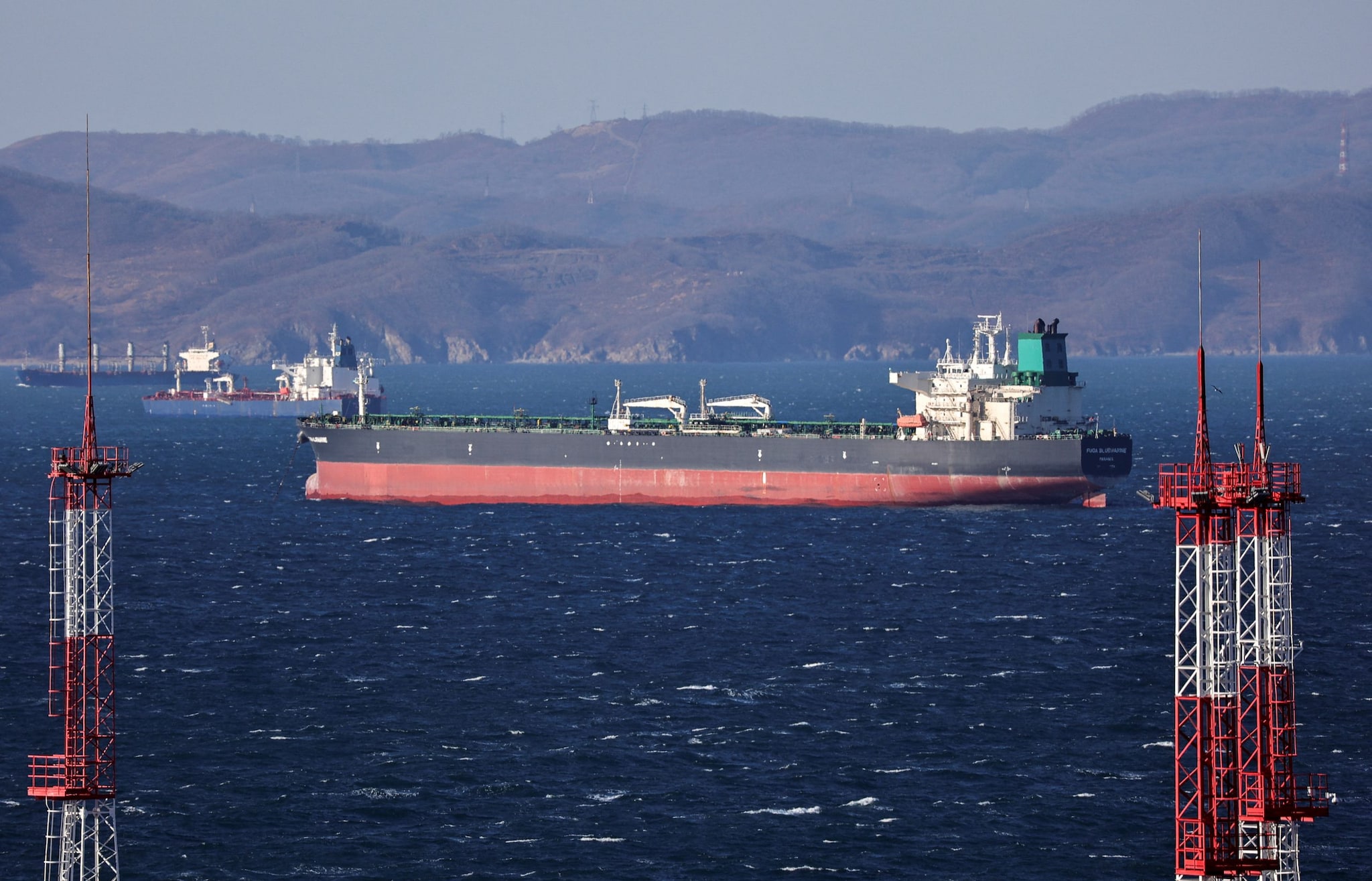
The decision to divert a Suezmax or VLCC (Very Large Crude Carrier) around the southern tip of Africa is a cold calculation of fuel burn versus insurance risk. A standard diversion adds approximately 3,500 to 4,000 nautical miles to a journey from the Persian Gulf to Rotterdam.
This creates a Logistics Bottleneck characterized by:
- Tonnage Compression: As voyages take longer, the global fleet of available tankers effectively shrinks. If 10% of the world's fleet is spent on longer transit times, the supply of "transport capacity" drops, driving up spot freight rates independent of the oil price itself.
- Fuel Consumption Nonlinearity: Ships must often increase speed to compensate for the longer route to meet delivery windows, leading to a non-linear increase in bunker fuel costs.
- Inventory on Water: Oil trapped on a vessel for an extra two weeks is "dead capital." It cannot be refined, sold, or used as collateral in short-term credit facilities, tightening physical market liquidity.
The Asymmetry of Modern Naval Defense
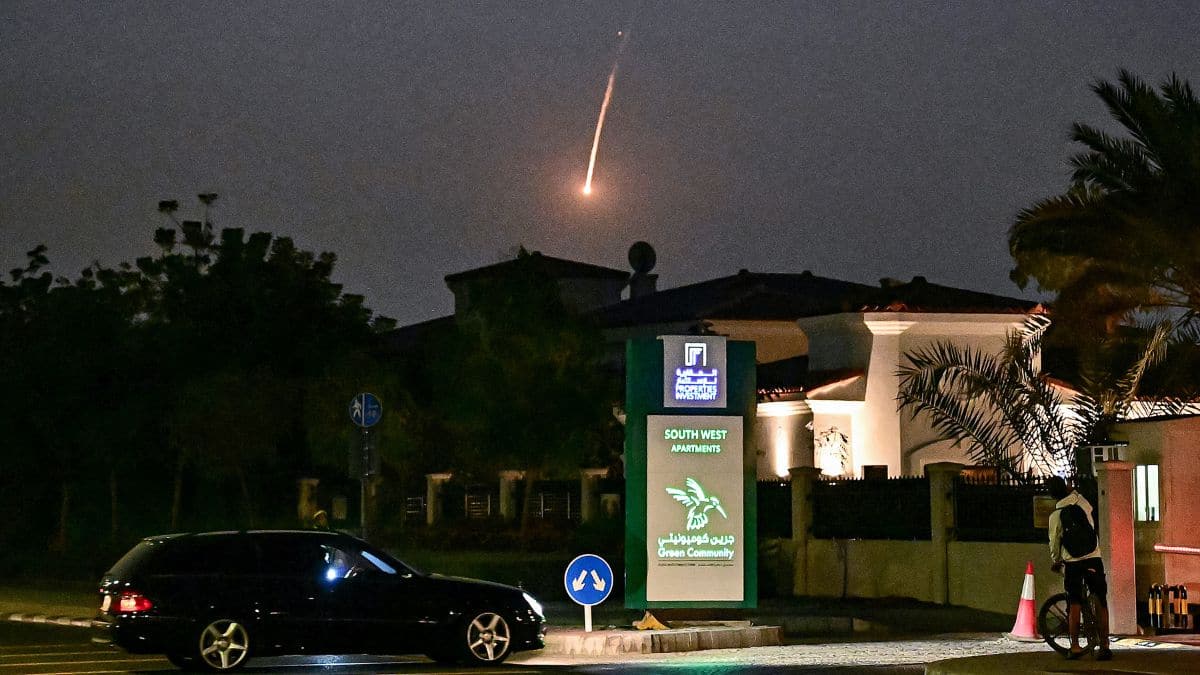
The escalation in the Red Sea and surrounding waters highlights a critical failure in the cost-benefit ratio of maritime defense. This is the Asymmetry Gap. A non-state actor or regional power can deploy a "suicide" drone costing $20,000 to $50,000 to threaten a vessel carrying $100 million in cargo.
The defensive response typically involves:
- High-Value Interceptors: Utilizing missiles that cost $1 million to $2 million per shot.
- Asset Fatigue: Constant high-alert status for carrier strike groups and destroyers leads to accelerated maintenance cycles and personnel burnout.
- Saturation Thresholds: There is a finite number of vertical launch system (VLS) cells on any given naval vessel. A persistent, low-cost drone swarm can theoretically exhaust the defensive kinetic capacity of a multi-billion dollar warship.
This asymmetry means that even "successful" defense of a shipping lane is economically unsustainable in the long term. Markets recognize this. The price of oil rises because the market is betting on the eventual exhaustion of the defensive umbrella or a successful "leaker"—a missile that makes it through the screen.
Strategic Petroleum Reserve Limitation
The common retort to maritime disruptions is the existence of the Strategic Petroleum Reserve (SPR) in the United States and similar stockpiles in IEA member nations. However, the SPR is a Volume Tool, not a Velocity Tool.
While the SPR can inject millions of barrels into the market, it cannot solve the physical delivery problem if the primary maritime routes are compromised. The SPR is located on the U.S. Gulf Coast; it does little to alleviate a supply crunch in European or Asian refineries that depend on Middle Eastern grades passing through the Bab el-Mandeb or the Strait of Hormuz.
Furthermore, the "cushion" provided by the SPR has been historically thin following recent drawdowns. This leaves the global economy with a diminished Buffer Capacity, making the price of oil hyper-sensitive to even minor kinetic incidents.
The Hydrogen and LNG Pivot Factor
While oil is the primary focus of "snap back" narratives, the volatility extends to Liquefied Natural Gas (LNG). Unlike oil, which can be stored relatively easily in varied locations, LNG is part of a "just-in-time" energy supply chain.
A disruption in maritime transit for LNG carriers creates an immediate Thermal Risk for regions like Western Europe that have decoupled from Russian pipeline gas. The relationship between maritime security and the "Green Transition" is also becoming evident. If the transit of critical minerals required for battery production—much of which passes through these same chokepoints—is disrupted, the inflationary pressure on renewable energy infrastructure will mirror that of fossil fuels.
Regional Hegemony and the Strait of Hormuz
The most significant "tail risk" is the transition of conflict from the Red Sea to the Strait of Hormuz. While the Red Sea is a transit corridor, the Strait of Hormuz is the Systemic Vent for the world's spare production capacity.
- Flow Statistics: Approximately 20-21 million barrels per day (bpd) pass through the Strait, representing roughly 20% of global consumption.
- Geography as a Weapon: The narrowness of the shipping lanes within the Strait makes them vulnerable to sea mines, shore-to-ship missiles, and small-boat harassment.
- Absence of Alternatives: While Saudi Arabia and the UAE have some pipeline capacity to bypass the Strait (to the Red Sea and the Gulf of Oman, respectively), these pipelines cannot handle even 50% of the total volume currently passing through the water.
A closure or significant slowdown of the Strait of Hormuz would move the market from a "risk premium" phase to a "structural shortage" phase. In this scenario, price movements would no longer be measured in single-digit percentages but in multiples.
Quantitative Easing and the Inflationary Feedback Loop
Central banks view oil prices as a "volatile" component of headline inflation, often preferring to look at "core" inflation (which excludes energy). This is a flawed methodology in a disrupted maritime environment.
Energy is the fundamental input for every physical good. If $Cost_{total}$ for oil increases due to $C_{risk}$ and $C_{time_value}$, the cost of transporting grain, manufacturing semiconductors, and operating data centers increases. This creates a Second-Order Inflationary Effect.
The "snap back" in oil prices acts as a de facto tax on global consumption. If oil stays elevated due to persistent maritime insecurity, central banks are forced to maintain higher interest rates for longer to combat the resulting "sticky" inflation. This increases the cost of capital, slowing down the very infrastructure projects (like pipeline expansion or domestic energy production) that could mitigate the dependency on these chokepoints.
Strategic Execution for Market Participants
The era of "peace dividend" shipping is over. To navigate this environment, energy traders and corporate strategists must move beyond simple price tracking and adopt a Geospatial Risk Framework.
- Diversification of Transit: Shift reliance away from single-point-of-failure corridors. This involves investing in "Mid-Corridor" rail and pipeline projects that connect Central Asia to Europe, bypassing traditional maritime routes.
- On-Shore Storage Expansion: Increasing local storage capacity to transform the energy supply chain from "just-in-time" to "just-in-case." This reduces the immediate price sensitivity to a single tanker strike.
- Synthetic Hedging: Moving beyond Brent/WTI futures and into freight rate derivatives (Forward Freight Agreements - FFAs). During maritime crises, the volatility in freight often exceeds the volatility in the commodity itself.
The current price action is a warning signal. The market is not just reacting to a hit ship; it is pricing in the end of guaranteed maritime security. The strategic play is to front-run the transition from a globalized, low-friction energy market to a balkanized, high-friction landscape where the security of the route is as valuable as the resource itself.
Would you like me to develop a comparative analysis of the specific throughput capacities of the East-West Pipeline versus the Abqaiq-Yanbu infrastructure to determine the exact "break point" of a total Strait of Hormuz closure?