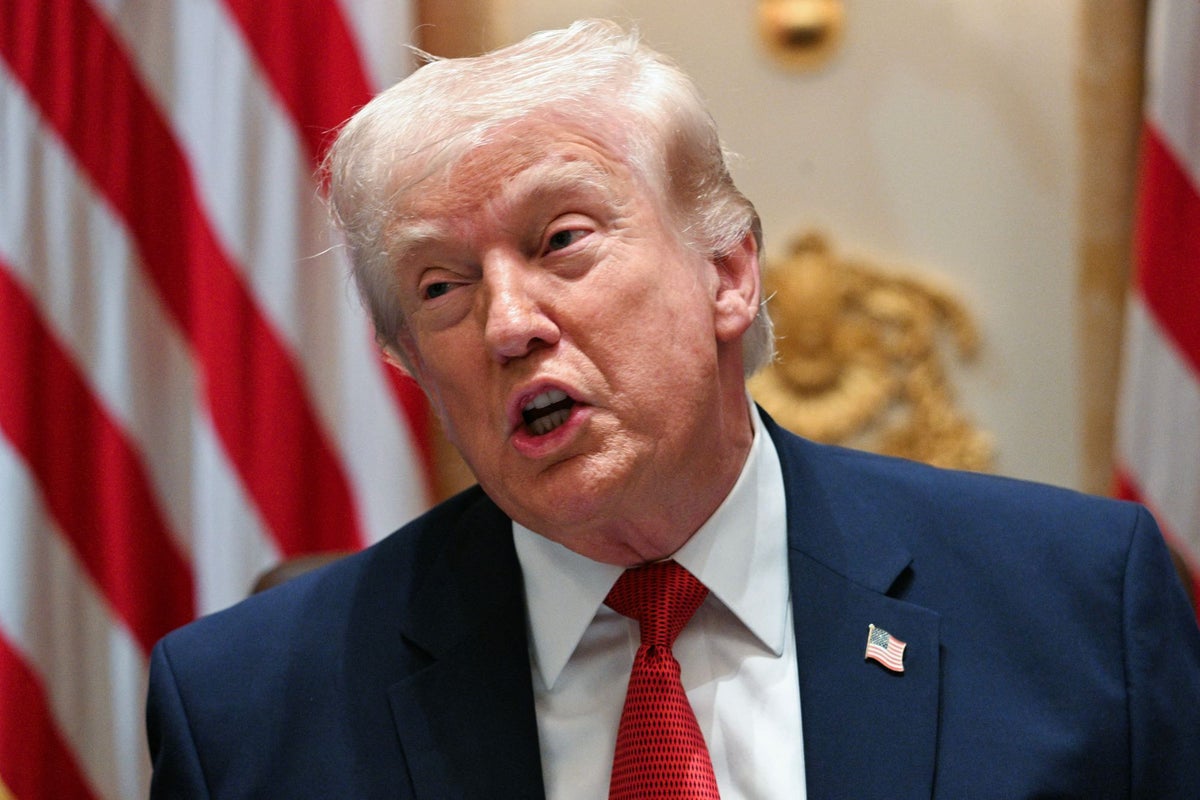
The proposed ceasefire in the Iran conflict represents a shift from a war of attrition to a high-stakes liquidation of geopolitical liabilities. While public discourse often focuses on the optics of diplomacy, the underlying reality is a complex re-indexing of regional security costs. A ceasefire is not an end-state; it is a tactical pause designed to stop the hemorrhaging of financial and military capital while attempting to fix a new baseline for Iranian regional influence. To understand the viability of this proposal, one must deconstruct the three fundamental pillars that sustain the current kinetic environment: the maritime security overhead, the proxy-state incentive structure, and the domestic political risk premiums in both Washington and Tehran.
The Maritime Security Overhead and Global Logistics
The most immediate quantifiable pressure driving the ceasefire proposal is the escalating cost of securing the Red Sea and Persian Gulf transit corridors. The conflict has moved beyond localized skirmishes into a direct tax on global trade. This "security overhead" functions as a regressive tax on energy and consumer goods.
- Insurance Risk Premiums: Commercial shipping companies face a tiered risk structure where hull stress and war-risk premiums fluctuate based on the perceived proximity of Iranian-backed assets. A ceasefire proposal aims to reset these premiums to 2021 levels.
- Defense Interception Ratios: There is a widening disparity between the cost of offensive drone technology and the cost of naval interceptors. When a $20,000 loitering munition requires a $2 million interceptor missile to neutralize it, the defender is operating on a negative ROI. This fiscal imbalance is unsustainable for Western naval coalitions over a multi-year horizon.
- Rerouting Externalities: The bypass of the Suez Canal in favor of the Cape of Good Hope adds roughly 10 to 14 days to transit times, increasing fuel consumption and tightening global container capacity.
A cessation of hostilities would immediately deflate these specific cost drivers, providing an instant "peace dividend" to the global supply chain, which explains the significant corporate and international pressure on the Trump administration to finalize a deal.
The Proxy-State Incentive Structure
The primary obstacle to a durable peace is the decentralized nature of Iran’s "Axis of Resistance." Tehran operates through a franchise model, where local actors in Yemen, Lebanon, and Iraq maintain their own domestic agendas. This creates a principal-agent problem: the principal (Tehran) may agree to a ceasefire to gain sanctions relief, but the agents (proxies) may find continued conflict more beneficial for their local political standing.
The ceasefire proposal must account for the following three-tier logic of proxy engagement:
- Economic Dependency: Proxies rely on Iranian funding, but they also generate revenue through smuggling and wartime taxation. A ceasefire threatens these war-economies.
- Political Legitimacy: For groups like the Houthis, "fighting the Great Satan" is a primary source of domestic legitimacy. Removing the conflict removes their raison d'être, potentially leading to internal instability.
- The Escalation Ladder: Every proxy action is a data point in a larger negotiation. If the ceasefire does not provide a "ladder" for these groups to transition into legitimate political or military roles within their respective states, they will likely sabotage the agreement to maintain their relevance.
A successful strategy requires a "de-risking" mechanism that decouples these local actors from Iranian command-and-control without creating a power vacuum that a more radicalized third party could fill.
The Nuclear Breakout Threshold and Sanctions Arbitrage
A ceasefire is inextricably linked to Iran’s nuclear program. The strategic bottleneck for the U.S. is the "breakout time"—the duration required for Iran to produce enough weapons-grade uranium for a single device. The current proposal likely involves a "freeze-for-freeze" architecture: Iran halts enrichment at specific levels in exchange for the unfreezing of restricted assets.
The risk in this framework is sanctions arbitrage. Iran has become adept at utilizing shadow banking systems and "ghost fleets" to export oil despite U.S. restrictions. If a ceasefire allows Iran to re-enter formal markets without a permanent dismantling of its enrichment infrastructure, it gains the financial capital to further harden its nuclear sites against future kinetic strikes. This creates a moral hazard where the short-term benefit of a ceasefire facilitates a long-term increase in the Iranian threat profile.
The Cost of Compliance and Verification
No ceasefire survives without a verification regime that is faster than the speed of tactical redeployment. The proposal’s success hinges on whether the International Atomic Energy Agency (IAEA) and regional monitors are granted "anywhere, anytime" access. This is a friction point. Tehran views intrusive inspections as an infringement on sovereignty and a tool for Western intelligence gathering.
The logistical requirements for a functional ceasefire include:
- Real-time Satellite Monitoring: Utilizing non-classified commercial imagery to track troop movements and missile battery deployments in real-time.
- Financial Oversight: Monitoring the flow of repatriated funds to ensure they are directed toward civilian infrastructure rather than IRGC (Islamic Revolutionary Guard Corps) paramilitary projects.
- Cyber-Conflict Buffers: A kinetic ceasefire is meaningless if state-sponsored cyberattacks on critical infrastructure continue. A comprehensive agreement must define "cyber-neutrality" to prevent a shadow war from triggering a return to physical combat.
Tactical Realignment of Regional Powers
The Gulf states, particularly Saudi Arabia and the UAE, are recalibrating their alignment. They are no longer interested in being the frontline of a Western-led containment strategy that yields inconsistent results. Their "Vision 2030" goals require regional stability. Therefore, their support for a Trump-led ceasefire is rooted in economic pragmatism rather than ideological shift.
This creates a new "Middle East Equilibrium" where the U.S. acts as a security guarantor of last resort while regional players handle the day-to-day diplomatic management. The danger of this equilibrium is the "abandonment anxiety" felt by Israel. If the Israeli security establishment perceives the ceasefire as a facade that allows Iran to complete its "Ring of Fire" encirclement, they may take unilateral action. Any ceasefire that does not include specific, enforceable limits on Iranian precision-guided munition (PGM) transfers to Hezbollah will likely be rejected by Jerusalem, regardless of Washington’s pressure.
Strategic Forecast
The most probable outcome of the current proposal is a "Cold Peace"—a reduction in direct kinetic exchanges between U.S. forces and Iranian proxies, coupled with an intensification of the intelligence and economic war.
The immediate tactical move for stakeholders is to prepare for a "Snap-Back" scenario. This involves maintaining a high state of naval readiness in the Eastern Mediterranean and the North Arabian Sea, even as diplomatic rhetoric softens. Investors should watch for the reactivation of primary oil terminals in Iran as a lead indicator of deal progress, but they must also discount the "peace premium" by at least 30% to account for the high probability of proxy-led disruptions in the first 90 days of any signed agreement.
The final play is not the ceasefire itself, but the subsequent negotiation of a regional security architecture that formalizes Iranian limits. If the ceasefire is treated as a standalone event, it will fail. It must be utilized as a six-month window to implement a "Containment 2.0" strategy that leverages economic incentives to peel the proxy fringes away from the Iranian core.

.jpg?width=1200&auto=webp&crop=3%3A2)