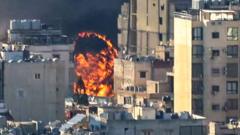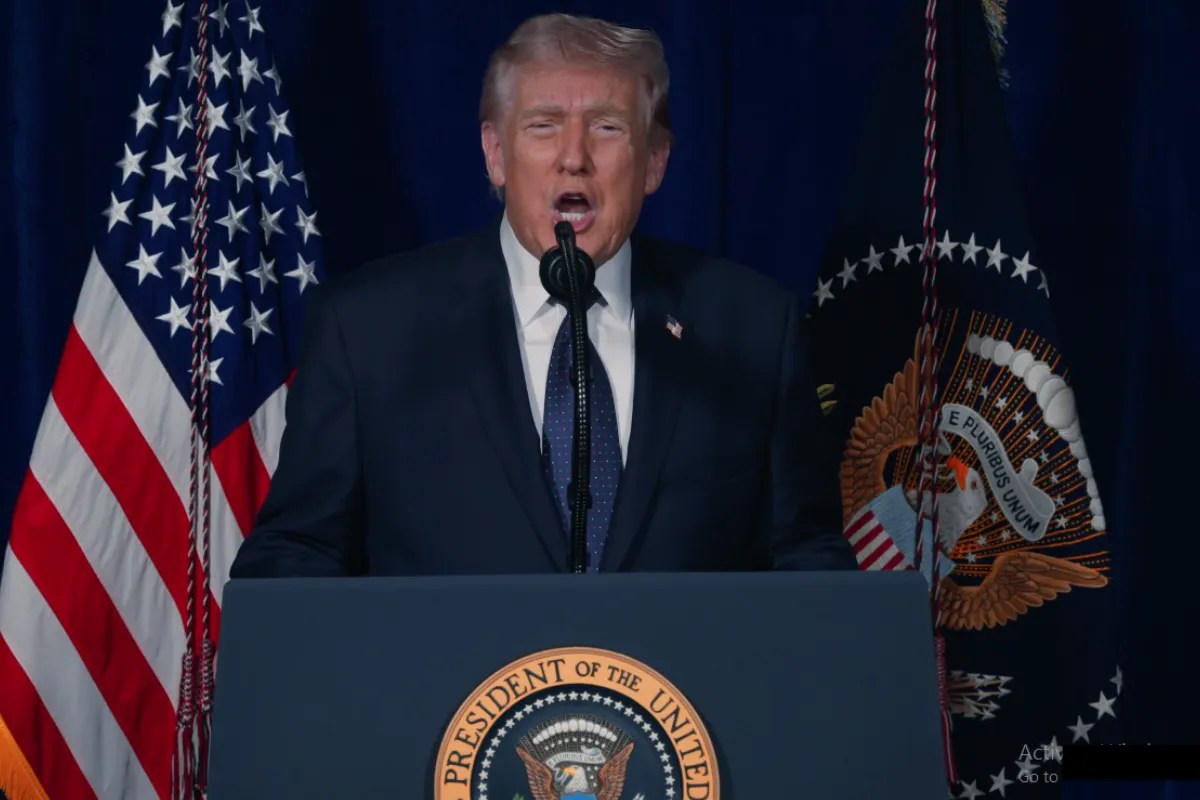
The recent escalation in rhetoric from the United States executive branch toward the Iranian clerical leadership represents more than a localized diplomatic friction; it is a calculated application of the "Madman Theory" of international relations, updated for a multipolar era where the cost of conventional conflict is historically high. When President Trump issues an ultimatum demanding immediate disarmament under the threat of total kinetic elimination, he is attempting to reset the regional equilibrium by artificially inflating the perceived risk of Iranian non-compliance. This strategy rests on the assumption that the Iranian regime’s internal stability is more fragile than its external posturing suggests.
The Three Pillars of Kinetic Deterrence
Effective deterrence in the Middle East is not a binary state but a variable dependent on three specific structural components. If any of these pillars fail, the "last warning" loses its psychological utility and becomes a liability for the issuing power.
- Credibility of Capabilities: The United States maintains a qualitative military edge through localized carrier strike groups and Fifth Fleet assets. The threat of "death" or total destruction is grounded in the operational reality of precision-guided munitions and the ability to decapitate command-and-control nodes without a full-scale ground invasion.
- Communication of Red Lines: For a warning to be effective, the recipient must understand exactly which action triggers the promised consequence. The demand to "drop weapons" is intentionally broad, covering ballistic missile programs, nuclear enrichment, and the funding of regional proxies.
- Domestic Political Will: The Iranian leadership evaluates the likelihood of a U.S. strike by analyzing American internal politics. If the administration appears constrained by legislative pushback or public fatigue over "eternal wars," the "last warning" is interpreted as a domestic signaling tool rather than a pre-operation brief.
The Asymmetric Value Gap
A fundamental disconnect exists between Western and Iranian strategic logic regarding the "cost of surrender." From a U.S. perspective, Iranian disarmament is a logical step toward regional stability and economic reintegration. From the perspective of the Islamic Revolutionary Guard Corps (IRGC), their missile inventory and proxy network represent their only "insurance policy" against regime change.
This creates a bottleneck in negotiations. If the cost of keeping the weapons is a potential strike, but the cost of surrendering them is certain regime collapse over time, the rational actor will choose the risk of the strike. This is known as the "Cornered Rat Dynamics" in game theory. When an opponent perceives the outcome of surrender as being identical to the outcome of defeat in war, deterrence fails because the opponent has no incentive to choose the peaceful path.
Operational Mechanics of the Ultimatum
The ultimatum delivered by the U.S. executive serves as a "forcing function" designed to accelerate the decision-making cycle (OODA loop) of the Iranian leadership. By compressing the timeframe for a response, the U.S. aims to induce errors in the Iranian command structure.
- Psychological Attrition: Constant high-level threats force the IRGC to maintain a state of high alert. This causes physical fatigue in personnel and mechanical wear on hardware, eventually leading to "readiness decay."
- Information Warfare: Publicly broadcasting a "last warning" is intended to communicate directly with the Iranian citizenry and mid-level military officers. The goal is to create a rift between the hardline leadership and those who would bear the brunt of a kinetic engagement.
- Economic Correlation: The threat of military action acts as a multiplier to existing sanctions. Uncertainty drives away the few remaining foreign investors and causes the Rial to fluctuate, further straining the regime's ability to fund its "Forward Defense" strategy.
The Strategic Failure of Ambiguity
The competitor narrative often focuses on the "bravery" or "aggression" of the rhetoric, but a rigorous analysis must focus on the risk of miscalculation. The primary danger of the "last warning" is the lack of a defined "off-ramp." If the U.S. does not provide a face-saving mechanism for the Iranian leadership to comply, the regime is forced into a defensive crouch.
This creates a feedback loop. Iran increases its "defensive" posture—perhaps by harassing tankers in the Strait of Hormuz or increasing centrifuge output—which the U.S. then interprets as a defiance of the warning, necessitating further escalation. This spiral continues until a minor tactical error, such as a localized naval skirmish, triggers the very total war both sides claim to want to avoid.
Precision Strike Capability vs. Total War
The "death" mentioned in the rhetoric likely refers to the "Targeted Decapitation" model rather than a 20th-century style occupation. Modern military doctrine favors the use of:
- Cyber Kinetic Integration: Disabling air defense grids via software before physical munitions enter the airspace.
- Standoff Weaponry: Utilizing B-21 or B-2 stealth assets to strike hardened sites from outside the range of Iranian surface-to-air missiles.
- LO (Low Observable) Platforms: Ensuring that the first indication of a strike is the impact itself, denying the adversary the opportunity for a counter-launch.
Regional Power Realignment
The reaction of neighboring states—specifically Saudi Arabia, Israel, and the UAE—serves as the ultimate barometer for the effectiveness of U.S. threats. These nations are currently recalibrating their security architectures. If they believe the "last warning" is a precursor to a meaningful shift in the regional power balance, they will align more closely with Washington. If they perceive it as empty rhetoric, they will continue to pursue independent diplomatic channels with Tehran or Beijing to hedge their bets.
The current trajectory suggests that the United States is moving toward a "Maximum Pressure 2.0" framework that treats diplomatic engagement as a secondary tool to be used only after military dominance is re-established. The success of this strategy hinges entirely on whether the Iranian leadership views the threat as an existential certainty or a bluff intended to gain leverage at the bargaining table.
The strategic play here is not to wait for a response from Tehran, but to immediately solidify the maritime security coalitions in the Gulf. Strengthening the "International Maritime Security Construct" (IMSC) provides the physical infrastructure to back the rhetoric. By securing the energy transit routes first, the U.S. lowers the global economic risk of a potential Iranian "suicide strike" on oil infrastructure, thereby making the threat of U.S. kinetic action more credible and less restrained by the fear of a global recession.