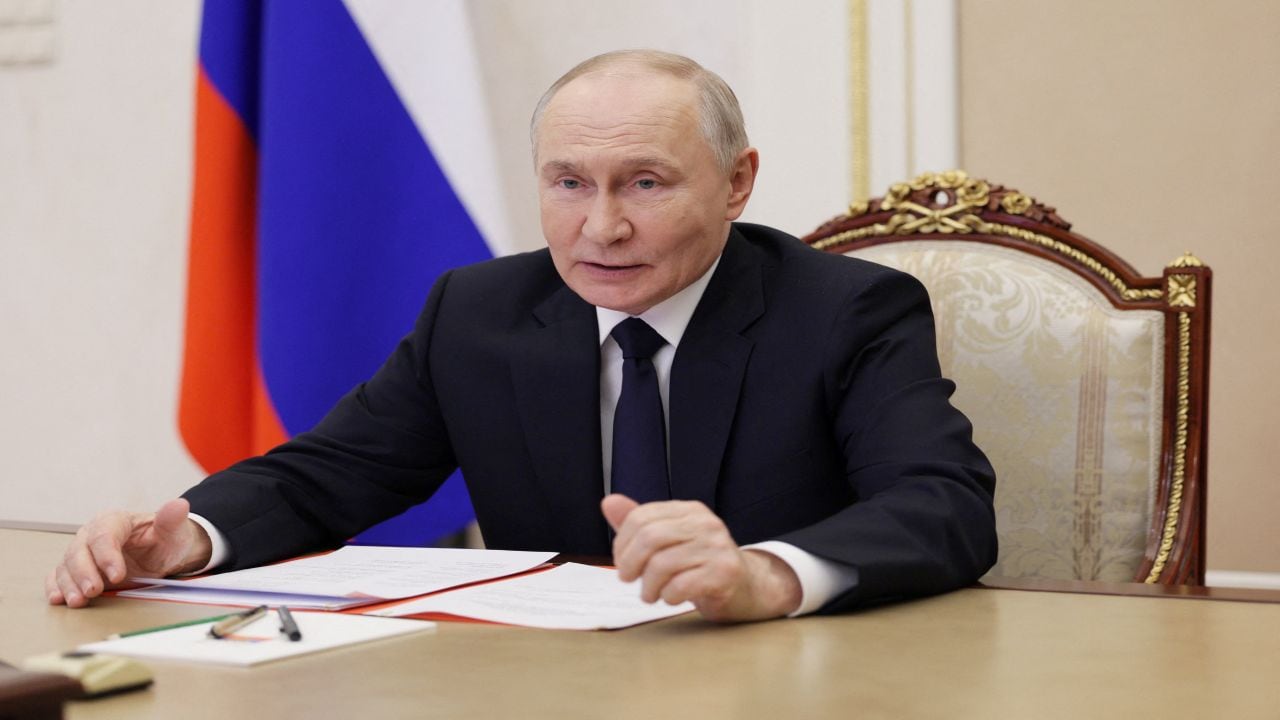
The persistent friction between Russian diplomatic concerns and U.S. over-the-horizon capabilities centers on a singular geographic inflection point: the Bagram Airfield. While recent diplomatic signaling from Zamir Kabulov, Vladimir Putin’s special envoy to Afghanistan, frames the potential U.S. return to Bagram as a direct threat to regional stability, the underlying tension is not merely a matter of military presence. It is a conflict over the re-establishment of a strategic projection platform that would effectively nullify the current Eurasian security architecture.
To understand why the Kremlin views the Bagram facility with such high-intensity skepticism, one must deconstruct the operational advantages the site offers and the cascading effects its reactivation would have on the regional power balance. Building on this idea, you can find more in: Why the Green Party Victory in Manchester is a Disaster for Keir Starmer.
The Triad of Strategic Encirclement
The Russian state's apprehension is rooted in a specific logic of "Strategic Depth." In the current vacuum, Russia and its partners in the Collective Security Treaty Organization (CSTO) have attempted to insulate Central Asia from Afghan-originated instability. A U.S. re-entry into Bagram breaks this insulation through three distinct mechanisms.
- Signal Intelligence and Electronic Warfare Dominance: Bagram is not just a runway; it is a nexus for high-altitude surveillance and electronic monitoring. From this position, U.S. assets can monitor communications and military movements across the Xinjiang border into China, as well as the southern military districts of the Russian Federation.
- Kinetic Projection Radius: The airfield allows for the deployment of long-range strike capabilities and unmanned aerial systems (UAS) that can reach deep into the Iranian plateau and the Central Asian republics. For Moscow, this represents a "flank risk" where the southern border—traditionally protected by the buffer of the Hindu Kush—becomes porous to Western kinetic influence.
- Logistical Prepositioning: The infrastructure at Bagram is designed for heavy-lift capacity. Re-establishing control provides the U.S. with a "Turnkey Intervention" capability, where the time-to-theater for a significant force is reduced from weeks to hours.
The Logic of the Proxy Paradox
The Russian position relies on a delicate contradiction. On one hand, Moscow benefits from a stable Afghanistan that prevents the northward flow of extremism. On the other hand, it views any U.S. involvement in achieving that stability as a Trojan horse for permanent encirclement. This creates a Zero-Sum Security Dilemma. Analysts at Associated Press have provided expertise on this matter.
If the Taliban administration fails to contain transnational threats such as ISIS-K, the justification for external intervention—specifically Western intervention—rises. Consequently, Russia's strategy involves providing "controlled legitimacy" to the Taliban. By engaging with the de facto government in Kabul, Moscow seeks to create a regional security bloc that explicitly excludes the United States, thereby removing the necessity for Bagram to ever be reopened.
Kabulov’s warnings function as a preemptive diplomatic strike. By publicly stating that a U.S. return is "impossible" or "unacceptable," Russia is signaling to the Taliban that their own internal legitimacy depends on maintaining a "no-bases" policy. This exerts pressure on the Afghan leadership to reject any Western overtures, even those potentially tied to financial aid or frozen asset releases.
Operational Constraints and the Cost of Re-entry
The technical feasibility of the U.S. returning to Bagram is often discussed without regard for the Friction of Re-occupation. For the U.S. to take control of the base, it would require one of two scenarios, both of which carry immense geopolitical costs.
- The Invitation Model: The Taliban, facing an economic collapse or a domestic insurgency they cannot control, invite U.S. technical or counter-terrorism assistance. This is the scenario Russia fears most, as it would represent a pivot in Afghan foreign policy that would leave Moscow marginalized.
- The Forced Entry Model: In the event of a catastrophic terrorist event linked to Afghan soil, the U.S. might move to secure Bagram unilaterally. The logistical burden of this—maintaining a base in a hostile, landlocked country without reliable ground lines of communication (GLOCs) through Pakistan or Central Asia—makes this a high-risk, low-sustainability option.
Russia’s current diplomatic posture assumes that the Cost-Benefit Ratio for the U.S. is currently negative. However, the Kremlin remains wary that the U.S. "Over-the-Horizon" strategy—which relies on bases in Qatar or carrier groups in the Arabian Sea—is inherently inefficient. The transit time and fuel costs for UAS operations from the Gulf to Northern Afghanistan result in limited "time on station." Bagram solves this efficiency problem, which is why it remains the ultimate prize in the regional security competition.
The Sino-Russian Security Integration
A secondary but vital layer of this analysis involves China’s role. The Bagram facility sits in proximity to the Wakhan Corridor. For China, a U.S. presence at Bagram is an existential threat to the Belt and Road Initiative (BRI) infrastructure in Pakistan and the security of the Xinjiang region.
Russia and China have increasingly aligned their Afghan policies to ensure that "Regional Solutions for Regional Problems" remains the dominant narrative. This alignment serves to:
- Standardize the diplomatic requirements for Taliban recognition.
- Coordinate counter-terrorism intelligence to prove that regional actors can manage threats without Western "interference."
- Leverage the Shanghai Cooperation Organization (SCO) as the primary arbiter of Afghan security.
When Russian envoys speak of "concern" regarding Bagram, they are speaking on behalf of a broader Eurasian consensus that views the airfield as the last potential foothold for Western hegemony in the heart of the continent.
Tactical Divergence in Taliban Governance
The internal dynamics of the Taliban also dictate the likelihood of a Bagram reactivation. The movement is divided between pragmatic elements who might consider limited security cooperation for economic concessions and hardline factions who view any foreign presence as a betrayal of their fundamentalist victory.
Russia exploits this division by positioning itself as the "Reliable Partner" that offers security cooperation without the ideological baggage of democratization or human rights conditions. By keeping the Taliban within the Russian-Chinese sphere of influence, Moscow ensures that the "Real Estate" of Bagram remains dormant.
The threat, from the Russian perspective, is not that the U.S. will invade Afghanistan again, but that the U.S. will successfully negotiate a functional presence. A functional presence allows for a "Light Footprint" that can disrupt Russian influence throughout the "Stans" (Tajikistan, Uzbekistan, Turkmenistan) without the baggage of a full-scale occupation.
The Strategic Play
The future of Bagram will not be decided by military force, but by the outcome of the Economic-Security Trade-off. The Taliban currently face a liquidity crisis and a lack of international recognition. If Russia and China fail to provide sufficient economic relief, the "Invitation Model" for a U.S. return becomes statistically more probable.
Russia's strategic recommendation to its regional partners is clear: accelerate the integration of the Afghan economy into the Eurasian framework to preemptively close the door on Western military return. This involves:
- Infrastructure Linkages: Connecting Afghan mineral resources to regional markets via rail projects through Uzbekistan and Pakistan.
- Intelligence Sharing: Formalizing the exchange of data on ISIS-K to render Western counter-terrorism claims redundant.
- Diplomatic Normalization: Moving toward full recognition of the Taliban government, contingent on the permanent exclusion of foreign military bases.
The "Bagram Concern" is a barometer for the broader struggle to define the security architecture of the 21st century. If Bagram remains an empty shell, Russia has successfully established a new status quo where the U.S. is effectively locked out of Central Asian geography. If the base is reactivated, the entire decade of Russian and Chinese strategic maneuvering will have suffered a significant setback, forcing a re-militarization of the southern Russian border and a total pivot in the Kremlin's regional defense posture.