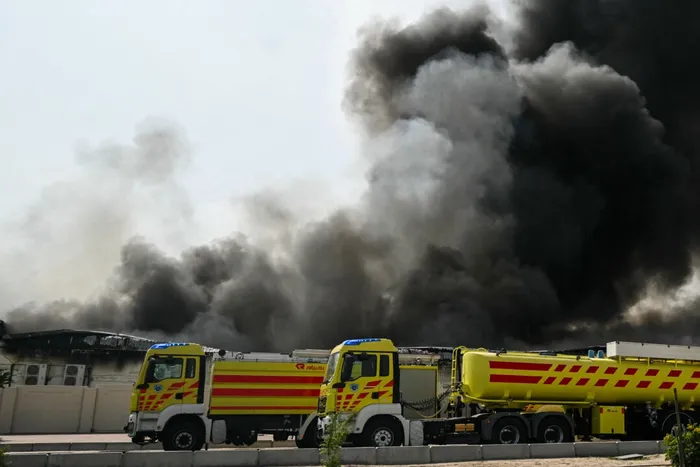
The closure of the UAE embassy in Tehran following Iranian strikes across the Gulf represents a calculated transition from a strategy of de-escalation to one of rapid risk containment. This maneuver is not a reactive emotional impulse but a formal execution of a "security-first" doctrine designed to protect sovereign assets and financial stability in the face of asymmetric kinetic threats. When a state shuttering its top diplomatic mission in a neighboring regional power, it signals that the marginal utility of dialogue has been surpassed by the mounting cost of physical and reputational liability.
The current friction is defined by a breakdown in the Regional Security Equilibrium. To understand the mechanics of this collapse, one must analyze the three structural drivers forcing the UAE’s hand: the failure of the maritime security umbrella, the breach of non-interference norms, and the protection of the "Safe Haven" economic premium.
The Triad of Deterrence Erosion
The decision to withdraw diplomatic personnel functions as a high-frequency signal to both global markets and regional adversaries. This shift is predicated on three distinct operational failures.
1. The Maritime Insecurity Loop
The Persian Gulf serves as the primary artery for global energy transit, specifically through the Strait of Hormuz. When kinetic strikes occur, the cost of "doing business" undergoes a non-linear spike.
- Insurance Premiums: War risk surcharges for vessels transiting the Gulf can increase by 200% to 500% within 48 hours of a confirmed strike.
- Physical Bottlenecks: Iranian naval posture suggests a capability to implement a "slow-bleed" strategy, where intermittent harassment of tankers creates a permanent state of high-alert fatigue for international navies.
- Asset Vulnerability: The UAE’s reliance on desalination plants and coastal energy infrastructure makes the cost of a single successful strike catastrophic. Closing the embassy removes a "soft target" and signals that the UAE is no longer prioritizing the preservation of a diplomatic facade over the preparation for defensive contingencies.
2. Failure of the De-escalation Protocol
For several years, Abu Dhabi pursued a policy of "functional engagement" with Tehran, attempting to decouple economic ties from ideological friction. This protocol relied on the assumption that Iran viewed the UAE as a neutral intermediary. The recent strikes across the Gulf indicate that Iran has shifted its calculus, viewing all neighbors hosting Western defense infrastructure as valid targets. This invalidates the neutral intermediary model, leaving the UAE with no choice but to retract its diplomatic footprint to avoid being perceived as a passive victim of proximity.
3. Protection of the Jurisdictional Premium
The UAE, particularly Dubai, operates on a business model of "geopolitical arbitrage." It attracts capital by offering a stable, Western-style legal and physical environment in a volatile region.
- Capital Flight Risks: If the perception of safety is compromised, the UAE loses its primary competitive advantage over emerging regional rivals like Saudi Arabia or global hubs like Singapore.
- Operational Continuity: By severing ties, the UAE creates a clear boundary. It communicates to the international community that it is taking active steps to distance its governance and territory from the source of the instability.
The Cost Function of Diplomatic Rupture
Closing an embassy is an expensive signal. It truncates intelligence gathering, halts consular services for a significant expatriate population, and freezes back-channel negotiations. However, in a data-driven strategy, this cost is weighed against the Expected Loss (EL) of remaining open.
$$EL = P(S) \times L(S)$$
Where $P(S)$ is the probability of a strike or siege on the embassy, and $L(S)$ is the total loss (human capital, national prestige, and escalation triggers). As $P(S)$ trends toward a statistical certainty following regional strikes, the rational actor must exit the position.
The UAE is currently calculating that the absence of a mission in Tehran is less dangerous than the presence of a mission that can be held hostage—either literally or metaphorically—during an escalation. This is a "hard-decoupling" that prioritizes the integrity of the domestic state over the influence of the foreign mission.
Asymmetric Escalation and the Proxy Variable
The strikes mentioned in recent reports are rarely direct state-to-state engagements in the traditional sense. They utilize a "Proxy Variable"—groups in Yemen, Iraq, or Lebanon—to maintain plausible deniability. This creates a logical paradox for UAE planners: how do you hold a state accountable for actions it claims it did not commit, while that state’s official diplomats remain in your capital?
The closure of the embassy resolves this paradox by removing the platform for "deniable aggression." It forces the conversation into the international multilateral sphere (the UN Security Council or regional defense blocs) rather than the bilateral sphere, where Iran holds the advantage of geographic proximity and asymmetric influence.
Structural Realignment of Defense
The UAE’s move likely precedes a deeper integration into regional integrated air and missile defense (IAMD) systems. This transition involves:
- Sensor Sharing: Real-time data exchange between Gulf Cooperation Council (GCC) members and Western partners to track drone and missile trajectories.
- Redundancy Planning: Redirecting logistics and supply chains toward the Red Sea and the Gulf of Oman, bypassing the Strait of Hormuz where possible.
- Cyber-Hardening: Anticipating that a diplomatic freeze will be met with increased state-sponsored cyber-attacks on UAE financial and utility grids.
The Economic Shadow of the Strike
While the headlines focus on the "embassy," the underlying data of concern is the Foreign Direct Investment (FDI) confidence interval. The UAE has spent decades positioning itself as a post-oil economy. This transition is fragile. It depends on the continued influx of global talent and capital.
A strike across the Gulf is not just a military event; it is a market-distorting event. If a projectile lands near a major logistics hub like Jebel Ali or a financial center like the ADGM, the "security discount" applied to UAE assets by global investors will rise. By shutting the Tehran embassy, the UAE is attempting to "price in" the risk. It is a signal to markets that the government is fully aware of the threat and is moving to a "war footing" or "crisis management" state to protect those investments.
Strategic Realignment and the Western Axis
The closure signals a pivot back toward a more rigid alignment with Western security guarantees. The previous "multi-aligned" approach—where the UAE maintained strong ties with China, Russia, and Iran while keeping a US security umbrella—is proving difficult to maintain under the pressure of active kinetic conflict.
This move likely suggests that private assurances have been made by the United States or other NATO members regarding enhanced protection or hardware sales (such as advanced interceptors or stealth platforms). The UAE is trading its role as a regional bridge for a position as a fortified outpost. This is a move from Soft Power Expansion to Hard Power Consolidation.
Operational Realities for Multinationals
For firms operating in the Dubai-Abu Dhabi corridor, the diplomatic shutdown necessitates an immediate audit of operational resilience.
- Supply Chain Diversification: Reliance on the Jebel Ali port must be balanced with secondary routes through Fujairah or overland via Saudi Arabia.
- Personnel Safety Protocols: High-level executives should evaluate the necessity of physical presence in the region during peak tension windows.
- Cyber Resilience: The probability of "wiper" malware attacks targeting energy and finance sectors increases when diplomatic channels are closed, as there is less "face-saving" incentive for the aggressor to show restraint.
The UAE is currently navigating the Thucydides Trap of the Middle East—where the rise of regional powers and the friction between them makes conflict appear inevitable. The embassy closure is an attempt to break that inevitability by raising the stakes and demanding a new security architecture. It is an admission that the old rules of "business as usual" are suspended until a new equilibrium is established.
The immediate tactical requirement for regional stakeholders is the establishment of a "Clearance Zone." This involves the hardening of critical infrastructure and the formalization of a "Red Line" policy where any further strike on UAE soil or interests results in a coordinated, multi-national economic or kinetic response. The era of the "Grey Zone"—where small strikes go unpunished—is being forcefully ended by the UAE’s decision to remove its diplomatic shield. Firms and state actors must now prepare for a binary environment: total security or total escalation. There is no longer a middle ground for diplomatic maneuvering in Tehran.