The superficial calm of a trade truce masks a structural decay in the American industrial base: the widening delta between the demand for High-Performance Permanent Magnets (HPPMs) and the domestic capacity to process the underlying Rare Earth Elements (REEs). While political discourse focuses on raw extraction, the actual bottleneck resides in the midstream chemical separation and metallization phases—processes currently dominated by a near-monopoly that renders "trade truces" irrelevant to long-term supply security.
The crisis in US aerospace and semiconductor manufacturing is not a shortage of rocks; it is a shortage of the industrial chemistry required to turn those rocks into high-purity oxides and metals.
The Architecture of the REE Dependency
The rare earth supply chain is often mischaracterized as a mining issue. In reality, it is a complex chemical engineering problem. The value chain consists of four distinct tiers, and the US faces critical failures in the latter three.
- Upstream Extraction: Mining of ore. The US possesses significant deposits, notably at Mountain Pass, but extraction is the lowest-value segment of the chain.
- Midstream Separation: The process of separating mixed rare earth concentrates into individual high-purity oxides. This requires thousands of solvent extraction stages.
- Downstream Metallization: Converting oxides into metals and alloys. This stage is energy-intensive and technologically specialized.
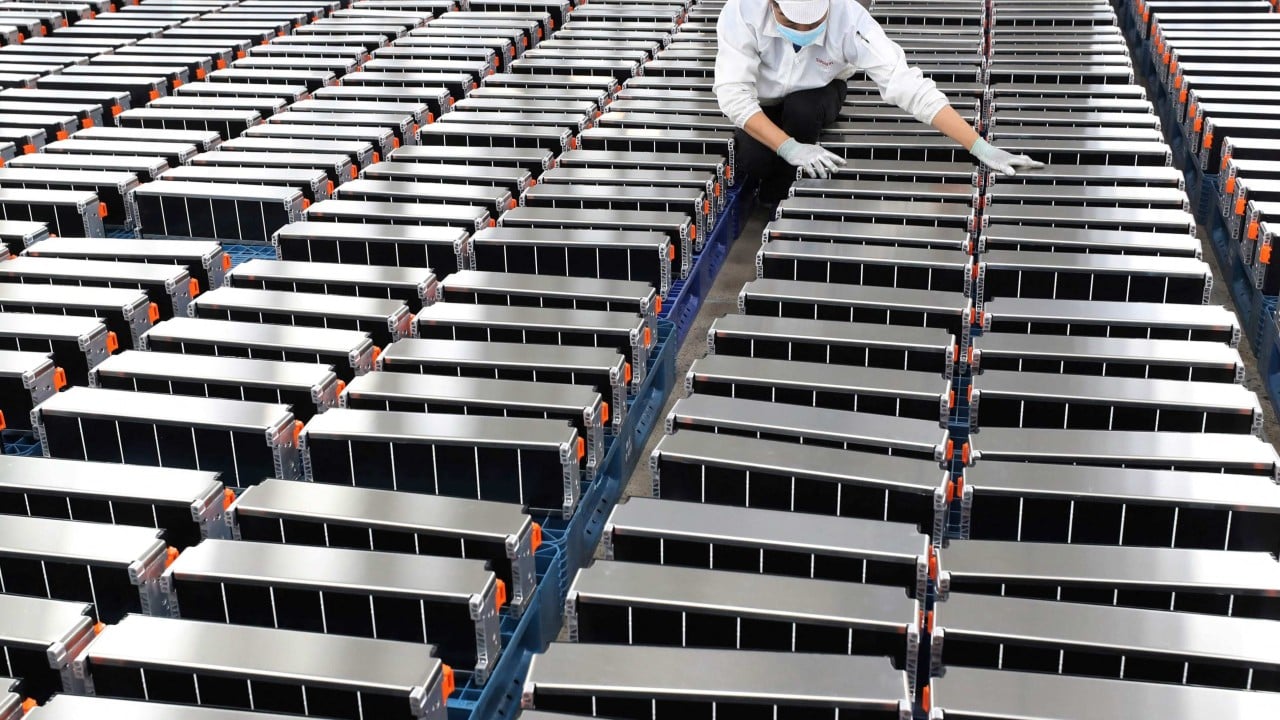
- Component Integration: Manufacturing magnets (NdFeB), sensors, and specialized glass for the aerospace and chip sectors.
The US aerospace sector depends on samarium-cobalt (SmCo) and neodymium-iron-boron (NdFeB) magnets for actuators, radar systems, and missile guidance. The semiconductor industry requires high-purity lanthanum and cerium for Chemical Mechanical Planarization (CMP) slurries—a process essential for flattening wafer surfaces between layering steps. Without these specific chemical grades, advanced node logic chips cannot be fabricated.
The Cost Function of Decoupling
The primary inhibitor to US self-sufficiency is the negative externality of environmental remediation and the sheer scale of the "Learning Curve" advantage held by established incumbents. China’s dominance is not merely a result of geological luck; it is the product of thirty years of subsidized R&D and a tolerance for the toxic byproducts of REE processing, specifically thorium and uranium tailings.
The economic barrier to entry for US firms is defined by three variables:
- Capital Expenditure (CAPEX) Intensity: Building a modern separation facility requires billions in upfront investment with a ten-year horizon for ROI.
- The Price Volatility Trap: Incumbents can manipulate global spot prices to drop below the marginal cost of production for new US entrants, forcing bankruptcies before domestic facilities reach operational maturity.
- Technical Debt: The "know-how" of managing the complex liquid-liquid extraction cycles at scale has largely migrated East.
Aerospace Vulnerabilities and the Single Point of Failure
In aerospace, the shift toward "more electric aircraft" (MEA) has tripled the requirement for rare earth-based permanent magnets. A single F-35 Lightning II requires roughly 920 pounds of rare earth materials. The current strategy of stockpiling is a tactical band-aid that ignores the velocity of consumption.
The risk profile for aerospace manufacturers is exacerbated by the "Tier 2 and Tier 3" problem. While a prime contractor like Lockheed Martin or Boeing may have visibility into their direct suppliers, the sub-components of their sub-components—such as the micro-motors used in wing flaps—frequently trace back to a single processing plant in Baotou. This lack of provenance transparency means a trade disruption at the metal-processing level can halt assembly lines three years after the initial "truce" is signed.
Semiconductor Slurries and the Logic of Scarcity
The semiconductor industry’s reliance on REEs is more subtle but equally precarious. Cerium oxide is the industry standard for polishing silicon wafers. As the industry moves toward 3nm and 2nm nodes, the precision required for CMP increases exponentially.
The "Scarcity Logic" in chips operates on a different timeline than aerospace. While aerospace needs large volumes of magnets, the chip industry needs hyper-pure chemical reagents. The disruption here is not a total lack of material, but a "quality-fade" where the available cerium does not meet the purity thresholds required for extreme ultraviolet (EUV) lithography environments. This creates a yield crisis rather than a total production stoppage, effectively raising the cost of every chip produced in the US.
The Three Pillars of Supply Chain Calcification
The worsening shortage despite a trade truce can be attributed to three systemic factors that market-based interventions have failed to solve.
1. The Separation Bottleneck
Even when US mines increase output, the concentrate is often shipped back to China for separation. The US lacks the hydrometallurgical infrastructure to handle the hazardous waste associated with the separation of "Heavy" Rare Earths (HREEs) like dysprosium and terbium. These elements are essential for high-temperature magnet stability in jet engines. Without domestic HREE separation, the US remains a vassal to the Chinese processing ecosystem.
2. The Magnet-to-Motor Gap
There is a massive disconnect between producing rare earth oxides and producing a finished motor. The US has almost zero large-scale capacity for sintering NdFeB magnets. Even if a US firm separates the neodymium, it must send it overseas to be turned into a magnet, then buy that magnet back. Each border crossing introduces a geopolitical "toll" and a point of potential seizure or delay.
3. Intellectual Property Moats
The patents for the most efficient magnet manufacturing processes and chemical separation ligands are often held by entities within the Chinese state-directed industrial complex. US firms attempting to innovate in this space face a minefield of IP litigation or must rely on inferior, less efficient "legacy" processes that make their final products uncompetitive on a cost-basis.
Quantifying the Strategic Deficit
To understand the magnitude of the problem, consider the following ratio: The US currently produces approximately 15% of global rare earth concentrate but accounts for less than 1% of global magnet production.
This 14% gap represents the "Strategic Deficit." Any policy that focuses on mining without addressing the magnet-making capability is fundamentally flawed. It is akin to growing wheat but having no flour mills or bakeries, yet claiming food security.
The Failure of the Trade Truce as a Stabilizer
A trade truce provides a false sense of security for two reasons. First, it does not incentivize the massive, long-term CAPEX required to build domestic refineries. Investors are hesitant to fund a US-based separation plant if they believe a "truce" will allow cheap Chinese materials to flood the market again in six months.
Second, the truce covers "official" trade but does not account for the "informal" quotas and internal consumption mandates within the Chinese domestic market. As China pivots toward its own high-tech "Made in China 2025" goals, it will naturally prioritize its domestic EV and aerospace sectors for REE allocation. The "shortage" felt by US firms is not a result of trade war tariffs, but a result of fundamental supply-demand shifts where the producer is now also the primary consumer.
Strategic Realignment and the Path Forward
The US must abandon the hope that market forces will resolve the REE shortage. The economics of rare earths are fundamentally distorted by state-sponsored competition. A clinical approach to restoring the supply chain requires the following structural shifts:
- Vertical Integration Mandates: Defense contractors should be required to demonstrate a "Point-of-Origin" audit for all REE components, moving beyond "Buy American" toward "Process American."
- Government-Backed Price Floors: To solve the investment risk, the US government must act as the "Buyer of Last Resort," guaranteeing a floor price for domestically processed REE oxides. This prevents the "Price Volatility Trap" used by incumbents to kill competition.
- Waste-Stream Harvesting: The US must pivot toward secondary sourcing. Significant quantities of rare earths are trapped in coal ash and recycled electronics. Developing the chemical processes to extract these at scale provides a domestic source that bypasses the traditional mining permit quagmire.
- Ligand Research and Development: Massive investment into the synthetic chemistry of separation (the molecules that "grab" specific rare earths) is required to leapfrog current solvent extraction methods which are environmentally disastrous.
The current trajectory indicates that the US will remain vulnerable to "supply chain weaponization" for at least the next decade. The trade truce is a tactical pause in a structural shift. Real power in the 21st-century economy flows through the separation tanks and the sintering furnaces, not the mines.
The strategic play is not to find more ore; it is to master the chemistry of its isolation. Failure to do so ensures that the US aerospace and semiconductor sectors will continue to operate at the mercy of a competitor’s industrial policy, regardless of the diplomatic temperature in Washington. Organizations must now prioritize "Design for Redundancy," engineering systems that minimize the use of HREEs or utilizing alternative motor topologies (such as induction or switched-reluctance) to hedge against the inevitable tightening of the magnet market.