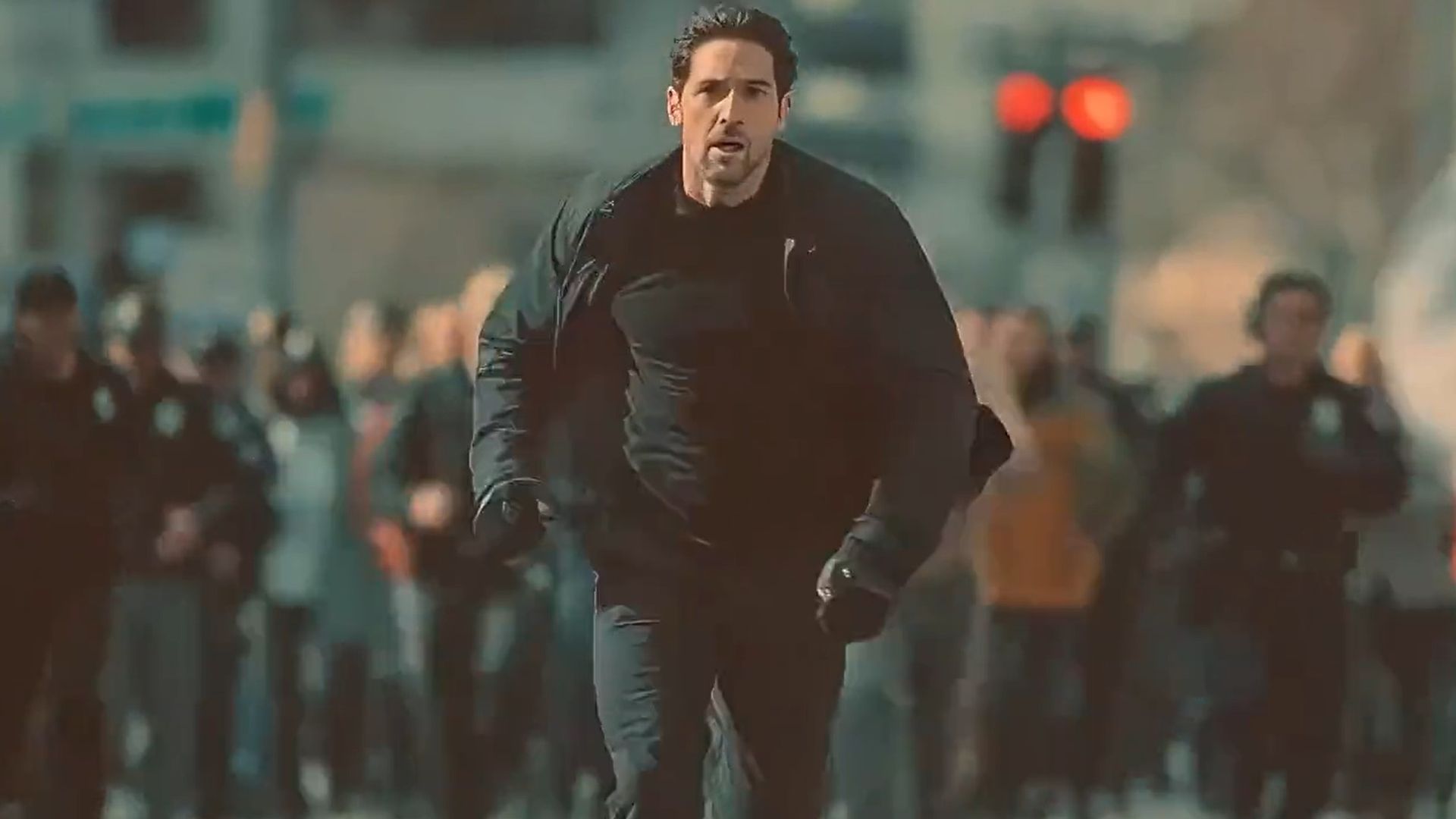
The assumption that high-fidelity video synthesis—exemplified by models like Veo or Sora—will inevitably lead to "blockbuster" content rests on a fundamental category error. It confuses visual density with narrative coherence. While the hardware and algorithmic capacity to render 4K photorealistic sequences at a fraction of traditional costs is rapidly approaching a zero-marginal-cost state, the production of "watchable" cinema is governed by an entirely different set of constraints: intentionality, continuity of character psychology, and the management of audience cognitive load.
The current state of AI cinematography suffers from what can be defined as Diffusion Drift. This is the measurable divergence between a user’s prompt intent and the model’s stochastic output. In a blockbuster environment, where every frame must serve a specific narrative or emotional function, this drift represents a catastrophic failure of control. To understand if AI can actually produce a film worth watching, we must deconstruct the medium into three structural pillars: the Physics of Intent, the Calculus of Continuity, and the Economic Reorganization of the Director’s Chair.
The Physics of Intent: Why Prompts Are Not Scripts
A traditional film director manages a hierarchy of intent. Every choice, from the focal length of a lens to the micro-expressions of an actor, is a calculated move to elicit a specific psychological response. Generative models, by contrast, operate on a probabilistic "best guess" basis. When a model generates a sequence of a character walking down a street, it is not "filming" a character; it is predicting the most likely next set of pixels based on a multi-dimensional latent space.
The Breakdown of Deliberate Choice
- Semantic Compression: A prompt like "a tense standoff" is a high-level abstraction. The AI fills the gaps with clichéd visual tropes because it lacks the context of the preceding 90 minutes of character development.
- The Loss of Subtext: Cinema thrives on the gap between what is said and what is shown. Generative AI is currently literalist by nature. It maps text to image directly, failing to grasp the subtle irony or visual metaphor that defines high-level filmmaking.
- The Stochastic Bottleneck: In a $200 million production, a director can demand 50 takes to get a specific eyebrow twitch. In generative video, "re-rolling" a prompt often changes the entire environment, lighting, and character appearance, making granular adjustments nearly impossible without massive manual post-production.
This lack of Granular Control means that while AI can create "vibe-heavy" trailers or music videos, it cannot yet sustain the rigorous intentionality required for a feature-length narrative. The model is the cinematographer, the set designer, and the actor simultaneously, yet it has no internal model of the story it is telling.
The Calculus of Continuity and Character Persistence
The most significant technical hurdle to AI-generated blockbusters is not the quality of a single frame, but the Temporal Consistency across 120,000 frames. Traditional CGI uses 3D assets (meshes, textures, rigs) that remain identical regardless of the camera angle. Generative AI "hallucinates" the scene anew for every frame or short chunk of frames.
Variables of Disintegration
- Identity Variance: The "Actor" in an AI film often undergoes subtle morphing—a changing nose shape or shifting eye color—between shots. Human brains are evolutionarily tuned to notice these discrepancies, leading to a persistent "Uncanny Valley" effect that prevents emotional immersion.
- Environmental Drift: If a character leaves a room and returns, the AI must reconstruct that room from memory. Without a persistent 3D world-state, the furniture, lighting, and spatial dimensions will inevitably shift.
- Physics Inconsistency: Blockbusters rely on high-stakes action. Current models frequently fail basic Newtonian physics—liquids that don't splash, gravity that fluctuates, or objects that phase through one another. These "glitches" are not merely aesthetic issues; they break the internal logic of the story, signaling to the audience that the stakes are not real.
To solve this, the industry is moving toward a Hybrid Workflow. This involves using AI to skin low-fidelity 3D renders, a process known as Neural Rendering. In this model, the "blockbuster" is still built in a traditional game engine (like Unreal Engine), and the AI acts as a sophisticated filter to provide photorealism. This maintains the Calculus of Continuity while leveraging the efficiency of generative tools.
The Economic Reorganization of Production
The narrative that AI will "replace" Hollywood overlooks the fundamental economic structure of the film industry. A blockbuster is not just a collection of images; it is a massive logistical and marketing operation.
The Cost Function of "Worth Watching"
The value of a film is often tied to its Scarcity and Signal. If anyone can generate a photorealistic superhero movie on their laptop for $10, the market will be flooded with "content," but "cinema" will remain a premium product.
- The Attention Tax: In an era of infinite AI content, the role of the "Curator" (the Studio or the Director) becomes more valuable, not less. The audience pays for the guarantee that a human intelligence has filtered out the noise.
- Talent as Insurance: Studios spend millions on A-list actors not just for their craft, but as a form of risk mitigation. An AI-generated face carries no "star power"—the parasocial relationship between the audience and a human celebrity is a key driver of box office returns.
- Production vs. Post-Production: AI shifts the labor. It reduces the "On-Set" costs (location, catering, physical stunts) but exponentially increases the "Data Curation" and "Prompt Engineering" costs. The "crew" doesn't disappear; it evolves into a team of technical directors who spend their time fixing AI hallucinations.
The Labor-Capital Shift
We are seeing a transition from Capital-Intensive production (hiring 500 people to build a set) to Compute-Intensive production. However, the bottleneck remains the same: human taste. A model can generate a million variations of a scene, but a human must still select the one that "works." This selection process is the most expensive part of the chain because it cannot be automated.
The Cognitive Load of AI Aesthetics
There is a specific visual "texture" to current generative video—a shimmering, oversaturated, and hyper-smooth aesthetic. While "uncannily good" at first glance, it creates high Cognitive Fatigue.
The human eye requires "visual rest." Blockbusters are paced not just by their editing, but by their visual complexity. AI models tend to maximize detail in every corner of the frame because they are trained on "high-quality" datasets. This results in a lack of Visual Hierarchy. Without a human cinematographer directing the eye through selective focus and lighting, the audience becomes overwhelmed.
Furthermore, the "perfect" nature of AI imagery is often its downfall. Film is defined by its imperfections—lens flares, grain, slightly missed focus. AI tries to resolve everything perfectly, leading to a sterile environment that feels "hollow." For an AI film to be "worth watching," developers must ironically teach the models how to fail like a human.
Strategic Implementation for the New Cinema
The transition to AI-assisted blockbusters will follow a predictable three-phase deployment.
Phase 1: Background and Asset Augmentation (Current)
AI is used for "invisible" tasks: rotoscoping, plate cleaning, and generating background extras. The core of the film remains human-led and 3D-asset-dependent.
Phase 2: The Prototyping Revolution
Directors use models like Veo to create high-fidelity "living storyboards." This allows them to pitch a visual style to investors without spending $5 million on a pilot. The AI creates the "look," but the final film is shot traditionally or through high-end CGI.
Phase 3: The Modular Synthesis
Feature films are produced using "LoRAs" (Low-Rank Adaptations) of specific actors and environments. The production becomes a sequence of AI-generated clips stitched together by a rigorous human-controlled "Master Continuity Model."
The Terminal Forecast
The "blockbuster" of the future will not be a 100% AI-generated prompt-to-video file. That path leads to a recursive loop of derivative content that fails to capture the zeitgeist. Instead, the breakthrough will come from Directed Synthesis.
The winners in this new era will be the creators who treat AI not as a "creator," but as a High-Performance Rendering Engine. The value remains in the architecture of the story—the blueprint.
To capitalize on this, studios must move away from general-purpose models and toward Proprietary Narrative Engines. These are models trained on a specific director’s style or a specific franchise’s lore, ensuring that the output isn't just "good video," but a specific, branded experience. The goal is not to automate the soul out of the film, but to automate the friction out of the execution.
The first truly "worth watching" AI-heavy blockbuster will arrive when a director uses these tools to show us something that was physically and financially impossible to film—not just a cheaper version of what we already have. Success lies in the delta between "Uncanny Simulation" and "Imaginative Expansion."
Strategic Recommendation: Invest in the development of "Control Layers" (like ControlNet for video) and "Persistent Character Rigs" that can be overlaid onto generative outputs. Stop chasing the "all-in-one" prompt and start building the modular pipeline that allows for frame-by-frame editorial veto. The future is not the AI Director; it is the AI-Augmented Auteur.