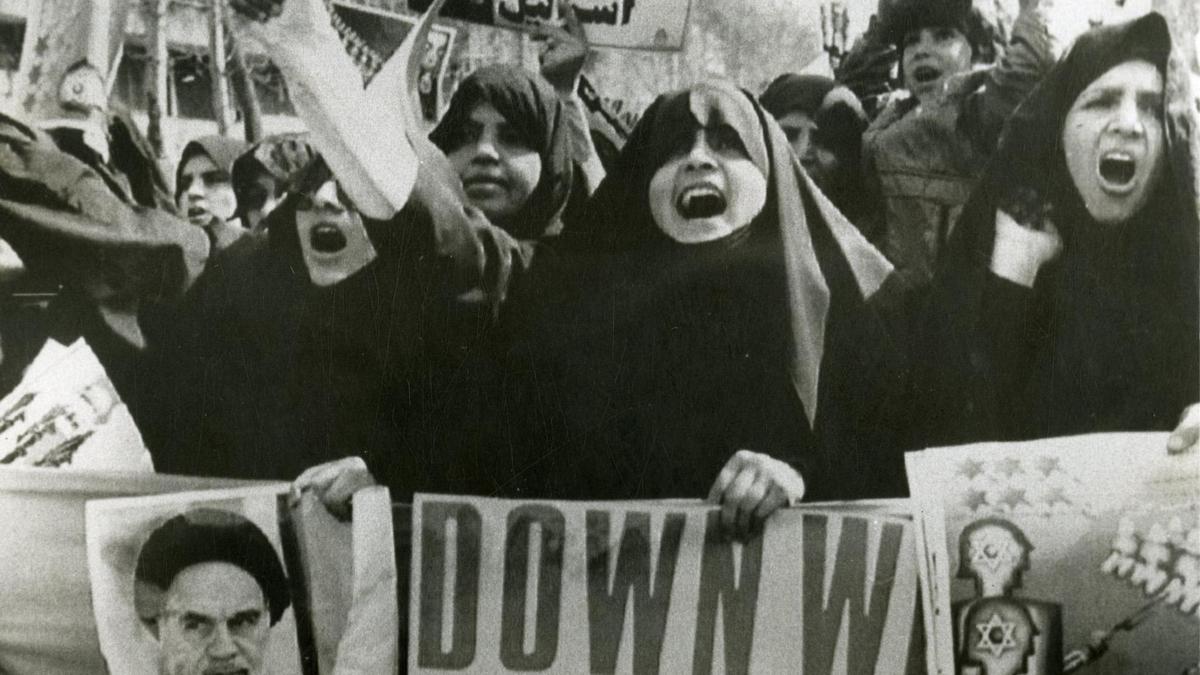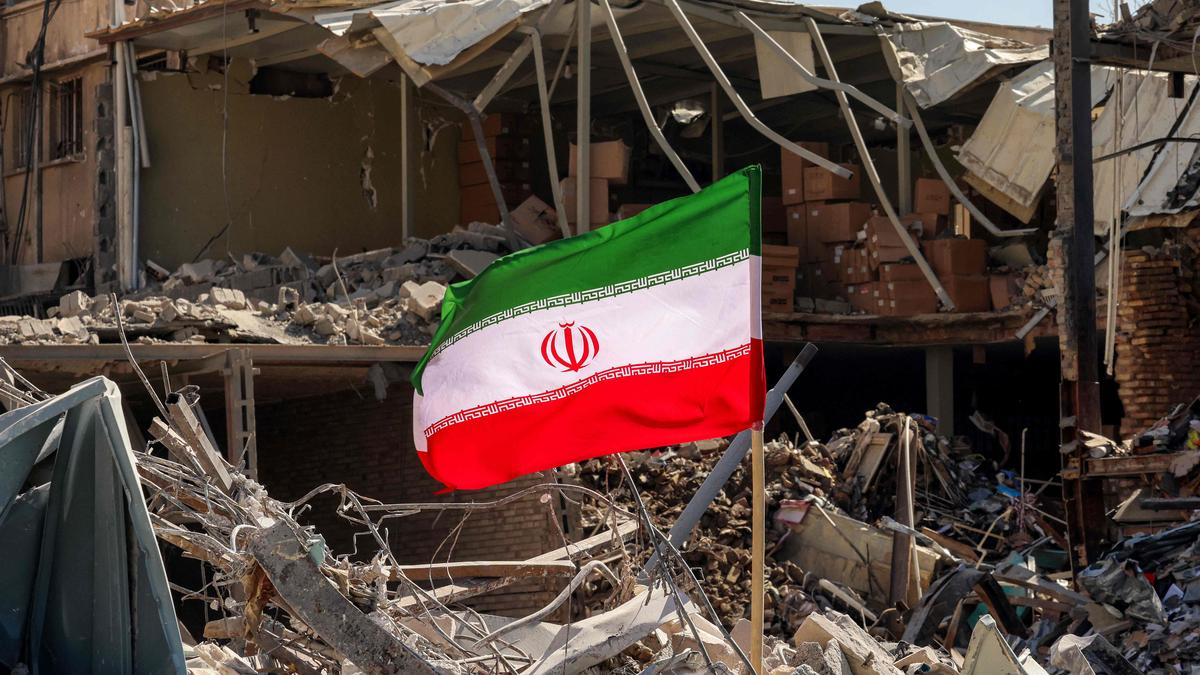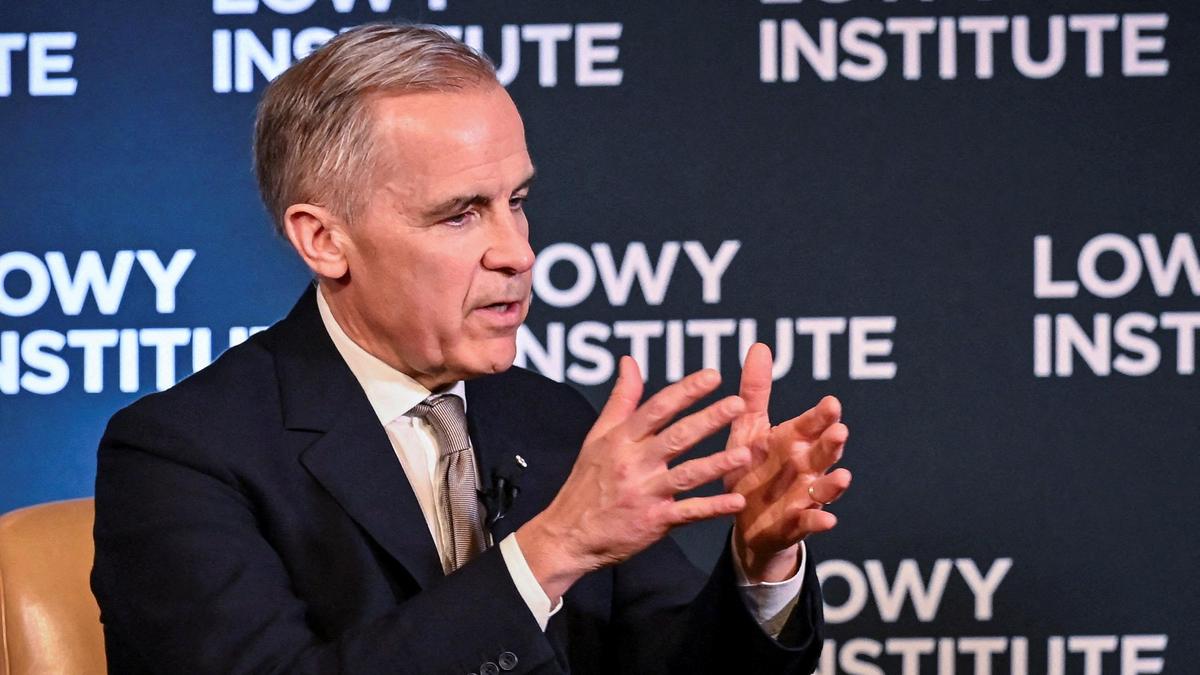
The air in Ottawa during late autumn carries a specific kind of bite. It is the sort of cold that makes you pull your collar up, not just against the wind, but against the weight of the world’s noise. Inside the halls of power, the atmosphere is rarely different. When Prime Minister Justin Trudeau stepped toward the microphone to address the latest exchange of fire between Israel, the United States, and Iran, he wasn't just reciting a briefing note. He was trying to steady a crumbling foundation.
He spoke of "inconsistency." It is a sterile word. A lawyer’s word. But beneath that clinical term lies a terrifying reality for anyone who believes that the rules of the world should actually mean something.
Imagine a small-town baker named Elias. He lives in a neighborhood where everyone has agreed on a simple set of rules: don't break windows, don't steal, and if someone hits you, call the authorities rather than burning their house down. For decades, the neighborhood has functioned because everyone—even the bullies—feared the shame of breaking those rules. But one night, the biggest guy on the block throws a brick through a rival’s window, claiming it was a "preemptive strike" to stop a future theft. The town council watches. They hesitate.
When the rules are applied only when it is convenient for the powerful, the rules cease to exist. They become mere suggestions. This is the "inconsistency" Trudeau hinted at. It is the sound of the international gavel hitting a hollow table.
The Mechanics of a Falling Sky
International law is often treated like a dusty textbook stored in a basement in The Hague. In reality, it is the only thing standing between us and a world defined by "might makes right." The strikes involving Israel, the U.S., and Iran aren't just tactical maneuvers or map coordinates. They are tests of a global operating system that hasn't been updated since 1945.
Under the United Nations Charter, the use of force is prohibited except in very specific circumstances: self-defense against an armed attack or authorization by the Security Council. When missiles cross borders in the name of "deterrence" or "de-escalation through escalation," they bypass these checkpoints.
Consider the paradox. If every nation decided to strike first to prevent a potential future threat, the world would be in a state of permanent, rolling war. There would be no morning without a siren. No night without a flash on the horizon. By calling these strikes inconsistent with international law, the Canadian leadership is pointing out a glitch in the matrix. If the protectors of the rules are the ones breaking them, who is left to guard the gate?
The Human Cost of Abstract Lines
Geopolitics is often discussed in terms of "assets," "capabilities," and "strategic depth." These words are designed to hide the blood.
When a drone hums over a city in the Middle East, a mother in Isfahan doesn't think about Article 51 of the UN Charter. She thinks about the structural integrity of her ceiling. She thinks about whether the local pharmacy will have insulin tomorrow. She thinks about the fact that her life has become a bargaining chip in a game played by men in climate-controlled rooms thousands of miles away.
The stakes are invisible until they are agonizingly real.
We often assume that international law is for "them"—for the dictators, the rebels, the rogue states. We forget that the law is actually for us. It is the invisible shield that ensures a trade ship carrying grain isn't sunk in a fit of pique. It is the agreement that keeps the internet cables on the ocean floor from being severed. It is the reason you can fly from Toronto to London without fear of being swiped out of the sky by a bored missile technician.
When Canada takes a stand on these strikes, it isn't just about picking a side in a Middle Eastern feud. It is a desperate plea for the survival of the rulebook itself. If we let the ink fade on the treaties that govern war, we are effectively inviting chaos into our own living rooms.
The Myth of the Surgical Strike
The phrase "surgical strike" is a masterpiece of marketing. It evokes images of a steady-handed doctor removing a tumor with zero collateral damage. It suggests precision, care, and a clean outcome.
But war is never surgical. It is a blunt instrument.
Every explosion sends out ripples. Not just physical shrapnel, but economic and psychological tremors. When the U.S. and Israel engage in strikes that bypass the traditional legal frameworks, they create a precedent. They tell the rest of the world that the "red lines" are actually made of elastic.
If Country A can strike Country B because of a perceived threat, why can't Country C do the same to Country D?
This is the "slippery slope" that keeps diplomats awake at night. We are watching the slow-motion dismantling of a century’s worth of effort to restrain the human impulse for vengeance. The irony is that these strikes are often justified as a way to "restore order." You cannot burn a map to find your way home.
A Choice Between Shadows
The tension in the Canadian Prime Minister’s voice reflects a broader cultural anxiety. We are living in an era where the old certainties are dissolving. We see it in our politics, our economies, and now, in the very laws of war.
There is a temptation to look away. To say, "This is too complex," or "They’ve been fighting there forever." But that apathy is a luxury we can no longer afford. The global neighborhood is shrinking. A missile launch in the desert affects the price of your groceries in the suburbs. A violation of sovereignty in the East weakens the concept of borders in the West.
We are at a crossroads. One path leads back to a world where the biggest tiger eats whoever he wants. The other path—the harder, more frustrating, more bureaucratic path—demands that we hold everyone to the same standard, even our friends.
Admitting that an ally has acted outside the law is uncomfortable. It’s socially awkward. It creates friction. But the alternative is a world without a floor.
The ghost of the global order is rattling its chains. It is reminding us that peace is not the absence of conflict, but the presence of justice. And justice cannot exist without a shared set of rules that apply to the king and the commoner alike.
As the sun sets over the Parliament buildings, the "inconsistency" remains. It hangs in the air like woodsmoke—pungent, lingering, and a warning that something, somewhere, is burning. We can choose to ignore the smoke, or we can start looking for the fire.
The gavel is waiting.
Would you like me to research the specific legal precedents Canada cited or look into the current humanitarian status in the regions affected by these strikes?