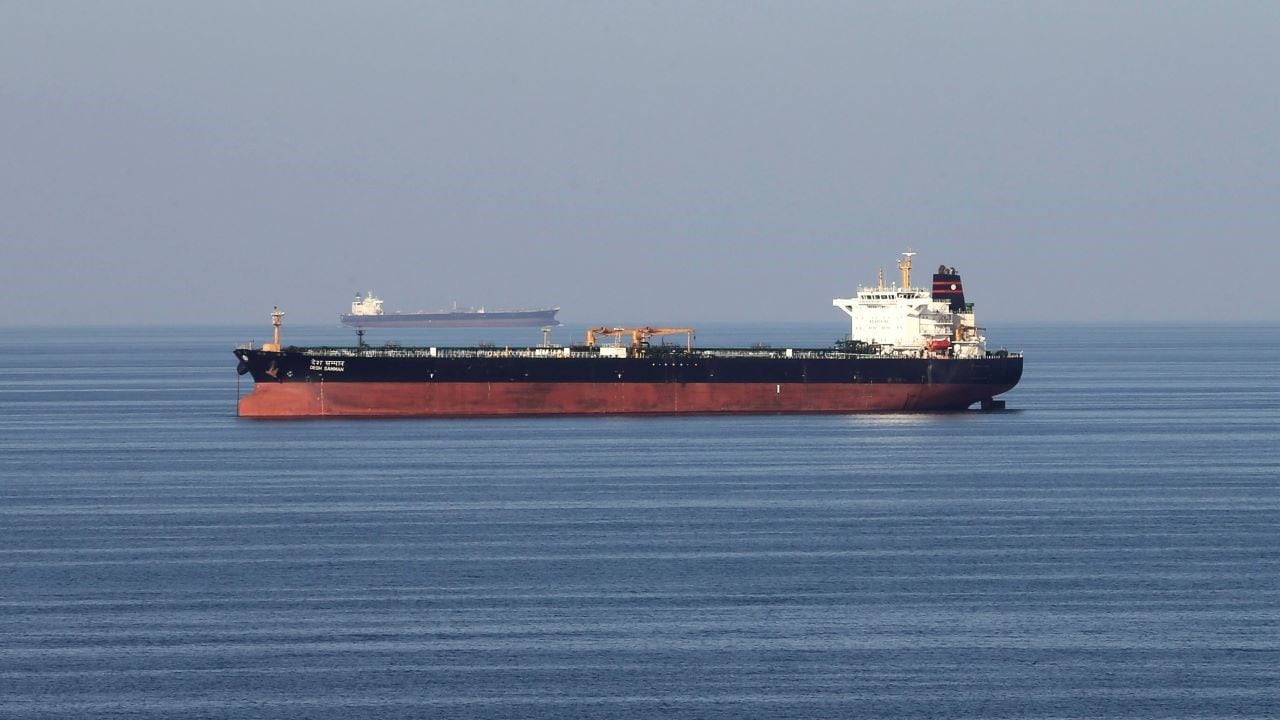
The headlines are screaming about smoke over the Gulf of Oman. "Fire erupts again," they say. "Loadings suspended," they moan. The mainstream financial press treats a localized industrial incident at Fujairah like it’s a systemic collapse of the global energy map. It isn't. If you’re staring at the flickering orange glow on a news feed and panic-buying futures or rerouting tankers, you’ve already lost the game.
The real story isn't the fire. The real story is the fragility of a "just-in-time" mindset that treats the world’s third-largest bunkering hub like a predictable vending machine.
The Myth of the Fujairah Bottleneck
Every time a terminal at Fujairah hiccups, the "experts" trot out the same tired narrative about the Strait of Hormuz and regional instability. They want you to believe that a fire in a storage tank is a harbinger of a global energy apocalypse.
I have spent fifteen years watching commodities traders sweat over satellite imagery of the UAE coastline. Here is what they miss: Fujairah is designed for chaos. It is a massive, redundant concrete lung for the global oil trade. A single fire—or even three—does not "break" the port. It tests the buffer.
The "lazy consensus" says this fire is a disaster for supply chains. The reality? This fire is a filter. It separates the operators who understand risk from the amateurs who merely react to it. If your entire logistical framework collapses because one of the most sophisticated ports on earth has a localized blaze, your problem isn't the fire. Your problem is your math.
Stop Obsessing Over the Spark
Journalists love the "Watch: Fire Erupts" hook because it’s visceral. It gets clicks. But while they focus on the flames, they ignore the structural engineering of modern bunkering.
Fujairah’s infrastructure is built on the principle of isolation. You have massive tank farms, specialized sub-sea pipelines, and deep-water berths. When a fire breaks out, the system doesn't melt down; it partitions.
The suspension of loadings is a standard safety protocol, not a sign of failure. It’s the equivalent of a circuit breaker tripping in your house. You don't claim the power grid is dead just because you had to flip a switch in the basement.
Why Your Risk Assessment is Wrong
Most procurement departments use a linear risk model. They see a fire and they add $+5%$ to their "Risk Score." This is useless.
True risk is non-linear. You should be calculating the Recovery Time Objective (RTO) and the Maximum Tolerable Downtime (MTD).
- Linear Thinking: "The port is on fire; prices will go up."
- Contrarian Thinking: "The port is on fire; the suspension of loading creates a backlog that will lead to a localized glut in 14 days when the tankers currently hovering offshore all try to dock at once. The play is the lag, not the fire."
The Death of Diversification
We’ve been told for decades that "diversification" is the cure for regional instability. "Move your bunkering to Singapore!" they shout. "Look at Gibraltar!"
This is a fallacy. In a globalized market, there is no such thing as geographic insulation. If Fujairah stops pumping, Singapore gets crowded. If Singapore gets crowded, premiums spike in Rotterdam. You aren't diversifying risk; you are just paying a different person to manage it.
The contrarian move isn't to run away from Fujairah. It’s to double down on Operational Elasticity.
Instead of looking for a "safer" port (which doesn't exist), you should be investing in:
- Virtual Inventory: Having the contractual right to swap volumes in different geographic zones.
- Edge-Case Logistics: Owning the capacity to switch from VLCCs (Very Large Crude Carriers) to smaller, more nimble Suezmax vessels that can utilize alternative berths with lower draft requirements.
The Data Trap
We live in an era of "Real-Time Intelligence." We have AIS data. We have thermal satellite pings. We have Twitter accounts dedicated to tracking every puff of smoke in the Middle East.
This abundance of data has made us stupider.
I’ve seen firms spend $50,000 a month on "intelligence dashboards" that just tell them what they can already see with their own eyes: there is smoke. This is "low-signal, high-noise" information. It triggers the amygdala and leads to "Panic Hedging"—the practice of buying expensive protection for a risk that has already manifested.
If you are reacting to the news of the fire, you are the liquidity for the people who saw the fire coming weeks ago.
The Real Indicators You Should Watch
Forget the fire. If you want to know the health of the UAE's energy export capacity, watch these three metrics:
- Inter-Tanker Transfer Latency: How long is it taking for vessels to clear the anchorage area after the fire is out?
- Bunker Premium Spreads: Is the gap between Fujairah and Singapore widening or narrowing? If it’s narrowing despite the fire, the market is telling you the incident is irrelevant.
- Insurance War-Risk Surcharges: These tell you more about the long-term viability of the route than any drone footage ever will.
The Inevitability of Friction
The competitor article treats the fire as an anomaly. An "accident."
In the high-pressure world of global energy, friction is not an accident; it is a feature. Moving millions of barrels of volatile liquid through a desert heat-sink is a violent process. Pipes burst. Seals fail. Humans make mistakes.
The status quo strategy is to "prevent" these events. This is a fool’s errand. You cannot prevent entropy. A superior strategy is to Antifragile your operations (to borrow a term from Nassim Taleb). You want to be in a position where you benefit from the volatility that breaks your competitors.
When the "Fire Erupts" headline hits, the Antifragile player is the one who already has storage capacity locked in at a fixed rate, knowing that the resulting congestion will drive spot storage prices through the roof.
Stop Asking "When Will It Stop?"
The "People Also Ask" section of your brain is likely screaming: "When will the port reopen?" or "How will this affect gas prices?"
These are the wrong questions. They assume a return to a "normal" that never existed. Fujairah is a high-stakes, high-reward environment. It is the frontier of the energy world.
The right question is: "How much of my margin is dependent on the world being a quiet, safe, and predictable place?"
If the answer is "most of it," then you aren't a business person. You’re a gambler who has had a lucky streak.
The Harsh Reality of Infrastructure
Most people don't understand the physical reality of a port like Fujairah. It is a sprawling industrial beast. It is not a clean room. It is a place of rust, salt, and immense pressure.
When the Times of India reports that "harbour suspends oil loadings," they make it sound like the end of the world. To the guys on the ground, it’s Tuesday. It’s a maintenance window forced by a flare-up.
The danger isn't the physical fire. The danger is the "Cognitive Fire"—the rapid spread of misinformation and fear through the financial markets. This fire destroys more value than any tank of crude ever could.
The Actionable Pivot
Stop reading "updates" on the fire. They are lagging indicators.
Instead, perform a stress test on your "Single Point of Failure" (SPOF). If you are 100% dependent on any single hub—be it Fujairah, Houston, or Jurong—you are a liability to your shareholders.
The contrarian move? Embrace the chaos. Build a supply chain that thrives on the friction.
- Stop Hedging After the Fact: If you didn't have a position before the smoke appeared, stay out. Entering the market now is just donating your money to the market makers.
- Audit Your Contracts: Check your Force Majeure clauses. Most of them are written by people who have never seen an oil fire. Ensure yours define "suspension" vs. "termination" with surgical precision.
- Invest in Physicality: In a world of digital trades, physical assets win. If you own the tank, you own the outcome.
The world isn't falling apart because a terminal is smoldering. Your strategy is falling apart because it was built on the delusion of permanent stability.
Fix the strategy. Let the fire burn itself out.
Go look at the vessel tracking data for the ships entering the Gulf right now. They aren't turning around. They know something the headline-writers don't: The spice must flow, and a bit of smoke is just the cost of doing business.
Move your capital. Shift your focus. Stop being a spectator to your own destruction.