The Myth of the Blue-on-Blue Blunder
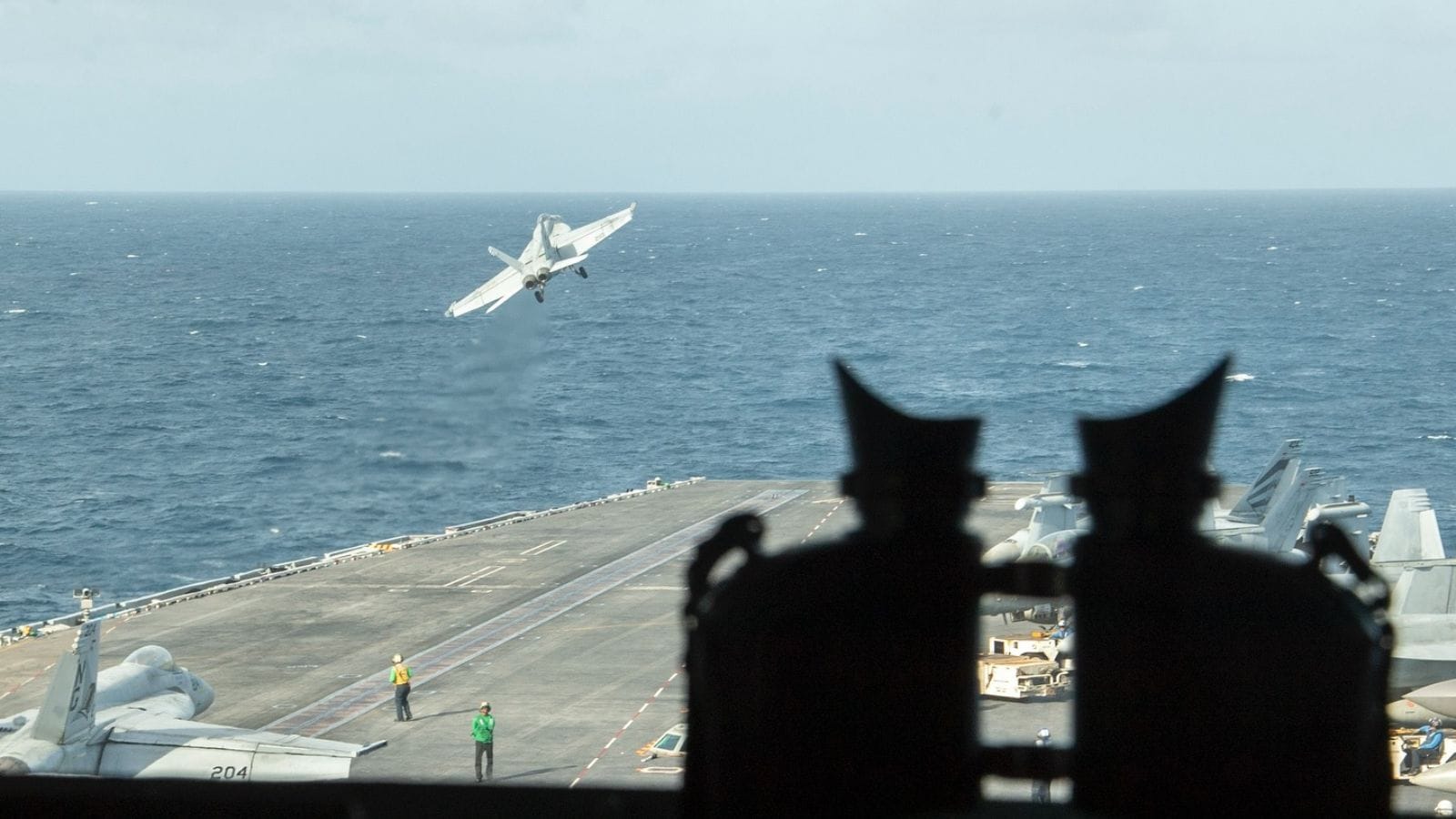
The headlines are predictable. They scream about incompetence, malfunctioning hardware, or "tragic accidents" when Kuwaiti defenses supposedly drop US jets out of the sky. The keyboard generals and armchair pundits immediately flock to the same tired narrative: how could two allies with the most expensive sensor suites on the planet fail to recognize each other?
They call it a failure of communication. They call it a failure of technology. They are wrong.
The assumption that "friendly fire" is a sign of a broken system is the most dangerous delusion in modern defense circles. In reality, the closer we get to the "automated battlefield," the more inevitable—and mathematically predictable—these incidents become. If you want a zero-percent chance of hitting your friends, you have to wait so long to verify a target that your enemies will have already turned you into a smoking crater.
The incident in Kuwait isn't a story about a "tailspin" or a glitch. It’s a story about the brutal, cold calculus of Information Dominance.
Your IFF is a Liar
Identification Friend or Foe (IFF) systems are the sacred cow of military aviation. We are told these transponders are the digital equivalent of a secret handshake. If the box says "friend," you don't shoot.
Except in a high-intensity conflict, the radio frequency spectrum is a chaotic mess of electronic warfare, jamming, and spoofing. I’ve seen sensor operators stare at screens where a friendly signal is flickering like a dying candle because a nearby jammer is screaming white noise across the band.
When you are operating in a congested airspace like the Persian Gulf, the margin for error is measured in milliseconds. If a Kuwaiti battery commander sees a fast-mover screaming toward a protected asset and the IFF return is delayed by even half a heartbeat, the "safe" play is to engage.
- Logic Check: Waiting for 100% certainty is a death sentence.
- The Reality: Defensive systems are tuned for aggression, not politeness.
The "consensus" view says we need better IFF. The insider truth is that better IFF actually increases risk because it builds a false sense of security that is easily exploited by an adversary using "ghosting" techniques to mimic friendly signatures.
The High Cost of the "Safety First" Delusion
The public wants a "clean" war. They want surgical strikes where the good guys never bleed and the tech works like a polished marketing demo. This creates a political environment where commanders are terrified of accidental engagements.
What happens then? They tighten the Rules of Engagement (ROE) so much that our pilots become sitting ducks.
When you prioritize the avoidance of friendly fire over the destruction of the enemy, you lose the initiative. The Kuwaiti battery that allegedly fired on those jets wasn't "wrong"—they were following the logic of a localized defense. In their sector, anything that isn't explicitly cleared and verified in real-time is a threat.
If we "fix" this by slowing down the response time, we aren't making the skies safer. We are just making it easier for an actual enemy to penetrate the perimeter. The "tailspin" you saw on video is the price of maintaining a hair-trigger defense in a world where speed is the only armor that matters.
Stop Asking "Who Erred" and Start Asking "Why We Sync"
People also ask: "Why didn't the US data link talk to the Kuwaiti radar?"
This question assumes that "Interoperability" is a simple software patch. It isn't. Data links like Link 16 are notoriously finicky. Sharing a common operational picture (COP) between two different nations—even allies—requires a level of trust and technical synchronicity that rarely exists outside of a PowerPoint presentation.
I have watched multi-national exercises where the "integrated" network fell apart within twenty minutes because one unit’s encryption keys were out of sync by a fraction of a second.
The Latency Trap
In a laboratory, $A + B = C$. In a combat zone, latency is the ghost in the machine.
If the US jet’s position is updated on the Kuwaiti screen with a $2.5$ second lag, that jet is no longer where the icon says it is. It has moved hundreds of meters. To a localized automated defense system, that discrepancy looks like a spoofing attempt. The system "thinks" it is seeing two different aircraft. It ignores the friendly icon and targets the "unidentified" physical radar return.
This isn't a bug. It’s the system doing exactly what it was designed to do: prioritize the raw sensor data over the potentially compromised digital label.
The Brutal Truth About Military Darwinism
We have spent decades and trillions of dollars trying to remove the "fog of war." We thought if we just had more cameras, more sensors, and more AI, the fog would lift.
Instead, we’ve just created a "digital fog."
The incident with the US jets and Kuwaiti fire is a symptom of a transition period where our weapons are faster than our ability to recognize them. We are building systems that function at Mach 3, but our decision-making cycles are still tethered to human biological limits and bureaucratic protocols.
If you want to stop friendly fire, you have to stop fighting. As long as we demand "instant response" and "total perimeter denial," we are accepting a statistical probability of hitting our own.
The Actionable Pivot: Embrace the Friction
Stop looking for a "fix" for friendly fire. There is no fix. There is only trade-off.
If you are a strategist, a contractor, or a policy maker, you need to stop selling the lie of the "perfectly coordinated" battlefield. We should be training for "degraded operations" where the data link is dead and the IFF is screaming lies.
- Decentralize Authority: Stop trying to run everything from a central hub. It creates a single point of failure that leads to mass confusion when the link goes down.
- Visual Confirmation is Dead: Accept that BVR (Beyond Visual Range) combat means we will never "see" what we are hitting.
- Redundancy is a Liability: More sensors often lead to more conflicting data. We need "thinner" data streams that are harder to jam, not "thicker" streams that look good on a fiber-optic cable but fail in the desert.
The crash in Kuwait wasn't a tragedy of errors. It was a demonstration of the fundamental physics of modern conflict. The machine saw a target. The machine took the shot. In the cold world of automated defense, "friendly" is just a label, and labels are the first thing to burn in a fight.
Stop crying about the tailspin and start acknowledging that the price of an impenetrable defense is the occasional piece of your own lead falling from the sky.