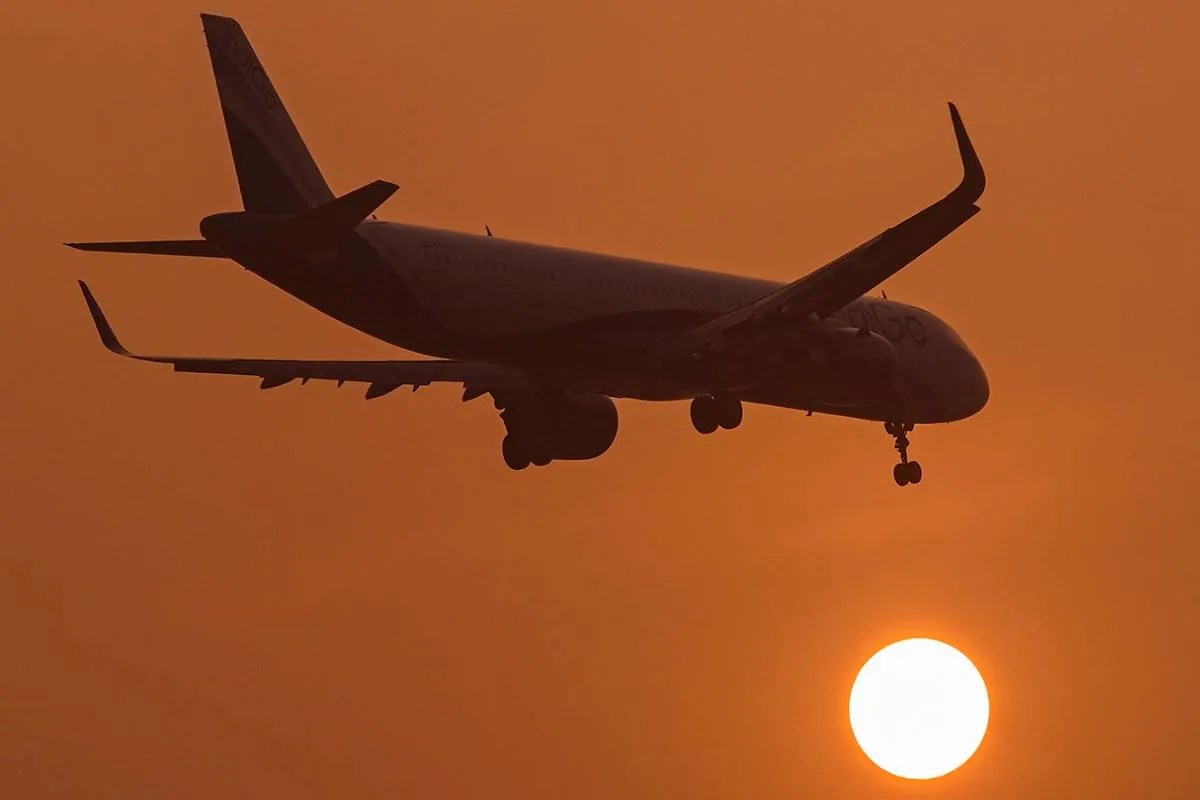
The global aviation network is currently facing its most severe structural test since the total grounding of the early 2010s. When Iranian missiles crossed into international airspace, they did more than trigger sirens; they effectively severed the primary artery connecting Europe to Asia. Within hours, the world’s most sophisticated flight tracking software lit up with thousands of diversions as carriers scrambled to pull jets out of harm's way. This isn't just a temporary delay for a few thousand vacationers. It is a fundamental collapse of the geographic efficiency that makes modern long-haul travel affordable.
For decades, the industry relied on a relatively stable corridor through the Middle East. That stability is gone. Every major airline, from the premium Gulf carriers to the budget-conscious European players, is now forced to choose between two expensive evils: burning massive amounts of extra fuel to fly around the conflict zone or canceling routes entirely to protect hulls and lives. The math for the consumer is simple and painful. Longer flight times require more fuel, more crew hours, and fewer available aircraft. Prices will rise, and they will stay high long after the smoke clears. You might also find this connected article useful: The Mexico Safety Myth and the Hard Truth of February 2026.
The Geography of Chaos
To understand why a localized strike causes a global ripple, you have to look at the map from 35,000 feet. Central Asia and the Middle East act as a narrow bottleneck. When Iraq, Jordan, Lebanon, and Iran close their skies, the remaining "safe" corridors become dangerously congested.
Imagine a ten-lane highway suddenly reduced to a single dirt track. That is the current reality for air traffic controllers in Turkey and Egypt. They are managing a sudden influx of hundreds of wide-body jets that usually spread out across a thousand miles of sky. This congestion creates a secondary layer of disruption. Even if your flight isn't going anywhere near Tehran, it might be delayed because the "safe" route over Saudi Arabia is backed up like a Friday afternoon commute. As highlighted in recent articles by The Points Guy, the implications are notable.
The Fuel Penalty
The most immediate casualty of these detours is the airline’s balance sheet. A flight from London to Singapore that once cut across Iranian airspace must now dip south over the Arabian Peninsula or trek north over the increasingly crowded Turkish corridor.
- Increased Burn: These detours can add 90 minutes to two hours of flight time.
- Weight Restrictions: To carry the extra fuel needed for the detour, airlines often have to leave cargo or passengers behind.
- Carbon Goals: The industry’s environmental targets are being shredded as millions of extra gallons of Jet A-1 are burned just to stay in the air.
This is a logistical nightmare. Airlines operate on razor-thin margins. When you add two hours of fuel burn to a Boeing 777, you aren't just losing money on that flight; you are potentially making the entire route unviable for the season.
Insurance and the Invisible Wall
While the physical missiles are the obvious threat, the legal and financial barriers are just as formidable. Aviation insurance is a cold, calculated business. The moment a region is declared a conflict zone, "War Risk" premiums skyrocket. For many smaller carriers, the cost of the insurance alone is enough to ground the fleet.
We are seeing a bifurcated sky. National flag carriers, backed by state guarantees, might continue to push the envelope on certain routes. Private, publicly traded airlines cannot take that risk. Their boards simply won't allow it. This creates a vacuum where certain regions become effectively cut off from the global economy, served only by a handful of state-run operators willing to gamble with their hardware.
The Human Component
We often talk about planes as machines, but the disruption hits the crews hardest. Pilot and cabin crew schedules are governed by strict "Duty Time" regulations. These rules are designed to prevent fatigue-related accidents.
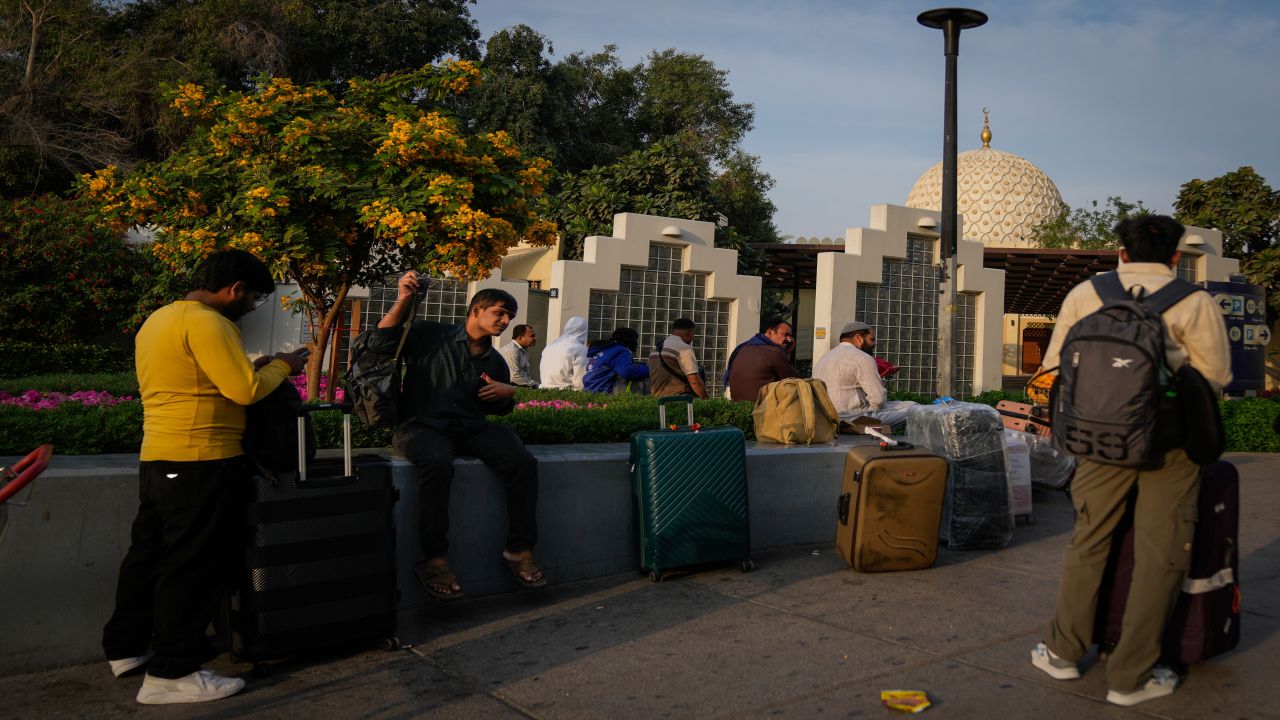
When a flight is diverted or forced into a two-hour detour, the crew often "times out." They legally cannot fly the return leg or continue to the destination without a mandatory rest period. This triggers a localized collapse at "outstation" airports. You end up with a plane on the tarmac in Dubai, a thousand angry passengers in the terminal, and a crew that is legally barred from touching the controls for the next twelve hours. Replacing those crews requires flying in "deadhead" staff, further straining an already depleted labor pool.
The Fragility of Just-in-Time Aviation
Modern aviation is built on the "hub and spoke" model. It relies on perfection. A flight from New York arrives in Qatar at 5:00 AM so that passengers can catch their 7:00 AM connections to India, Africa, and Southeast Asia.
When the primary corridors are blocked, the hub stops breathing. If the "inbound" waves are delayed by even forty minutes due to rerouting, the "outbound" waves miss their windows. This creates a literal pile-up of humanity in airport lounges. We are seeing the limits of this efficiency. The system has no "slack" left. Every gate is spoken for, every seat is booked, and every pilot is scheduled to the limit. When you remove a massive chunk of airspace, the system doesn't just slow down; it breaks.
Divergent Strategies in the Cockpit
Different airlines are handling this crisis with varying levels of transparency. Some have been proactive, wiping their schedules clean for weeks to provide certainty to travelers. Others are playing a day-to-day game of "wait and see," leading to last-minute cancellations at the boarding gate.
- The Risk-Averse: Carriers like Lufthansa and United have historically been the first to pull out of contested zones. They prioritize brand protection and safety above all else.
- The Pragmatists: Gulf giants like Emirates and Qatar Airways have mastered the art of "tactical routing." They have the intelligence networks and the geographic proximity to thread the needle, but even they are reaching their limit as the "safe" gaps in the sky narrow.
- The Stranded: Regional low-cost carriers often lack the fuel reserves or the sophisticated dispatch teams to handle mid-air rerouting. They are the ones most likely to leave passengers stranded in third-country airports.
This isn't a problem that clears up when the missiles stop flying. The "re-opening" of airspace is a slow, bureaucratic process involving international safety audits and diplomatic negotiations. Even if a ceasefire were signed tomorrow, it would take weeks for flight paths to return to their optimal coordinates.
The Economic Aftershock
The travel industry was already reeling from inflation and supply chain issues. This geopolitical friction is the "black swan" event that could push several mid-tier airlines into restructuring. It is no longer enough to offer a good seat and a decent meal. Survival in this era of aviation requires a massive cash buffer to absorb the costs of a volatile map.
Frequent fliers need to adjust their expectations. The era of the "reliable" six-hour connection is dead for the foreseeable future. If your route passes anywhere near a geopolitical fault line, you are flying on a wing and a prayer, subject to the whims of regional commanders and the escalating costs of a world that has forgotten how to share the sky.
Check the flight path, not just the destination. If the line on the map looks like a jagged zig-zag, someone is paying for that extra mileage, and it is almost certainly going to be you.