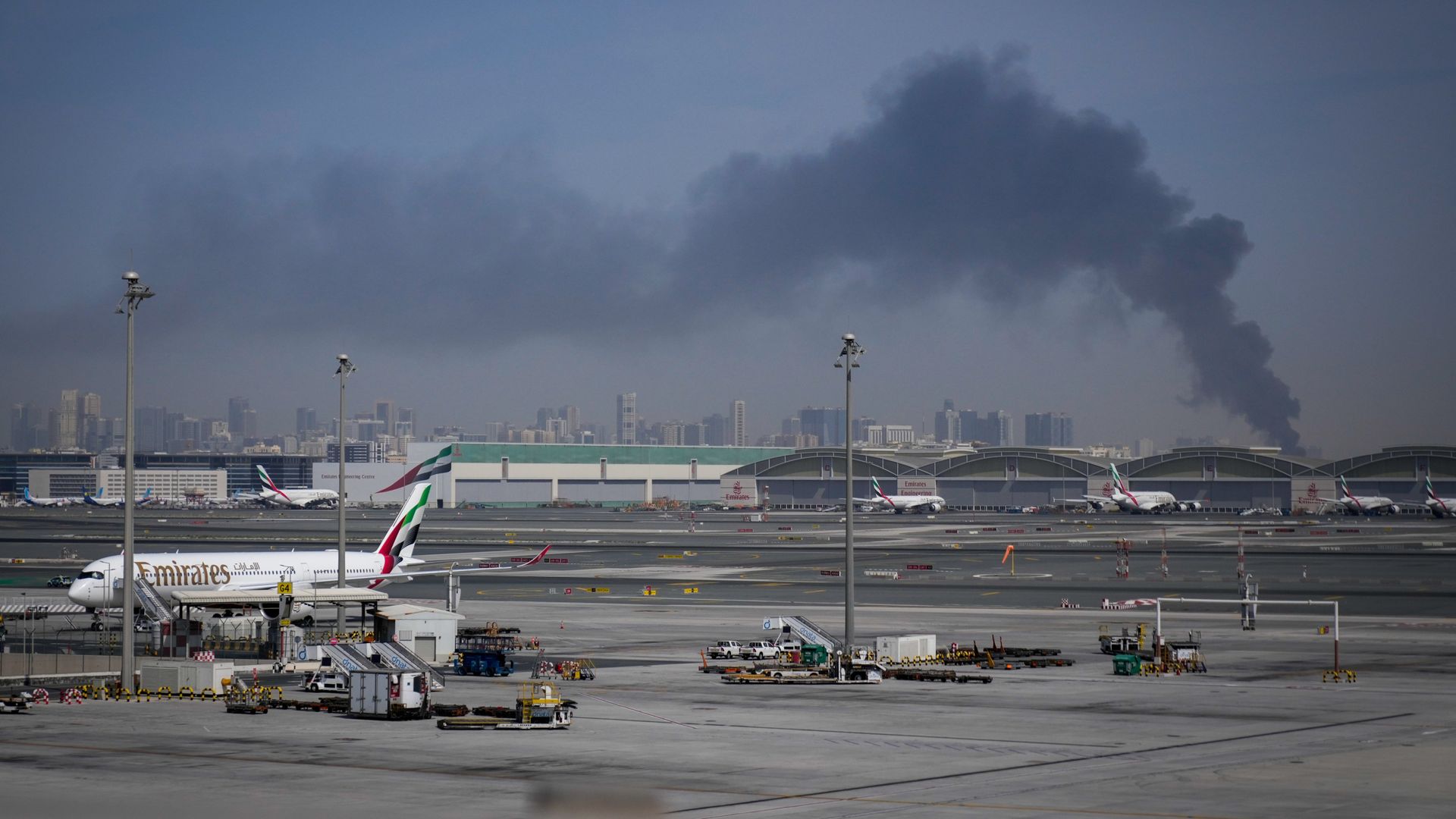
The sudden grounding of British Airways flights to the Middle East and the ensuing gridlock at Dubai International (DXB) is not merely a byproduct of bad timing. It is a structural failure. When airspace over the Levant and the Gulf closes, the global aviation map does not just bend; it breaks. Within hours of the most recent regional escalations, thousands of passengers found themselves stranded in terminal lounges that were never designed to double as refugee camps for the business class.
British Airways made the executive decision to pull the plug on several key routes, citing safety as the primary driver. While the optics suggest a cautious carrier prioritizing lives, the underlying reality involves a brutal calculation of insurance premiums, crew rest cycles, and the physical impossibility of rerouting long-haul jets through "soda straw" corridors of safe air. When the sky over Iraq, Jordan, and Israel tightens, the remaining paths become so congested that fuel reserves—and profit margins—evaporate before the wheels even touch the tarmac.
The Geography of Contagion
Aviation operates on a high-wire act of interconnectedness. Dubai serves as the world's busiest international hub because it sits at the intersection of Europe, Asia, and Africa. However, this same proximity makes it uniquely vulnerable to geopolitical tremors. When a single slice of airspace becomes a no-go zone, the ripple effect is instantaneous.
A flight from London to Dubai typically relies on predictable waypoints. If those waypoints vanish, pilots must seek alternatives over Saudi Arabia or Turkey. But those lanes are already packed. Air traffic control (ATC) centers in neighboring regions quickly become overwhelmed, leading to "ground holds" where planes stay parked in London or Frankfurt because there is literally no room for them in the sky thousands of miles away.
For British Airways, the math became untenable. Unlike regional carriers like Emirates or Qatar Airways, which have the logistical home-field advantage and a fleet designed for these specific pivots, BA operates on a more rigid hub-and-spoke model from Heathrow. When the spoke breaks, the hub bleeds.
Why Technical Safety Masks a Financial Crisis
The official statements always lean on the word "safety." It is a shield that deflects criticism. No passenger wants to fly through a missile corridor, so they accept the cancellation. Yet, the crisis at Dubai and the BA pull-back are deeply rooted in the economics of risk.
Aviation insurance doesn't work like a standard car policy. Underwriters track "War Risk" zones in real-time. The moment a notification of airspace closure is issued, the cost to insure a hull flying near that zone can spike by 500% or more. For a legacy carrier like BA, which is already fighting tight margins against low-cost competitors, those few hours of extra flight time and the massive jump in insurance premiums make the flight a net loss. It is often cheaper to cancel the flight and pay the statutory compensation than it is to actually fly the mission.
- Fuel Burn: Rerouting around closed airspace adds 45 to 90 minutes of flight time.
- Crew Timing: Long-haul crews have strict "Time of Duty" limits. An extra hour in the air can mean the crew "times out" before landing, requiring an expensive unscheduled stop.
- Asset Displacement: If a Boeing 777 is stuck in Dubai, it cannot perform its next scheduled leg to New York, causing a secondary crisis in the Atlantic.
The Dubai Bottleneck
While BA pulled back, the chaos on the ground at DXB intensified. Dubai is a victim of its own efficiency. The airport is a masterclass in high-volume throughput, designed to move people through duty-free and onto their next gate with surgical precision. It is not designed to stop.
When flights are cancelled or diverted, the "dwell time" of passengers increases exponentially. Hotels in the city-state reach 100% occupancy within hours. The terminal infrastructure—lounges, bathrooms, and seating areas—begins to degrade under the weight of thousands of people who have nowhere to go. This isn't just a British Airways problem; it is a systemic vulnerability of the "Mega-Hub" model. We have built an aviation system that assumes the world will always be open.
The Myth of the Alternative Route
Industry analysts often point to the "flexibility" of modern jets. A Dreamliner can fly almost anywhere. But the sky is not a free-for-all. It is a strictly partitioned grid of sovereign territories.
If a carrier wants to avoid Iranian or Iraqi airspace, they must negotiate "overflight rights" with other nations. These aren't granted instantly. They are part of long-standing bilateral agreements. During a crisis, the demand for these "safe" routes creates a digital traffic jam. Computers at Eurocontrol and other regional bodies struggle to balance the load. A pilot might be ready to fly, the plane might be fueled, but if the ATC slot isn't there, the plane stays on the ground.
The Shortfall of Passenger Protection
The current legal frameworks, such as the UK’s UK261 regulations, provide some solace to passengers, but they are cold comfort in a total system collapse. Airlines are often exempt from paying "extraordinary circumstances" compensation when airspace closes for security reasons. This leaves the passenger holding the bag for everything except basic "duty of care" items like a voucher for a soggy sandwich and a night in a low-end hotel.
We are seeing a growing gap between the promise of global connectivity and the reality of a fragmented world. The BA cancellations are a warning shot. They suggest that the era of "anywhere, anytime" travel is being replaced by a more cautious, intermittent reality.
Operational Resilience is a Choice
Airlines that survive these disruptions with their reputations intact are those that invest in "dark" capacity—spare planes and crews that can be deployed to clear backlogs. British Airways, having spent years "optimizing" its fleet and staffing to the absolute minimum required for daily operations, has no such buffer. When the system shocks, the recovery takes days, not hours.
The chaos in Dubai proves that the industry has prioritized efficiency over resilience. We have seen what happens when the "Just-in-Time" model of aviation meets the "Just-in-Case" reality of global conflict. The result is a total paralysis of the world’s most important transit points.
The next time you book a flight through a major hub, look at the map. Notice the narrow strips of land that connect East to West. Understand that your travel depends on the continued stability of some of the most volatile regions on earth. If those strips vanish, your ticket is nothing more than a digital ghost.
Check the current "NOTAMs" (Notices to Air Missions) for the Middle East before your next departure to see the real-time restrictions that your airline might not mention until you are already at the gate.