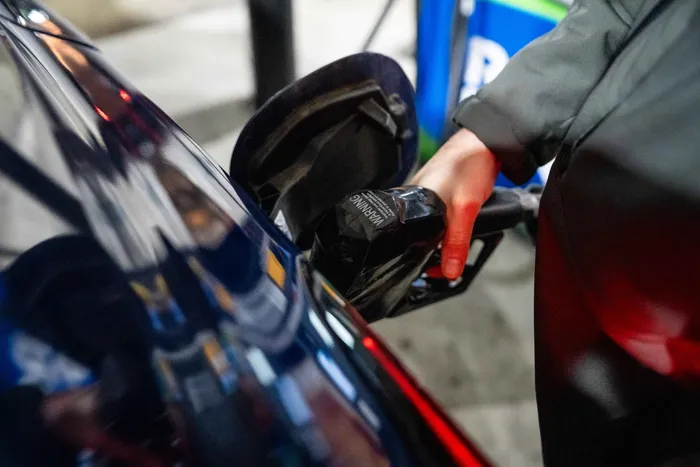
You probably felt the sting at the pump this morning. For the first time in years, the national average for a gallon of regular gas has officially blown past $4.02. It's a psychological gut punch that many Americans haven't dealt with since the early days of the Ukraine conflict. But this time, the culprit isn't Eastern Europe. It's the escalating war in Iran, and honestly, the numbers suggest we haven't even seen the peak yet.
If you're wondering why your commute just got 30% more expensive in a single month, the answer lies in the Strait of Hormuz. Roughly 20% of the world's oil flows through that narrow waterway. Right now, it's a no-go zone. Since the U.S. and Israel launched strikes on February 28, tankers have been sitting ducks. When a fifth of the world’s energy supply is effectively held hostage, the price of a barrel of crude doesn't just rise—it teleports.
The $100 Barrel Returns With A Vengeance
Before the first missiles flew, Brent crude was lounging around $70 a barrel. It was stable, predictable, and kept gas prices at a manageable $3 average. Today? We’re looking at $102 a barrel. The math for gas stations is simple and brutal. Crude oil accounts for about 60% of what you pay at the nozzle. When crude spikes by $30 in four weeks, your local station has no choice but to pass that pain directly to your credit card.
It's not just the war itself; it's the uncertainty. Markets hate a vacuum, and right now, nobody knows if the Strait will stay closed for weeks or months. Iran has already targeted tankers from Kuwait and the UAE. This isn't just a local skirmish. It's a total shutdown of the global energy circulatory system.
Why The Strategic Petroleum Reserve Won't Save You
You might have heard the news about the White House releasing 172 million barrels from the Strategic Petroleum Reserve (SPR). On paper, it sounds like a massive move. In reality, it’s a drop in the bucket. The U.S. consumes about 20 million barrels of oil every single day. That "massive" release covers less than nine days of domestic demand.
The SPR is meant for short-term emergencies, not to subsidize a prolonged regional war. Energy Secretary Chris Wright confirmed the release will take 120 days to fully hit the market. That’s too slow to stop the immediate price hike. Plus, we’re starting from a lower baseline than in previous decades. We’re essentially trying to put out a forest fire with a garden hose while the wind is still picking up.
Diesel Is The Real Economy Killer
While $4.02 for regular gas gets the headlines, the real disaster is happening in the trucking lanes. Diesel has surged to an average of $5.45 a gallon. If you think that only affects truckers, you're wrong. Everything you buy—from the milk in your fridge to the iPhone in your pocket—gets moved by a truck burning diesel.
Patrick De Haan from GasBuddy has been vocal about this "inflationary ripple." When shipping costs spike, retailers don't just eat the loss. They raise prices. You're going to see "fuel surcharges" appearing on everything from Amazon deliveries to your local garbage pickup. This is how a war in the Middle East turns into a more expensive grocery bill in Ohio.
Regional Price Gaps Are Getting Ridiculous
The $4.02 figure is just an average, which means it’s a lie depending on where you live. If you’re in California or Washington, you’ve likely been paying $5 or more for weeks. Meanwhile, drivers in the Deep South or Texas might still see $3.50.
- State Taxes: High-tax states feel the surge immediately because their baseline is already elevated.
- Refinery Proximity: If you're near the Gulf Coast, you're paying less for transport. If you're in the Rockies, you're paying a premium.
- Local Competition: Rural areas with only one station often see prices jump faster and stay higher because there's no incentive to undercut a neighbor.
Breaking The Dependency Cycle
We've been here before. 1973, 1979, 2008, 2022. Every time the Middle East erupts, American wallets bleed. The current administration has sent mixed signals, pushing for more domestic drilling while simultaneously trying to manage a delicate diplomatic dance with OPEC+.
OPEC+ recently agreed to a production hike of 206,000 barrels per day. It sounds like a lot until you realize the war has knocked out nearly 7.3 million barrels of daily output. We're effectively trying to fill a swimming pool with a teaspoon.
What You Can Actually Do Now
Stop waiting for a miracle at the pump. It isn't coming this month. If you want to protect your budget, you have to change how you move.
- Audit your errands: Grouping trips sounds like "mom advice," but at $4 a gallon, it’s a legitimate financial strategy.
- Use the apps: GasBuddy and Waze aren't just for directions anymore. A station two miles away could be 20 cents cheaper than the one on your corner.
- Check your tires: Under-inflated tires drop your fuel economy by 3%. It’s a small fix that saves real money over a month of commuting.
The Iran war has fundamentally shifted the energy floor. We're no longer looking for a return to $2.50 gas. The goal now is simply hoping we don't hit $5 before summer hits. Keep your tank topped off when you find a "deal," because in this market, today's high price is tomorrow's bargain.